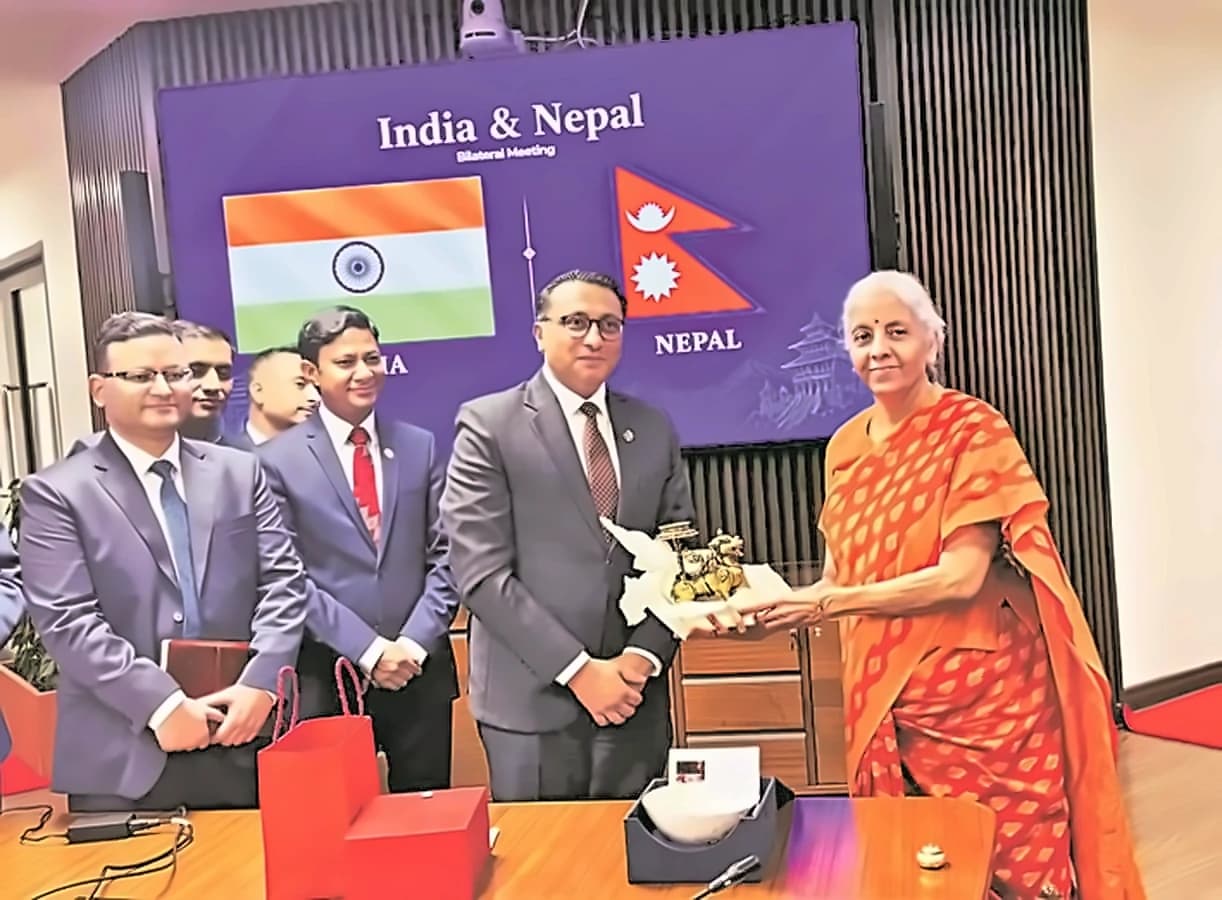
India and Nepal held the India-Nepal Inter-Governmental Sub-Committee (IGSC) on Trade, Transit and Cooperation to Control Unauthorised Trade on September 16-17, 2026 in New Delhi. According to the Commerce Ministry, this bilateral institutional mechanism serves as an important platform for detailed examination of trade and trade-related issues while facilitating bilateral trade and transit between the two countries. The discussions focused on strengthening customs and trade cooperation while addressing the misuse of preferential market access between the two countries. Both sides emphasised continued cooperation between relevant agencies to facilitate legitimate cross-border trade and address issues relating to unauthorised trade and commercial fraud. The Indian delegation was led by Joint Secretary, Department of Commerce, Ujjwal Kumar Ghosh, while the Nepali delegation was led by Joint Secretary, Ministry of Industry, Commerce and Supplies, Buddha Bahadur Gurung, with senior officials from both countries participating in the meeting.
The committee reviewed key sectors including agricultural products, dairy, food products, pharmaceuticals, medical devices and AYUSH products, along with standards and phytosanitary requirements. As reported by the Commerce Ministry, the meeting also addressed rail and road connectivity, freight movement, Integrated Check Posts and land-port infrastructure. The discussions covered market access, customs and trade facilitation, standards, food safety, phytosanitary measures, pharmaceuticals, medical devices and AYUSH products, with both sides focusing on improving the utilisation of existing infrastructure and addressing operational bottlenecks affecting bilateral and transit trade. The two sides considered measures to facilitate greater market access for Indian and Nepali products, including agricultural and dairy products, food products, pharmaceuticals, medical devices and AYUSH products. Bilateral merchandise trade between India and Nepal fell from a peak of about $11.02 billion in FY22 to $8.92 billion in FY23 and $7.87 billion in FY24—a cumulative decline of roughly 28.5%. However, it has since recovered to $9.39 billion in FY26, according to Commerce Ministry data published by the Embassy of India in Kathmandu.
In a separate statement on the Shanghai Cooperation Organization (SCO) Ministers' meeting held on September 17 in Dushanbe, India emphasized the importance of trade facilitation and digitalisation in reducing trade costs and time. According to the ministry, India highlighted the need for simplified customs procedures, paperless trade and electronic exchange of documents, alongside stronger multimodal connectivity and reduced transit times. The country also called for greater cooperation among SCO Member States to diversify and strengthen supply chains in strategic sectors including agriculture, critical minerals, pharmaceuticals, manufacturing and electronics.
During the meeting, both sides discussed strengthening customs cooperation and trade facilitation through measures such as pre-arrival exchange of information, electronic verification of Certificates of Origin, and customs automation and digitalisation. The discussions focused on facilitating legitimate trade while strengthening mechanisms to ensure compliance with applicable rules and prevent misuse of preferential trade arrangements. These initiatives aim to create more efficient cross-border commerce between India and Nepal, with particular focus on supporting smaller enterprises in both countries. The two sides also welcomed continued cooperation in standards, food safety, plant quarantine and conformity assessment, including institutional cooperation and capacity-building initiatives.
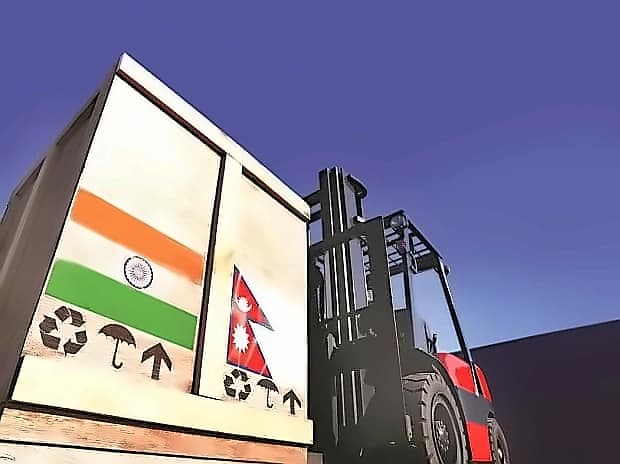
India and Nepal maintain robust trade relations with bilateral trade standing at $9.39 billion in FY 2025-26. According to the latest data, India's exports to Nepal were valued at $7.45 billion, while Nepal's exports to India stood at $1.94 billion. India serves as Nepal's largest trading partner, accounting for about 62.3% of Nepal's total external trade, providing transit for Nepal's trade with other countries. Trade with India constitutes about two-thirds of Nepal's overall external merchandise trade, while in services, trade with India constitutes about one-third of Nepal's overall trade in services. India is also the source of one-third of Nepal's foreign direct investments, almost 100% of its petroleum supplies, and a significant share of inward remittances on account of pensioners, professionals and workers employed in India. The bilateral framework is governed by the India-Nepal Treaty of Trade and the Agreement of Co-operation to Control Unauthorised Trade-2009, which was automatically renewed in October 2023 and allows Nepal unilateral duty-free access to the Indian market. The revised Treaty of Transit was signed on June 1, 2023, for a period of seven years, providing transit rights through mutually agreed routes and modalities.