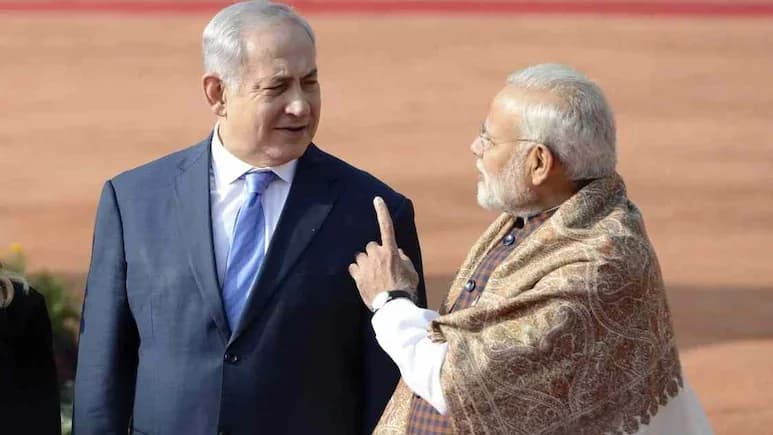
India and Israel are expected to restart formal negotiations for a comprehensive Free Trade Agreement after July, according to sources tracking the development reported by NDTV Profit. The upcoming second round of in-person discussions will take place in Israel, with the next phase of face-to-face negotiations initially intended to occur earlier but delayed due to ongoing conflict in West Asia. Despite the delays to in-person schedules, bilateral diplomatic channels have remained active, with both nations maintaining momentum through continuous virtual engagements and technical-level discussions.
When the delegations meet in Israel, the second round of negotiations is expected to focus on crucial regulatory frameworks and trade pillars. Key areas of focus will include market access to streamline import-export pathways and expand trade volumes, services and customs to ease cross-border professional services and simplify customs procedures, technology and innovation to leverage mutual strengths in tech ecosystems, and intellectual property to establish a robust framework for protecting bilateral innovations. As reported by NDTV Profit, Commerce and Industry Minister Piyush Goyal emphasized in November in Tel Aviv that the FTA will open doors for greater market access, flow of capital, and remove obstacles in doing business. The groundwork for the trade pact was fast-tracked when India and Israel officially signed the Terms of Reference for the FTA in November 2025.
Indian equity markets ended Thursday's session on a weak note as rising geopolitical tensions in West Asia weighed on sentiment, with the Nifty hovering near the crucial 23,100 support zone. Market participants are closely watching developments in the Iran conflict, which have already triggered volatility in global commodity and equity markets. According to Teji Mandi Investment Technologies, the benchmark index continues to hold a key support band despite weak global cues, with 23,550-23,600 acting as immediate resistance and 23,000-23,100 as support levels. GIFT Nifty was trading 0.3% lower at 23,130 at 10:58 pm, indicating the market may be opening close to the crucial support level.
Following the signing of the Terms of Reference, the initial round of official talks concluded successfully in New Delhi in February 2026. According to NDTV Profit, while geopolitical challenges have adjusted the immediate roadmap, the continuation of technical discussions highlights a mutual commitment to finalizing a balanced agreement that expands economic cooperation and opens new market avenues for businesses in both nations. The bilateral nations have maintained active engagement despite the delays in formal negotiations.
Despite the upcoming FTA negotiations, bilateral trade has shown significant decline in recent years. During 2024-25, India's exports to Israel dipped 52% to USD 2.14 billion from USD 4.52 billion in 2023-24, while imports fell 26.2% to USD 1.48 billion last fiscal year. The bilateral trade stood at USD 3.62 billion, with India being Israel's second-largest trading partner in Asia. While bilateral trade is dominated by diamonds, petroleum products, and chemicals, recent years have witnessed an increase in areas of electronic machinery, high-tech products, communications systems, and medical equipment. Exports from India to Israel include pearls and precious stones, automotive diesel, chemical and mineral products, machinery and electrical equipment, plastics, textiles, apparel, base metals and transport equipment, and agricultural products, while imports include pearls and precious stones, chemical and mineral/fertiliser products, machinery and electrical equipment, petroleum oils, and others.