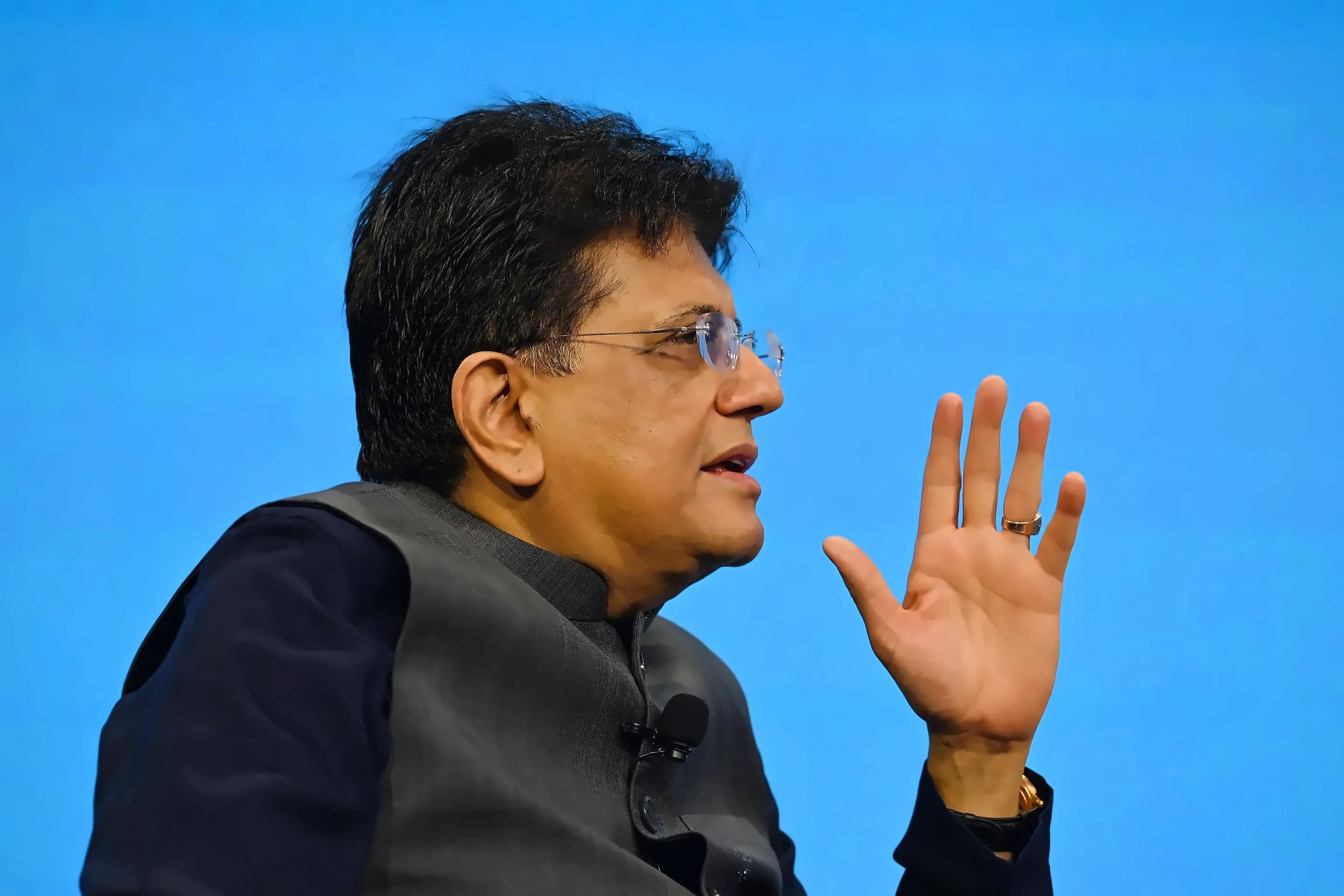
India's ambassador to China Vikram Doraiswami has emphasized the need for greater market access between the two countries during the World Peace Forum organised by China Tsinghua University on July 4, 2026. Speaking at a panel discussion on Protectionism and Global Economic Governance, Doraiswami stated that 'Obviously, we would like to be able to export more to China. There is nothing unreasonable about suggesting that, particularly in areas where we believe we have a competitive advantage such as pharmaceuticals'. He highlighted India's position as 'one of the world's biggest exporters of pharmaceuticals to advanced markets' and expressed hope that 'Chinese partners will work with India to ensure that firms producing high-quality generic medicines, which are exported to the US and other places, can be exported to the Chinese market as well'. The envoy noted that 'We think there is a balance of advantage for both countries, including value for China and of course, value for the relationship'. According to Business Standard, Doraiswami recently held talks with Wang Liping, Director General of the Department of Asian Affairs, Ministry of Commerce of China, to discuss initiatives to step up trade ties.
India's ambassador to China Vikram Doraiswami has dismissed comparisons between India and Pakistan regarding their roles in mediating the West Asia conflict. Speaking at the World Peace Forum organised by China Tsinghua University on July 4, 2026, Doraiswami stated that countries should decide for themselves whether mediating serves their interests. According to reports from Business Standard, he emphasized that 'the comparison, if I might be a little direct, with Pakistan, is a little unfair', citing the significant economic differences between the two nations. Responding to a Chinese journalist's question about India's role in global leadership and Islamabad's attempts to mediate in the Iran-US conflict, Doraiswami said 'I think the comparison, if I might be a little direct, with Pakistan, is a little unfair. I think the economy in the two countries will tell you a lot'. He added that 'We should look at countries according to what they are and what they are actually doing in the larger global system'. The envoy stated 'The question about mediation that you're talking about, this is one that, you know, it is for individual countries to decide whether that adds value to their larger national position. We have done our bit of that in the past. I don't see how, at this point of time in what is already a crowded field, that would benefit us in any particular way'.

Doraiswami emphasized the similarity in positions taken by India and China in recent international crises. As reported by Business Standard, he stated 'As far as I see it, our position in recent crises, both in West Asia or even in East Europe, has been quite similar to that of China'. The envoy noted that 'I don't see China or India actually stepping forward to offer mediatory services', suggesting a coordinated approach between the two nations on international conflict resolution. He drew a parallel between India and China on the Iran and Ukraine conflicts, emphasizing that 'I don't see China or India actually stepping forward to offer mediatory services'. Doraiswami had earlier participated in a panel discussion on protectionism and global governance at the forum, emphasizing that 'any decision on mediation would depend on whether it served the country's wider interests'.
India-China trade relations have shown significant growth despite widening deficit concerns. According to the Indian Ministry of Commerce data, bilateral trade reached $151.1 billion in 2025-26, with India's exports to China rising 36.66% to $19.47 billion during the last fiscal year. However, imports increased 16% to $131.63 billion, resulting in the trade deficit swelling to an all-time high of $112.6 billion in 2025-26, compared to $99.2 billion in 2024-25. As reported by Business Standard, China has overtaken the US to emerge as India's largest trading partner in 2025-26. India has long been demanding that China open its IT, pharmaceutical and agriculture sectors, which are the country's strong areas. Doraiswami expressed hope that 'Chinese investments are also good for the larger country-to-country relationship' and noted that 'India has taken steps to re-establish opportunity for Chinese businesses to invest in the Indian market'.
The envoy highlighted positive developments in the investment climate between the two countries. According to Business Standard, Doraiswami stated that 'Indeed, the policy environment has been specifically changed in the last few months to facilitate greater Chinese investment' and noted that 'the relationship between the two countries is moving towards normalisation'. He invited Chinese businesses to invest in India, stating that 'the Indian embassy is willing, not just to help make the investment happen, but also to listen to their concerns'. Doraiswami emphasized that 'That I think is good for the economics of the relationship. It is also good for the larger country-to-country relationship'. The ambassador highlighted India's comprehensive global integration approach, stating that 'India's integration with the globe is at a level not matched by most countries' and outlined India's willingness to contribute to larger questions of peace and security, including economic integration with European countries and Asian nations.