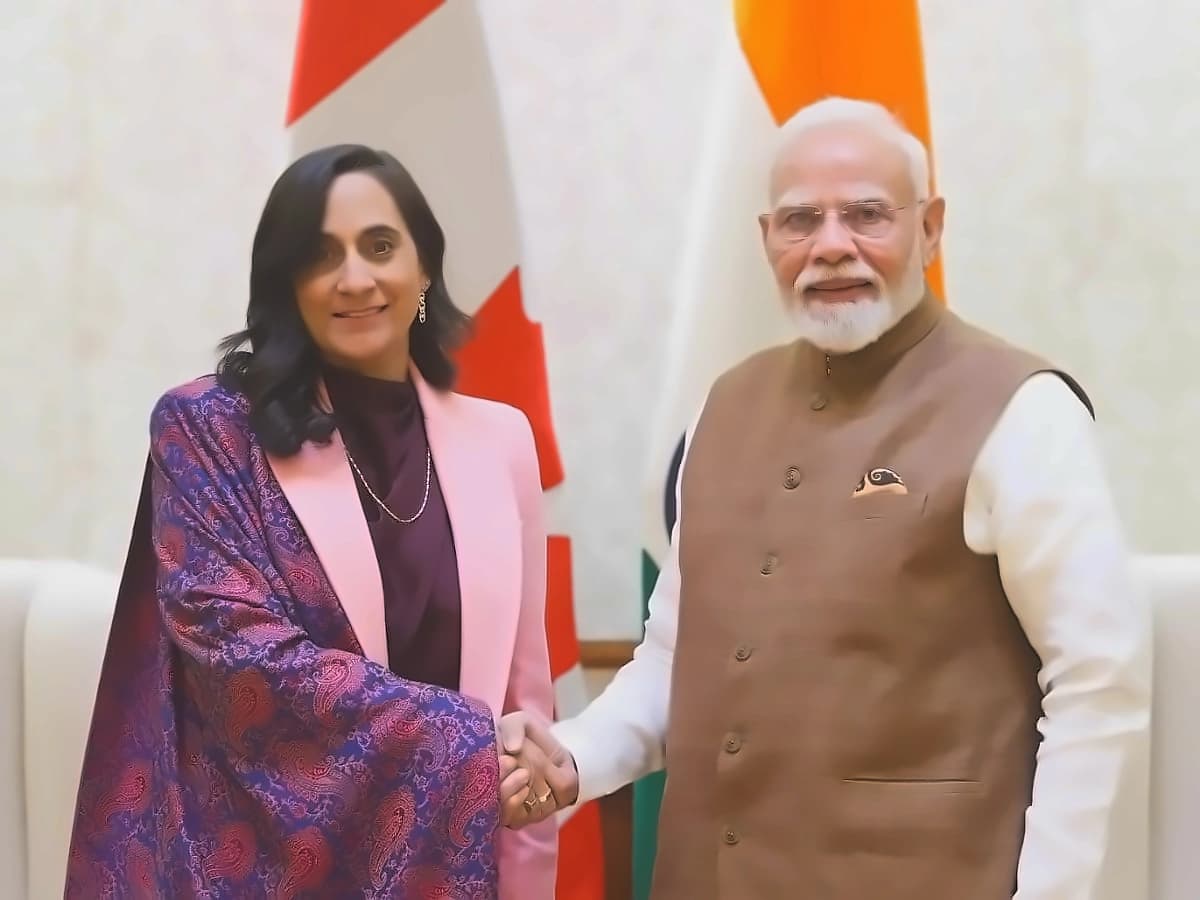
Following the 2023 Nijjar incident, India and Canada have undergone a calculated strategic reset under the leadership of Prime Ministers Narendra Modi and Mark Carney. According to reports from NDTV Profit, this diplomatic thaw represents the supremacy of economic imperatives over diplomatic grievances, with both nations decoupling commercial interests from historical security friction. The reset is driven by mutual structural complementarities, energy dependencies, and shared global trade vulnerabilities, demonstrating how economic survival and material interests outweigh political disputes in an era of global trade volatility. As per recent analysis, this pragmatic reality has been starkly illustrated by the profound turnaround in India-Canada relations, with the material undercurrents of trade, resource security, and capital flows ultimately dictating the long-term behaviour of states.
For Canada, the primary material driver is urgent trade diversification necessity. As reported by NDTV Profit, historically dependent on the United States for the vast majority of its trade, Ottawa has found itself vulnerable to American protectionist policies, particularly sweeping tariffs on steel and automobile sectors. Caught in unpredictable Washington dynamics and ongoing structural disruptions in Europe and West Asia, Canada has adopted a 'middle power' strategy to mitigate overreliance on the US market. India, with its massive market scale, rapid industrialization, and expanding technology ecosystem, offers Canada an unparalleled destination to diversify trade portfolio and protect domestic economy from unilateral tariff shocks. The strategic partnership has now reached new heights with the fast-tracking of the Comprehensive Economic Partnership Agreement, with India and Canada accelerating negotiations to finalise the pact by the end of 2026, aiming to double bilateral trade to upwards of $50 to $70 billion by 2030.
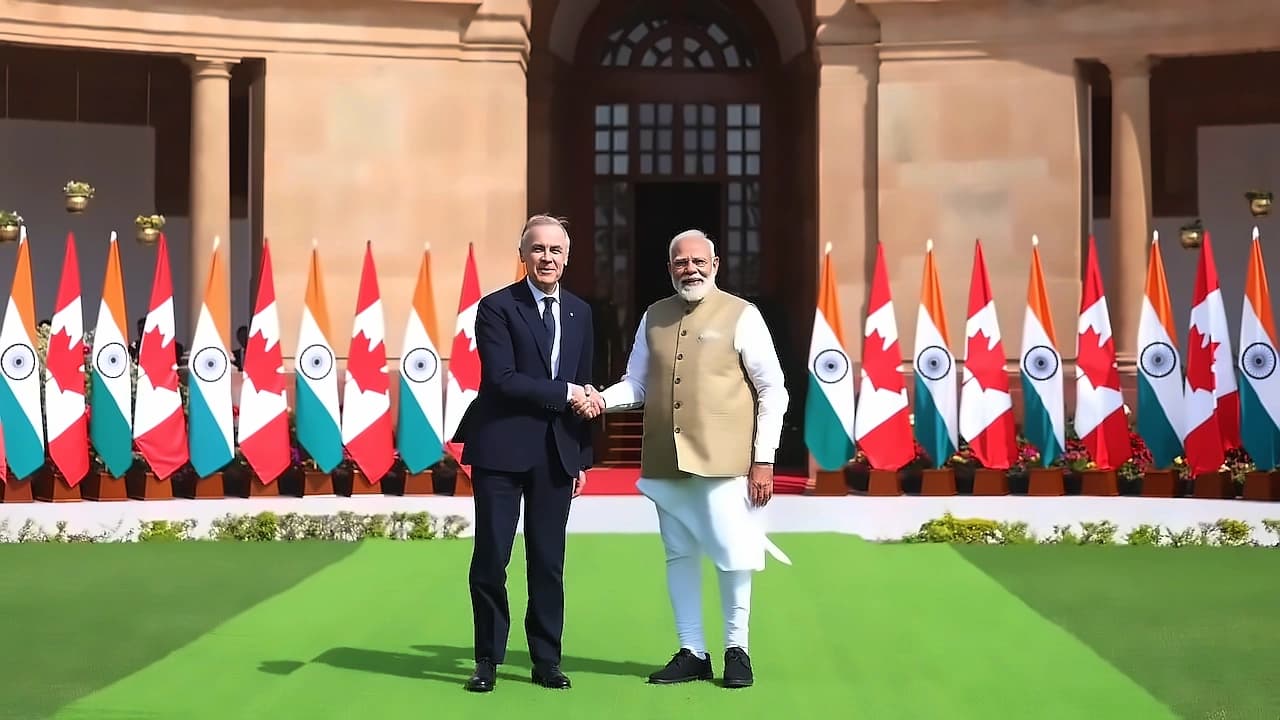
India's material motivations center on domestic development demands, particularly clean energy transition and high-tech manufacturing ambitions. According to NDTV Profit, as the world's fastest-growing major economy, India faces existential need for stable, conflict-free supply chains for energy and strategic raw materials. Geopolitical instability in the Gulf and shipping vulnerabilities in the Strait of Hormuz present direct economic risks to India's energy security. Canada, as the world's second-largest uranium producer and resource-abundant power, offers politically stable alternatives for India's energy security requirements. This synergy was formalised through a landmark 10-year, $2.6-billion civil nuclear agreement with Canada's Cameco to supply uranium to India's Department of Atomic Energy, directly supporting New Delhi's long-term target of achieving 100 GW of nuclear capacity by 2047. While core security sensitivities-particularly India's concerns regarding extremist and separatist factions operating on Canadian soil-remain present, they are now managed via insulated, high-level national-security-adviser dialogues rather than being permitted to derail commercial interactions.
The strategic partnership extends beyond energy to critical minerals essential for India's clean energy and technology ambitions. As reported by NDTV Profit, Canada's vast reserves of lithium, cobalt, and rare earth elements are vital for India's clean energy, electric mobility, and semiconductor manufacturing. Through mechanisms like the Critical Minerals Annual Dialogue, the two nations are integrating Canadian resources into the scale of Indian manufacturing. This collaboration supports India's long-term target of achieving 100 GW of nuclear capacity by 2047, formalized through the landmark nuclear agreement with Canada's Cameco. The economic complementarity is further reinforced by Canada's vast reserves of critical minerals, which are vital for India's clean energy, electric mobility, and semiconductor ambitions, creating an unbreakable economic symbiosis between the two nations.
The bilateral framework is reinforced by deep institutional investment ties and talent mobility that form the bedrock of the relationship. According to NDTV Profit, Canadian institutional investors, particularly mega pension funds like the Canada Pension Plan Investment Board and CDPQ, have quietly deployed over $75 billion into Indian infrastructure, renewable energy, and real estate, recognising India as a high-yield destination for capital. Human capital remains a vital bridge with nearly 1.8 million individuals of Indian origin in Canada and hundreds of thousands of Indian international students, feeding Canada's labour market demands while sustaining robust services trade. The institutionalization of the India-Canada Migration and Mobility Dialogue underscores shared recognition that well-managed professional and student mobility is an economic necessity for both societies. This demographic synergy, combined with the institutional investment ties, creates a robust foundation for sustained bilateral economic cooperation.