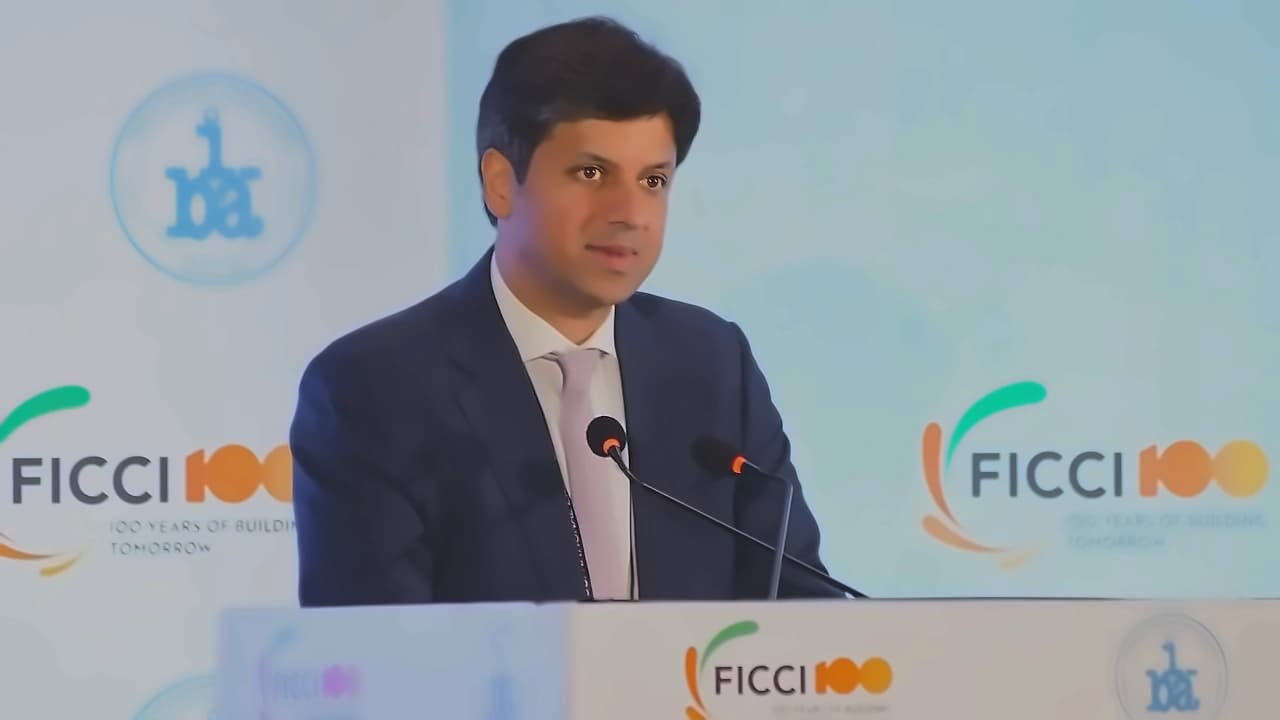
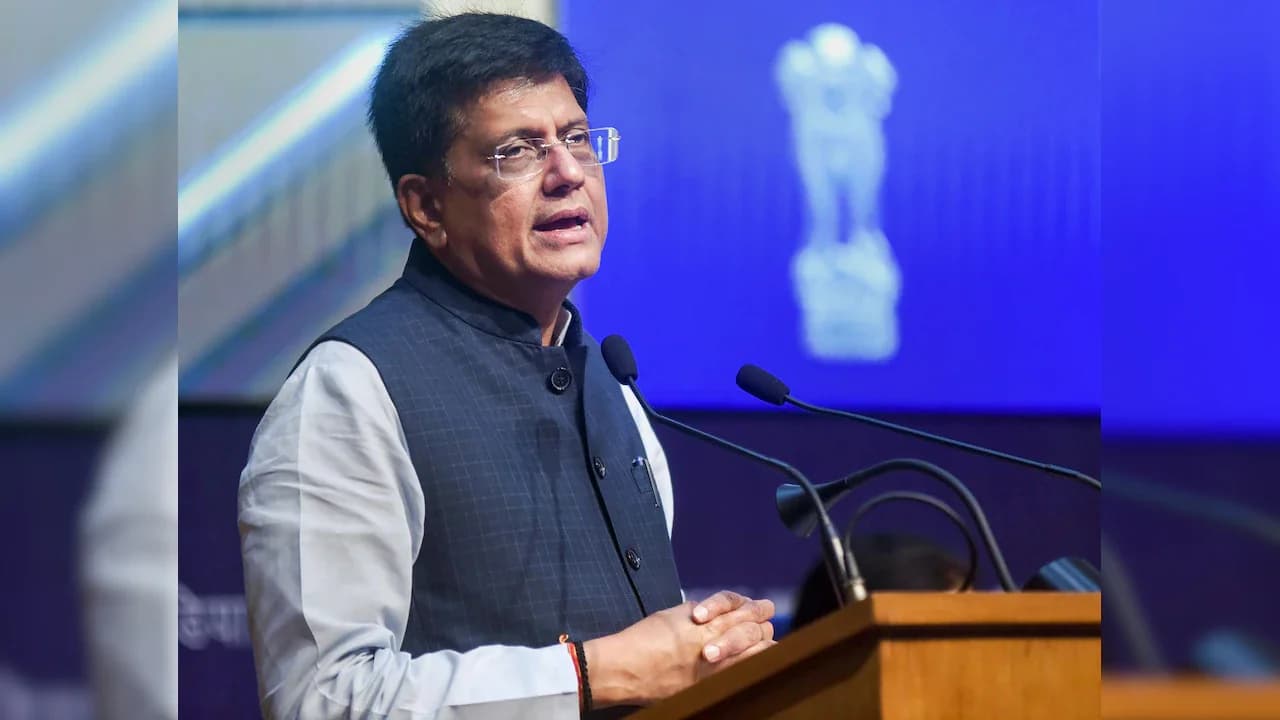
Commerce and Industry Minister Piyush Goyal has accelerated the timeline for concluding the India-Canada Comprehensive Economic Partnership Agreement (CEPA) to November 2026, moving it forward from the original December target. Following his meetings with Canadian Prime Minister Mark Carney and Minister of International Trade Maninder Sidhu, both sides decided to advance the trade deal timeline. The minister announced that India and Canada are targeting bilateral trade of $50 billion by 2030, significantly expanding from the current $8.66 billion in 2024-25 ($4.22 billion exports and $4.44 billion imports). Sidhu is also likely to lead a Canadian trade mission to India later this year, indicating continued momentum in bilateral economic engagement.
During his address at the Munk School of Global Affairs and Public Policy, University of Toronto, Goyal suggested that Canada consider dual-degree programmes with India to increase cooperation in the education sector. As per NDTV, he stated that "In fact, I was talking to the Honorable Prime Minister (Mark) Carney and I suggested we should quickly look at dual degrees so that students from India come to Canada for may be a year, see the world out here, and go back encouraged to prepare India for the future." In dual degrees arrangements, universities or higher educational institutions of both countries could jointly offer academic programmes where students study partly in India and partly in Canada and receive degrees/certifications recognised by both institutions. The minister also invited young boys and girls from Canada to come to India and observe the developmental activities, emphasizing the importance of cross-cultural exchange in strengthening bilateral relations.
Addressing the global economic challenges, Goyal emphasized that "the way the global turmoil is affecting world economies and relations between nations today, it's truly a 'very' appropriate time to do a political reset in the Canada-India relations." He highlighted India's strong economic fundamentals, stating that "We've been the fastest growing large economy for the last several years in a row. Our effort and plans, the roadmap that we've set for ourselves is to continue to be the fastest growing large economy at least for the next two decades or 25 years so that until 2047, when we celebrate 100 years of independence, India is a country with at least a $20,000 per capita income." The minister added that India is investing heavily in manufacturing and infrastructure building, with an economy of $4 trillion growing at constant prices at about 7% plus or minus 1%, with a nominal growth of anywhere between 9% and 10%, compounds in the next 25 years to an '8x' level. When we talk of a $4 trillion becoming a USD 30 trillion economy, it's not just a prediction... It's just pure mathematics.
During his three-day Canada visit that started on Monday, May 25, 2026, Goyal pitched India as a long-term investment destination while meeting with top Canadian industry leaders including Fairfax Financial Holdings Chairman Prem Watsa, Manulife Financial Corporation President Philip Witherington, Sun Life President Kevin Strain, and Neo Performance Materials President Rahim Suleman. The minister emphasized India's economic growth prospects, manufacturing expansion, digital transformation, and infrastructure push, inviting Canadian businesses to deepen engagement across sectors such as financial services, critical minerals, artificial intelligence, telecom, clean energy, food processing, and advanced manufacturing. A business delegation of more than 100 Indian industry representatives accompanied the minister for sector-focused roundtables and business-to-business engagements in Ottawa and Toronto. As per Business Standard, Goyal highlighted how the Indian government's focus on infrastructure, financial sector reforms & ease of doing business is creating unprecedented opportunities for global investors.

Energy security and clean energy transition are expected to figure prominently in the talks, given the strong complementarities between Canada's vast natural resource base and India's growing energy needs. Civil nuclear cooperation is also likely to remain a key pillar of the bilateral energy partnership. A free trade agreement with Canada could help India diversify import sources for strategic products such as energy products ($341.36 million) and fertilisers ($263.17 million), supplies of which are currently under disruption amid the conflict in West Asia. India's top imports from Canada in FY26 were yellow peas ($311.24 million) and lentils ($306.56 million). Indian industries anticipate export opportunities in sectors such as pharmaceutical products ($548.27 million), gems and jewellery ($380.46 million), iron and steel items ($292.47 million), organic chemicals ($234.41 million), and electrical equipment ($226.01 million).