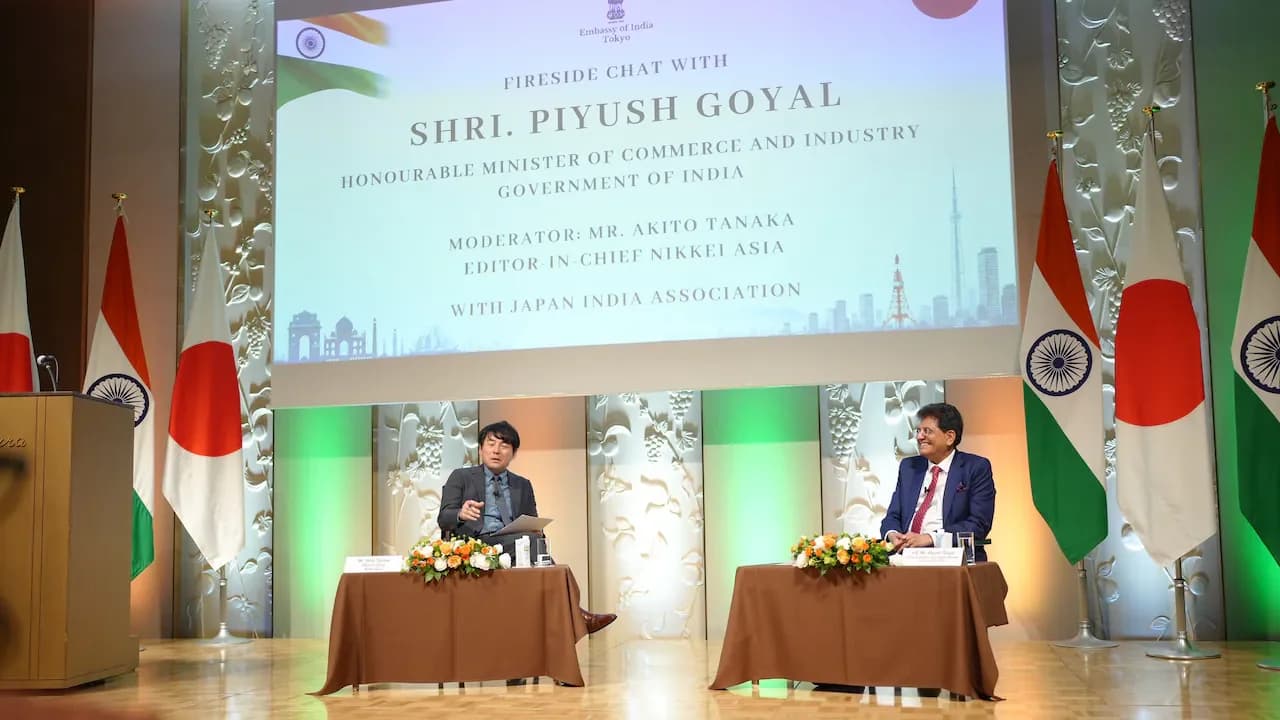
Commerce and Industry Minister Piyush Goyal has publicly urged India and African nations to align their standards, customs procedures, and business practices to substantially boost bilateral trade relationships. Speaking at the India Global Innovation Connect, Goyal emphasized that the combined economic potential of the African Continental Free Trade Area and the Indian economy represents a formidable opportunity for integrated value chains, particularly in sectors such as renewable energy production and digital technology deployment. As reported by The Times of India, harmonising standards and customs regulations could reduce transaction costs, eliminate technical barriers to trade, and create a more predictable environment for manufacturers seeking to participate in cross-border supply networks.
The minister highlighted that renewable energy collaboration could accelerate India's decarbonisation goals while supporting African nations' energy security objectives through joint investment and technology transfer. Goyal also emphasized the strategic relevance of digitalisation partnerships, encompassing shared platforms for e-commerce, fintech solutions, and data analytics, which could foster deeper economic integration by bridging informational gaps and enabling smoother cross-regional transactions. He urged Indian exporters to view African markets not merely as peripheral destinations but as integral components of global supply chains, encouraging them to adopt African standards where feasible to enhance market acceptance and competitiveness.
India's strategy of entering into Free Trade Agreements with developed economies is specifically designed to support the country's long-term growth ambitions by expanding global engagement, attracting investments, promoting innovation, creating jobs, upgrading quality standards and increasing India's participation in international trade. According to Business Standard, Goyal noted that India's engagement with developed economies is based on complementarity rather than competition, with the country benefiting from a young workforce with an average age below 30 years and an expected demographic advantage over the next three decades. The minister highlighted that India has signed nine FTAs in the last three to three-and-a-half years, covering 38 countries, many of which are developed economies with significantly higher per capita incomes than India.
Commerce and industry minister Piyush Goyal on Thursday acknowledged that countries worldwide are increasingly protecting their domestic industries, including sectors such as steel. According to reports from The Times of India, speaking at the India Global Innovation Connect, Goyal stated that such measures are part of global trade realities and are not unique to India. He emphasized that when the EU, US, and UK are trying to safeguard their domestic steel industry against competition, or when India protects its economy from unfair trading practices of certain geographies with overcapacity and predatory pricing, these are realities that must be confronted.
Despite acknowledging the World Trade Organization's current ineffectiveness, Goyal maintained that international trade continues to function under the WTO framework. As reported by The Times of India, he stated that the WTO as a forum is not very effective right now, requiring action to be almost bilateral. However, he emphasized that all world trade, at the aggregate, is still very much in its place, working under the WTO framework. Goyal noted that responses to trade challenges often involve a mix of bilateral action and targeted measures, while India continues to engage globally through cooperation and negotiated agreements.
The minister's call for standards alignment raises significant legal questions regarding constitutional treaty-making powers, statutory frameworks, and WTO obligations. Under Article 253 of the Constitution, the Union possesses authority to negotiate trade treaties, but implementation typically requires parliamentary legislation. Any legislative measures would need to incorporate thorough impact assessments evaluating compliance with WTO obligations, particularly under the Technical Barriers to Trade Agreement. The process would involve statutory instruments under the Foreign Trade (Development and Regulation) Act, 1992, and may require amendments to the Customs Act, 1962. Additionally, the Bureau of Indian Standards (BIS) Act, 2016 would govern any mutual recognition agreements, subject to procedural safeguards and public consultation requirements.