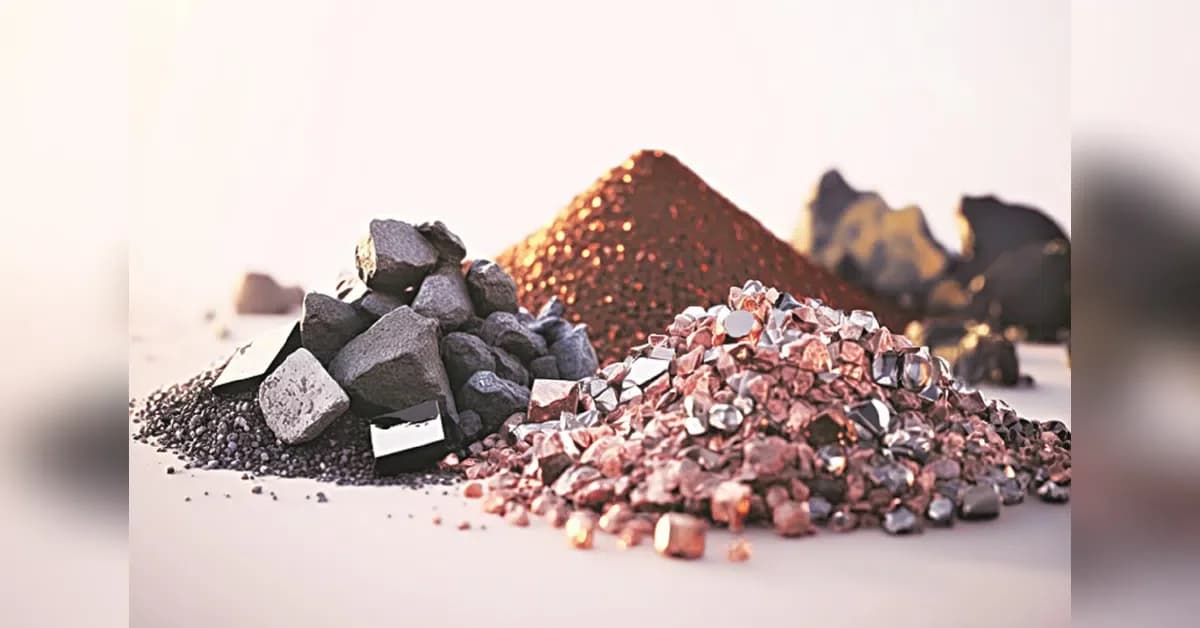
India's critical minerals diplomacy has gained significant momentum with the establishment of its first joint working group on critical minerals with France, marking a milestone in bilateral cooperation. According to a French Embassy statement, the working group held discussions over Monday and Tuesday to strengthen cooperation in exploration, processing and recycling of critical minerals and rare earth elements. Benjamin Gallezot, France's Interministerial Delegate for Strategic Minerals and Metals Supplies, co-chaired the group and emphasized that 'France and India can collaborate on critical mineral projects across geographies' with the priority being reducing dependence on any one source of supplies. The collaboration builds on the France–India Joint Declaration of Intent on Cooperation in Critical Minerals, signed during French President Emmanuel Macron's visit to India in February 2026. This partnership is part of India's broader strategy to diversify critical mineral supply chains beyond traditional sources.
India's critical minerals diplomacy reflects a broader strategy to reduce dependence on traditional suppliers amid intensifying global competition. According to Business Standard, India has signed a series of bilateral agreements including the India-US Strategic Critical Minerals Cooperation Framework, investments in nickel and rare earth permanent magnet manufacturing with Indonesia, and the Quad's commitment to strengthen resilient critical mineral supply chains. The latest development includes Australia's agreement to export uranium to India during Prime Minister Narendra Modi's visit to Melbourne. These partnerships signal a shift where 'sovereignty through cooperation' becomes the objective, with countries diversifying supply chains through international partnerships spanning mining, processing, recycling and manufacturing rather than through resource nationalism alone.
India remains heavily dependent on critical mineral imports despite significant domestic potential. According to the Ministry of Mines, India imported about 12.47 million tonnes of critical minerals in 2024-25, with the import bill led by platinum group elements, phosphorus, nickel, molybdenum and tin. The country is fully import-dependent for lithium, cobalt and nickel, minerals essential for batteries and clean energy technologies. India possesses substantial geological potential, including the world's third-largest rare earth resources with around 13.15 million tonnes of monazite containing an estimated 7.23 million tonnes of rare earth oxides. The Geological Survey of India has identified a 5.9-million-tonne lithium deposit in Jammu and Kashmir's Reasi district, besides smaller reserves in Karnataka, Rajasthan and Chhattisgarh. However, commercial mining, processing and refining capacities remain at early stages.
France sees its biggest contribution to India's critical minerals ambitions in technologically intensive stages of the value chain rather than mining itself. As reported by Economic Times, French companies have expertise in rare earth separation, refining, metallisation, recycling and magnet manufacturing. Gallezot highlighted that separation and refining remain the biggest bottlenecks in the rare earth value chain, advocating for simultaneous development of mining, processing, recycling and downstream manufacturing rather than sequential progression. The in-depth exchanges allowed the two countries to identify shared interests and develop collaboration projects in France, India and other key countries. France is prepared to support critical mineral projects through several financing mechanisms, including a €500 million critical minerals investment fund that can take equity stakes, government-backed loan guarantees linked to French industrial buyers, and development finance institutions such as Agence Française de Développement (AFD) and Proparco.
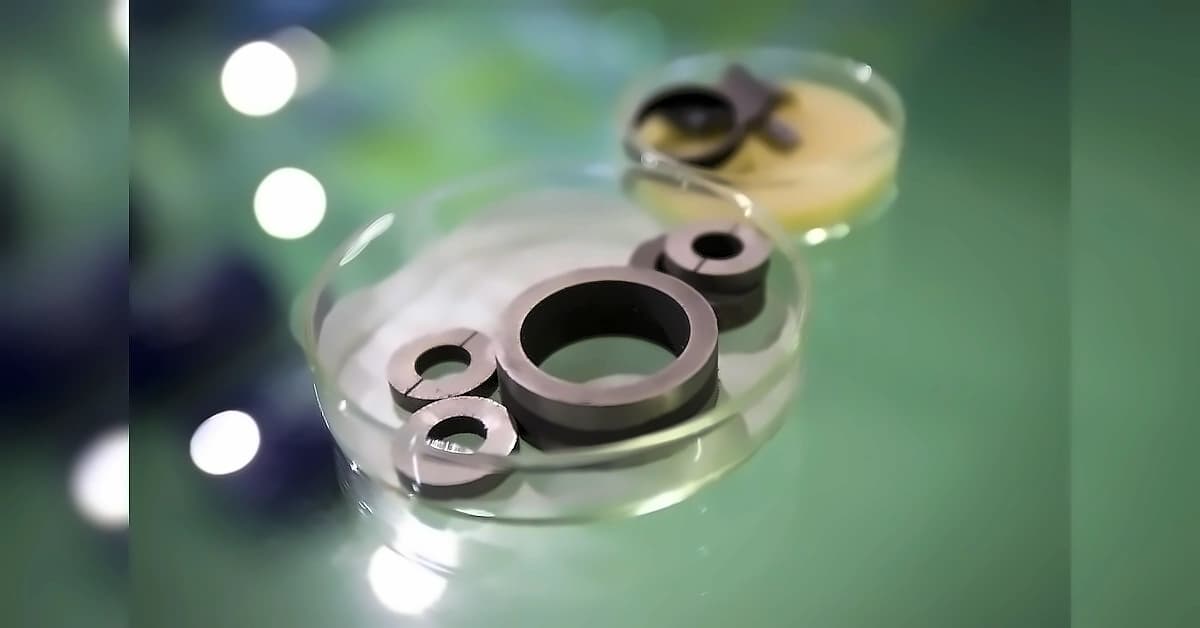
Beyond bilateral partnerships, India is strengthening domestic capabilities through comprehensive policy initiatives. In the Union Budget for FY27, the Centre announced plans to establish rare earth corridors in Odisha, Kerala, Andhra Pradesh and Tamil Nadu. These hubs will support mining, processing, research and the manufacture of high-performance rare earth magnets used in EVs, wind turbines and other advanced technologies. The National Critical Mineral Mission (NCMM), launched in 2025, has tasked the Geological Survey of India with undertaking 1,200 exploration projects between 2024-25 and 2030-31 to identify new deposits of strategic minerals. The government also plans to auction more than 100 critical mineral blocks and expand exploration to offshore regions containing polymetallic nodules rich in cobalt, nickel, manganese and rare earth elements. India is also encouraging private companies to secure overseas mineral assets, with Hyderabad-based Midwest Ltd becoming the first Indian private firm to acquire critical mineral resources abroad through an agreement with Indonesia's state-owned PT Perusahaan Mineral Nasional (PERMINAS).