At the 16th India-Japan Annual Summit held recently in New Delhi, Prime Minister Narendra Modi and Takaichi recognised that strengthening strategic and global cooperation between the two countries will be mutually beneficial and contribute to a resilient and prosperous Indo-Pacific and beyond in an increasingly volatile and uncertain geopolitical environment. As reported by Business Standard, they concurred on advancing cooperation based on three priority areas: defence and security cooperation; economic partnership, including economic security, energy resilience, technology, and innovation; and people-to-people exchanges. The leaders shared the view that India and Japan are natural and indispensable partners in their efforts to realise respective national interests, with both countries having a duty to shape and uphold an international order that is free, open, and based on the rule of law.
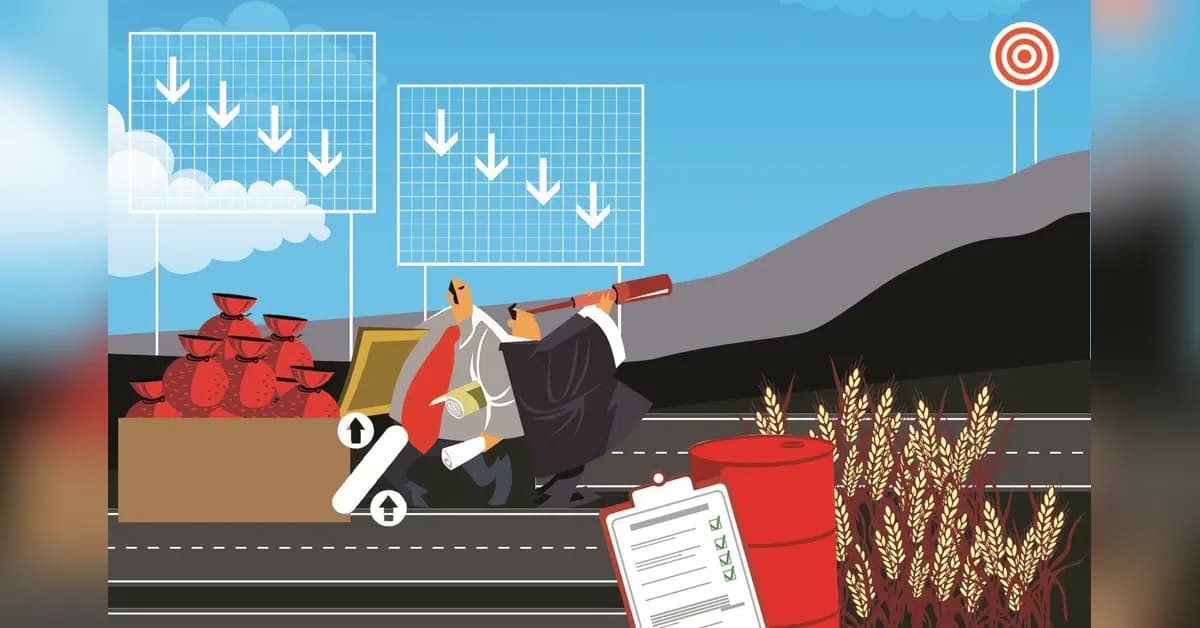
According to reports from Business Standard, geoeconomics - the use of economic tools for national security and global dominance - faces significant challenges. The analysis notes that tools meant to create value are poor at providing security or ensuring economic dominance, are difficult to target well, and impossible to contain. Donald Trump is finding it difficult to satisfy his electorate due to inflationary conditions from his policies, while Xi Jinping faces similar challenges as Chinese dominance assertions have led to trade and investment tightening by countries including India. The report emphasizes that what China needs most today is global markets, which its policies have deprived it of. Recent developments show that economic weaponization has become the vital underpinnings of trade and growth, with major economies outside the main trading blocs needing to work more closely to diversify production in key supply chains such as critical minerals, including finance, strategic projects and standards.
India has launched the National Critical Mineral Mission (NCMM) in January 2025 for a seven-year period from 2024-25 to 2030-31, marking a significant shift in the country's approach to securing critical minerals supply chains. As reported by The Times of India, during PM Modi's visit to Indonesia, it was announced that India will invest in the manufacturing of steel, nickel and rare earth permanent magnets in Indonesia. This initiative is aimed at strengthening the critical mineral supply chain and represents a new beginning in partnerships between Indian companies regarding stainless steel and rare-earth magnets. The mission goes far beyond a conventional mining initiative, laying out a long-term strategy aimed at strengthening India's energy security, accelerating industrial development and enhancing technological self-reliance. According to The Times of India, Modi emphasized that "In today's era, the supply chain resilience of technology holds great significance. An important agreement was reached to further strengthen the supply chain in the sectors of critical minerals and steel."
According to the latest summit outcomes, both India and Japan will promote technical cooperation and information exchanges between Geological Survey of India and JOGMEC in the field of mineral exploration and establish an ecosystem by facilitating the collection and recycling of e-waste to enhance the recovery of critical minerals across relevant supply chains. The partnership will also explore alternative supply chains in Active Pharmaceutical Ingredients (APIs) and Key Starting Materials (KSMs) to reduce dependence on China. As reported by Business Standard, the current international situation calls for both countries to further promote tangible cooperation in the areas of economic security, with both Delhi and Tokyo sharing concerns over the use of economic coercion and non-market policies and practices, including arbitrary export restrictions that may lead to supply chain disruptions, particularly in critical minerals and critical industrial sectors. The summit underscored the importance of diversified, resilient, and reliable global supply chains, a fair competitive global environment, and the need to avoid reliance on any one country.
As reported by Business Standard, India currently uses various tools including trade policy measures such as tariffs, export controls, and bilateral free-trade agreements (FTAs); selective investment controls; dual use technology limitations; and industrial policy favoring some segments. The analysis suggests adding a comprehensive R&D framework with far greater resources and very specific asks from R&D establishments. The report emphasizes that the more India seeks to achieve and the greater the need for geopolitical advantages, the greater the economy-wide coordination required. Economic prosperity will be increasingly tied to security, but increasing security needs should not come at the cost of efficiency and productivity. The latest developments show that India and Japan are building deeper institutionalisation of economic security cooperation, with both sides working towards establishing a Track 1.5 Dialogue between the government, industry, and domain experts and strengthening and diversifying supply chains in the manufacturing of semiconductors.