China is drawing 'red lines' around its economic model ahead of upcoming trade negotiations with the European Union and United States, as reported by Bloomberg. According to Chinese Commerce Ministry spokesman Xu, "The first is about hoping others understand where it comes from. A better mutual understanding helps in negotiations. The second is about drawing a red line." The ministry paper "made clear that China doesn't accept discriminatory measures against its firms and products," signaling Beijing's growing confidence in defending its economic interests. China's approach reflects its position as a $16 trillion economy with about 60% of global rare earths output and up to 90% of refining capacity, allowing it to control global critical minerals supply chains at will. Recent analysis from the International Energy Agency estimated that public financing commitments for new projects more than quadrupled to $65 billion between 2023 and 2025, as the US and other countries race to diversify their critical mineral supply chains.
China's export restrictions on rare earths are accelerating investment in new mines and processing capacity worldwide, potentially weakening Beijing's dominance over critical mineral supply chains. According to reports from Bloomberg, some 15 years ago, almost all rare-earth elements were mined and refined in China, but years of similar threats have significantly changed that picture. Almost a third of total production now happens in other countries, forcing Beijing to focus on the rarest of the rare earths while the world responds with alternative sourcing strategies. The imposition of rare-earth export controls by China is sparking an unexpected global movement toward industry independence, with this escalating international effort poised to increase the supply of these crucial minerals significantly. However, China's heavy dependence on exports to power its own growth in light of weak domestic demand makes it difficult to argue that Chinese exports are a gift to consumers worldwide.
Kazakhstan's rare earth ambitions face significant challenges despite its strategic positioning as a potential alternative to China. The world's largest landlocked nation is rich with mineral reserves, claiming more than 9,500 deposits of minerals including lithium, tantalum and other critical minerals, and has proven resources or active production of about half of the minerals listed by the US that are considered critical for electrification and national security. The country's last year's Zhana Kazakhstan discovery, located about 420km from the capital Astana, is estimated to have more than 20 million tonnes of rare earth metals, injecting new fervour into its ambitions. However, as Temur Umarov from the Carnegie Russia Eurasia Centre notes, "Kazakhstan is not a realistic substitute for China in the foreseeable future."
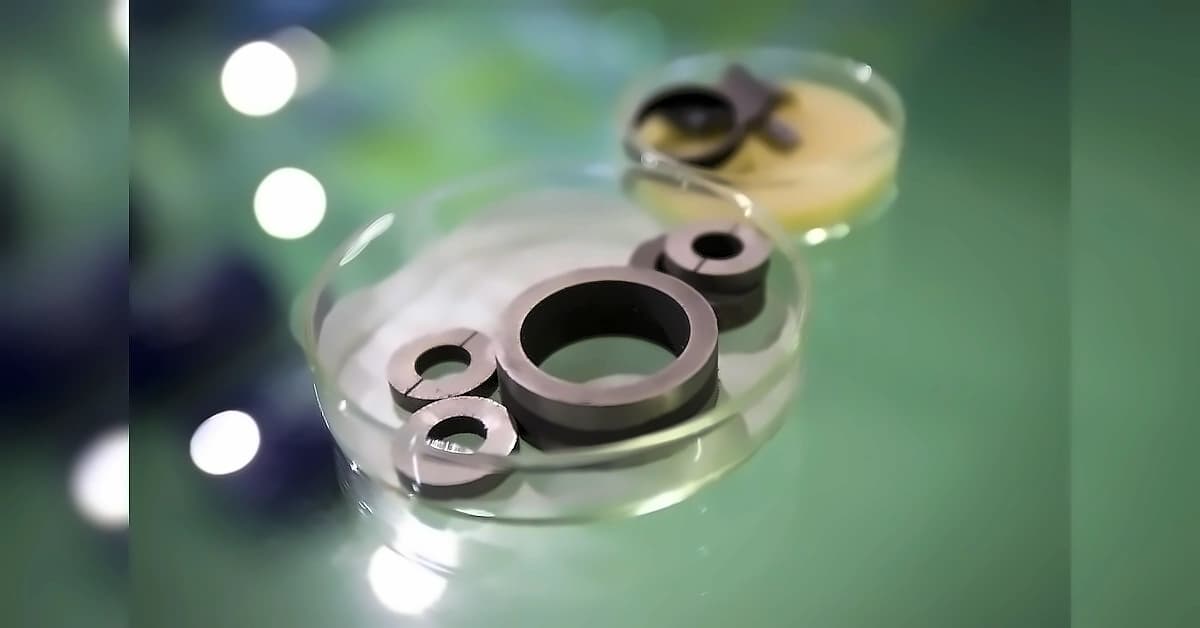
Significant investment is underway in alternative sourcing across the globe. In Brazil, Boston-based private equity firm Denham Capital Management LP spent much of the 2010s proving up a clay deposit in central Goiás state, after receiving investment from former Xstrata Plc CEO Mick Davis and starting production in 2024. The mine is now being taken over by magnet producer USA Rare Earth Inc. under a $2.8 billion deal announced in April. Companies outside China with processing expertise are building separation circuits, with Lynas Rare Earths Ltd. and Neo Performance Materials Inc. achieving commercial production, while MP Materials Corp. and USA Rare Earth's partner Carester SAS expect to be up and running within months. In Kazakhstan, the US Export-Import Bank and International Development Finance Corporation wrote letters of interest adding up to $1.6 billion to finance a deal with US-based Cove Capital and Kazakhstan's state mining company to develop two tungsten deposits in Northern Katpar and Upper Kairakty. Abu Dhabi's ADQ is also part of the $1.8 billion Orion Consortium exploring investment opportunities in Kazakhstan.
The global response represents a significant shift in rare earth supply dynamics, with China maintaining its dominant position despite international diversification efforts. China retains about 60% of global rare earths output and up to 90% of refining capacity, allowing it to control global critical minerals supply chains at will. Recent analysis from the International Energy Agency estimated that public financing commitments for new projects more than quadrupled to $65 billion between 2023 and 2025, as the US and other countries race to diversify their critical mineral supply chains. India and the US have inked a pact to secure critical mineral supplies, bolstering a broader Quad initiative aiming to invest $20 billion in mining and processing to counter China's dominance in rare earths. Kazakhstan's Minister of Industry and Construction, Yerssaiyn Nagaspayev, reported that investment in geological exploration has exceeded more than $1 billion since 2018, with mining companies Rio Tinto and Barrick Gold among firms entering the Kazakh market. However, Washington's effort to boost pressure on China through tariffs of more than 100% last year floundered as Beijing used its dominant position in rare earths production to regain strategic ground.