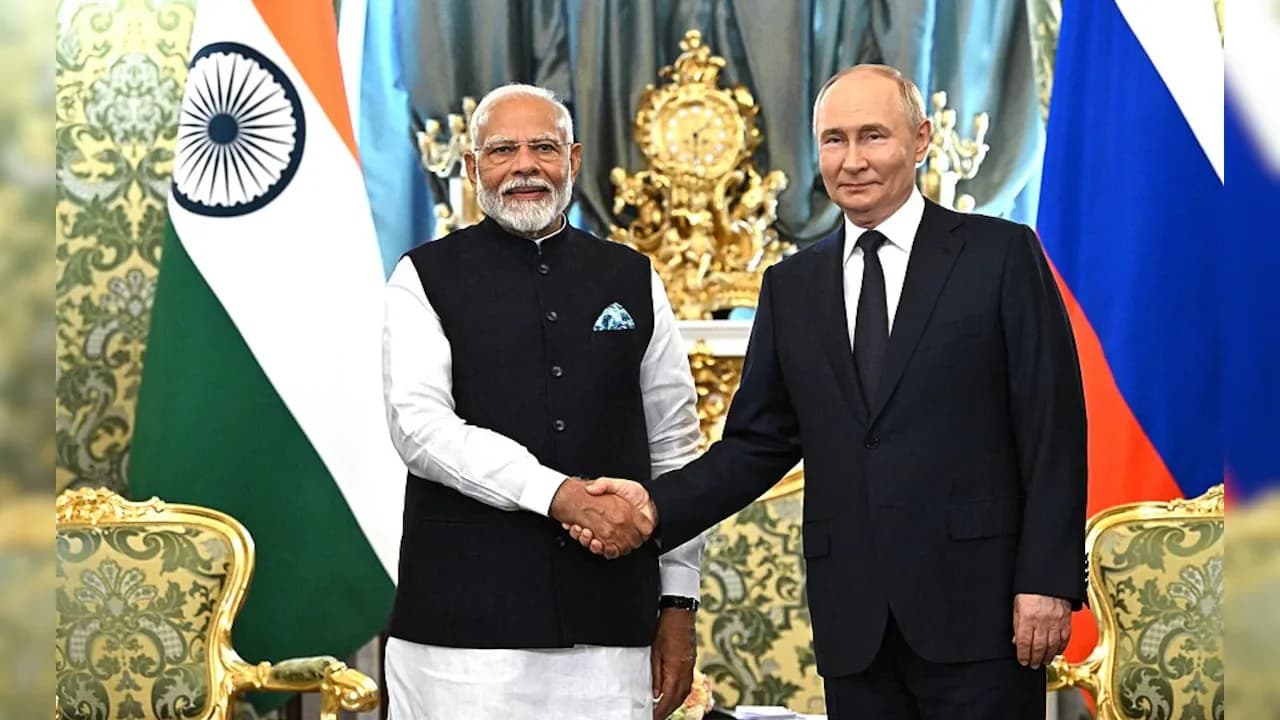
The India-Myanmar-Thailand transnational highway project has received significant momentum following bilateral discussions between Myanmar President U Min Aung Hlaing and Thailand Prime Minister Anuthin Chawirakorn during the former's official visit to Thailand from August 6-7, 2026. According to reports from Essential Business Intelligence, the 1,360-kilometre strategically important road project connecting Moreh (Manipur, India) to Mae Sot (Thailand) via Myanmar received fresh commitment during their official meetings. The highway, first conceptualised in 2002, is rooted in India's Act East policy to boost regional trade, tourism, and economic activity through connectivity with ASEAN. As per the joint statement, the leaders categorically reaffirmed their commitment to strengthening the transport network through improved transport and infrastructure links, with the Act East Policy placing the North Eastern Region at the centre of India's engagement with Southeast Asia.
The highway project has made significant progress with key sections already completed. As reported by Essential Business Intelligence, the Tamu-Kalewa Highway construction was completed and handed over to the Myanmar government in 2009, while the Kalewa-Yargi highway section from 112 km to 60 km was completed and handed over to the Government of Myanmar in October 2025. The joint statement between the leaders outlined future development areas including the Phu Nam Rong-Htei-Tawei transport corridor development, upgrading the India-Myanmar-Thailand trilateral highway project, and establishing appropriate special economic zones and logistics facilities along the border. These efforts are expected to enhance trade between the two countries and the wider region, with the Thailand-Myanmar Business Forum 2026 providing a platform for private sectors from both countries to meet, exchange business information, and build trade networks, which will further investment cooperation and create new business opportunities in the future.
The leaders also discussed maritime connectivity between Ranong Port and suitable ports in Myanmar, according to the joint statement reported by Essential Business Intelligence. The statement emphasized the importance of developing mutually beneficial maritime connectivity in accordance with bilateral agreements, relevant feasibility studies, and domestic laws. The joint statement specifically mentioned that 'areas for future discussion include the development of mutually beneficial maritime connectivity between Ranong Port and suitable ports in Myanmar, in accordance with the bilateral agreement of both countries, relevant feasibility studies, and relevant domestic laws and procedures, and the promotion of potential commercial coastal shipping services'. Additionally, the leaders expressed the importance of establishing a 'Myanmar-Thailand Transport Network Enhancement Joint Working Group' to coordinate the overall multi-modal connectivity plan, including road, sea, port and cross-border routes, and to harmonize relevant policies, procedures and regulations of the two countries, where appropriate, in accordance with the domestic laws of the two countries.

The high-level discussions serve as a 'Political Signal' reflecting the serious commitment of both governments to promote economic cooperation, especially in reducing trade barriers and facilitating border trade. According to the Department of Foreign Trade, the Myanmar president's visit to Thailand is not merely a reciprocal high-level visit but a crucial opportunity to lay the foundation for a new economic cooperation that could lead to the recovery of Thailand-Myanmar border trade and drive stable and sustainable growth of the border economy. Thailand's proposal to hold the Joint Trade Commission (JTC) meeting within 2026 has emerged as a vital mechanism to systematically discuss and address trade obstacles, including improving import procedures, reducing non-tariff measures, facilitating customs operations, and developing logistics networks and border trade connectivity. The Thailand-Myanmar Business Forum 2026 provides a dedicated platform for private sectors from both countries to meet, exchange business information, and build trade networks, which will further investment cooperation and create new business opportunities in the future.
Once completed, the highway will connect India's northeastern states directly to Southeast Asian markets, as reported by Essential Business Intelligence. The project is considered a game changer in India's neighbourhood policy in engaging with the Association of Southeast Asian Nations. Plans exist to extend the corridor further into Laos, Cambodia, and Vietnam, expanding the connectivity beyond the initial India-Myanmar-Thailand route. The joint statement added that 'these efforts are expected to enhance trade between the two countries and the wider region, facilitate logistics facilities, facilitate trade and investment, and strengthen connectivity'. The two leaders also welcomed the support of Thailand's Neighbouring Economic Development Assistance Agency for Myanmar's infrastructure development, with both sides underlining the importance of connectivity for enhancing people-to-people contacts and agreed to work towards the early completion of the Kaladan Multi-Modal Transit Transport Project and the Kalewa-Yagyi segment of the India-Myanmar-Thailand trilateral highway. The highway is expected to improve India's access to ASEAN, one of its largest trading partners, with India's exports to ASEAN increasing to about US$44 billion in 2022-23 from US$42.3 billion a year earlier, while imports rose to nearly US$87.6 billion from US$68 billion during the same period.