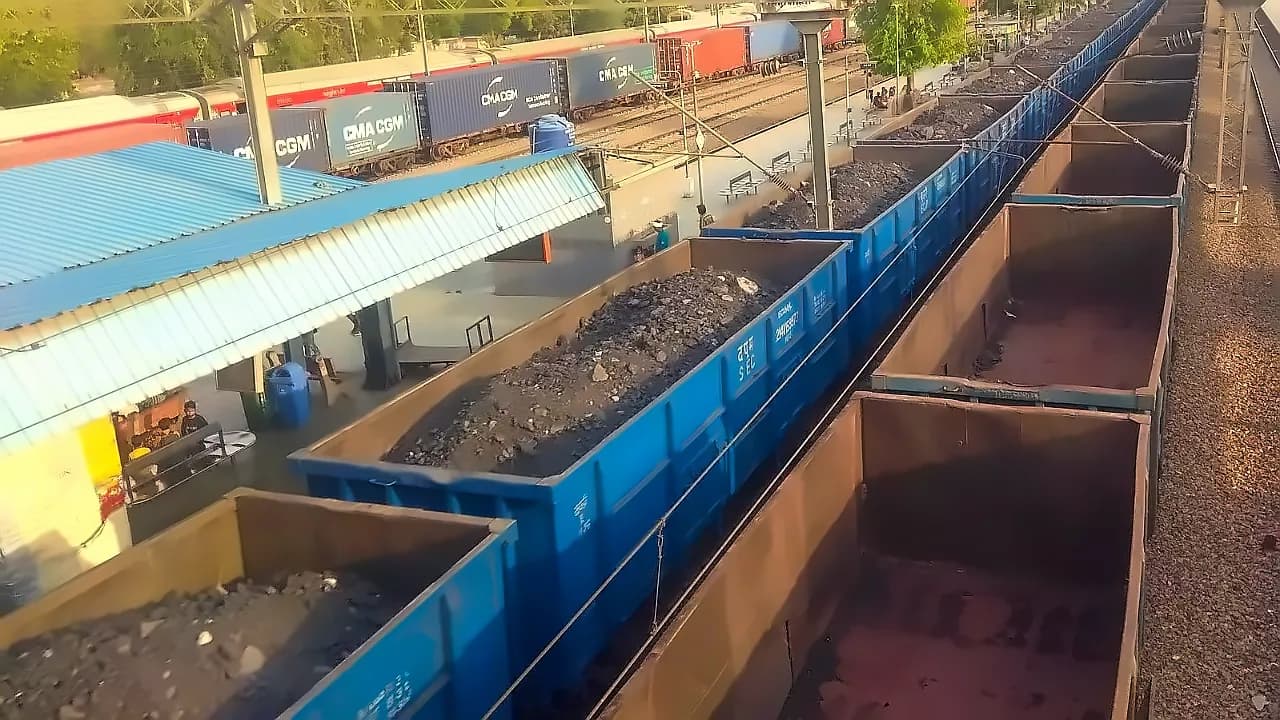
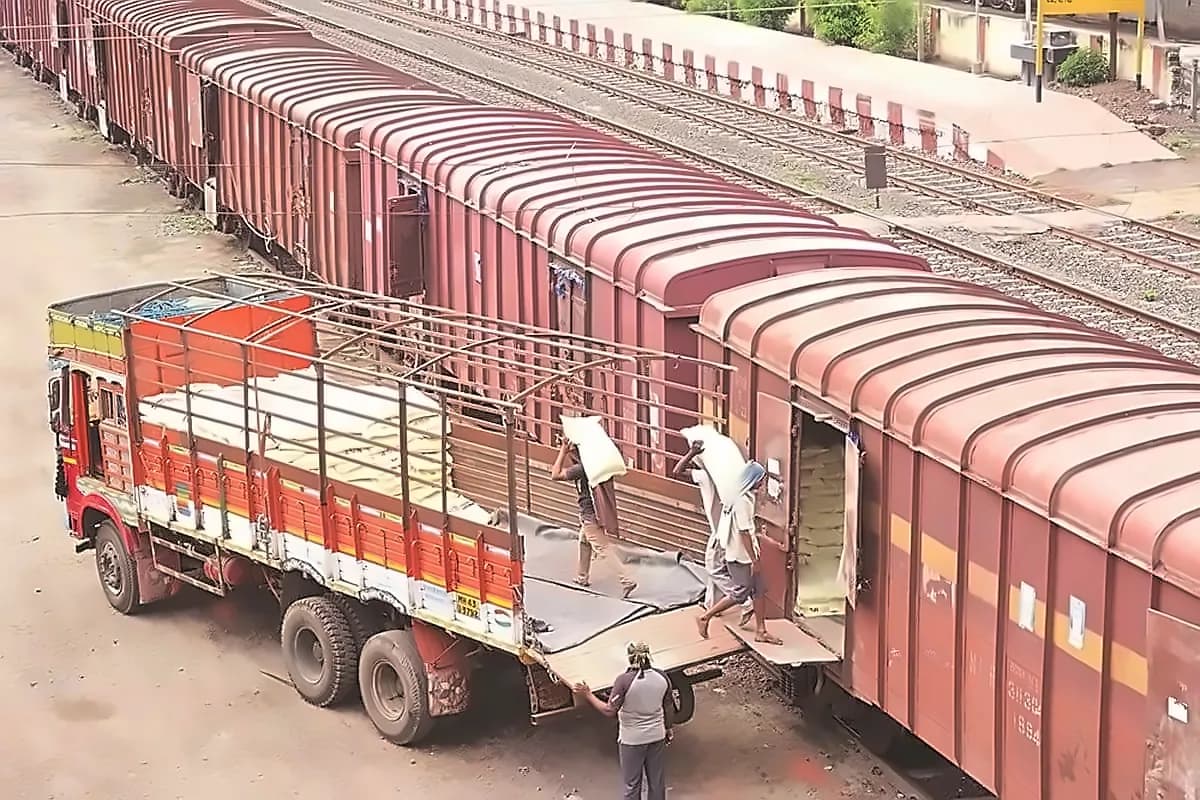
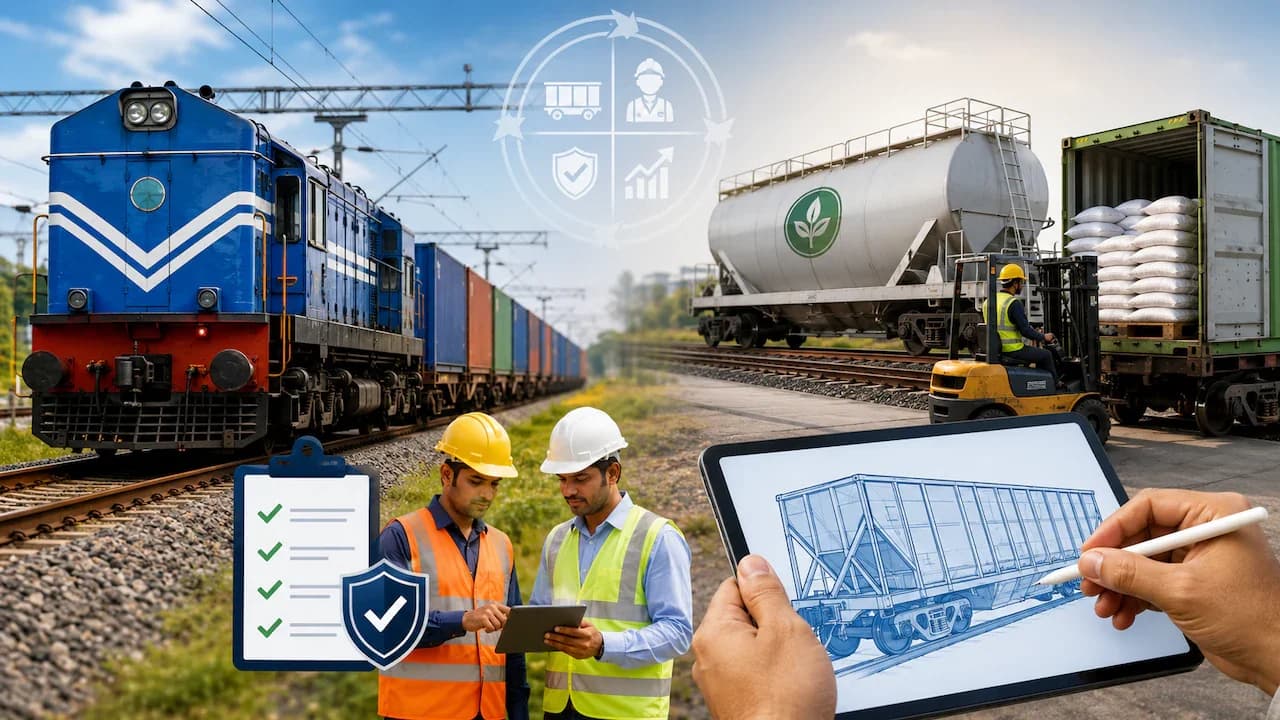
Indian Railways has simplified freight policies for key commodities and introduced new wagon norms to improve cargo movement and execution. According to Railway Minister Ashwini Vaishnaw, the national transporter has introduced a new freight structure under which charges have been simplified to a per-tonne-per-kilometre basis with a rationalised tariff structure comprising three variations, replacing the earlier system of 50 rate slabs that complicated operations. The ministry has also launched a similar simplification and containerisation programme for the transportation of foodgrains, pulses and flour as well, allowing distributors to store individual containers at rake points and distribute them on demand, preventing product contamination and rake detentions. Additionally, Indian Railways has removed structural barriers governing design and induction of petroleum tank wagons, allowing oil companies to procure specialised petroleum, oil, and lubricant (POL) tank wagons directly or lease them through leasing agencies for specialised requirements, removing the dependency on railway-owned fleets.
Indian Railways announced the introduction of specialised covered containers for transporting fly ash, addressing environmental concerns while making transportation more viable for industries. According to Railway Minister Ashwain Vaishnaw, India generates around 340 million metric tonnes of fly ash annually, of which nearly 96 million metric tonnes is utilised by the cement industry. However, only 13 million metric tonnes, or about 4 per cent of total fly ash generated, is currently transported by rail. The new containers feature top-loading capabilities and will reduce pollution during loading, storage and unloading while enabling easier handling using equipment such as reach stacker cranes. As per the latest announcement, the closed-container system will enable pollution-free transportation, facilitate safe storage within cement plants until the material is required, and significantly improve logistics efficiency. The containers can be loaded directly from power plants through top-loading arrangements and unloaded using side-discharge or pneumatic systems without generating dust pollution. Under the new reform, fly ash will be transported in closed, leak-proof containers that can be unloaded cleanly using air-pressure pneumatic pumps and stored directly inside cement factory premises without causing air pollution.
The Railways introduced a unified all-India licence regime for container train operators under a new framework requiring a single licence to operate across the country with a uniform registration fee of ₹25 crore for all routes. The ministry has also removed renewal fees after 20 years of successful operations and introduced license extensions beyond the initial 20-year period will now be granted free of charge. Previously, container train operators had to navigate four distinct route categories, paying up to ₹50 crore for a Category-I registration, and ₹10 crore for each individual category, with renewal fees of up to ₹25 crore after 20 years for Category I and ₹5 crore for other categories. The reforms also ease regulatory requirements for container train operators and private manufacturers, with the railway now accounting for about 85% of the country's fertilizer movement. Under the revised policy, fertilizers and foodgrains, including flour and pulses, can now be transported in containers to eliminate storage bottlenecks, allowing distributors to store individual containers at rake points and distribute them on demand, preventing product contamination and rake detentions.
Indian Railways tightened contractor eligibility norms for railway projects, requiring contractors to provide upfront performance security of 10 per cent before work begins instead of deductions being made from running bills. Contractors whose pending litigation exceeds 50 per cent of their net worth will not be eligible to bid for railway contracts. Railway Minister Vaishnaw explained that the reforms are intended to improve construction quality while discouraging contractors focused primarily on arbitration and litigation. The reforms are aimed at encouraging serious and capable contractors, improving quality of construction, reducing disputes and ensuring timely completion of railway infrastructure projects. To accelerate project delivery and safeguard contractors from financial delays, key construction reforms have been implemented, with contractors now required to deposit a 10% performance security at the start of the contract, with zero deductions made from subsequent running bills.
The ministry announced a skill certification framework for workers engaged in critical trades such as welding, plumbing, masonry and concrete testing, with the project expected to be implemented across all projects in a maximum of 24 months. Railway Minister Vaishnaw emphasized the importance of skilled workforce development, stating "This project can be implemented across all projects in a maximum of 24 months," while stressing the need for proper training to support India's large-scale infrastructure expansion. The ministry also launched the Rail Bhoomi portal to streamline land acquisition for railway projects, expected to reduce land acquisition timelines by 30-40 per cent, depending on the state. These announcements form part of the Railways' broader roadmap to implement 52 reforms during the year, aimed at improving project execution, modernising freight logistics and enhancing operational efficiency. The portal integrates various Railway applications, including IRPSM, IPAS and HRMS, enabling seamless exchange of information, online processing of major land acquisition stages, efficient workflow management and real-time monitoring through dashboards.