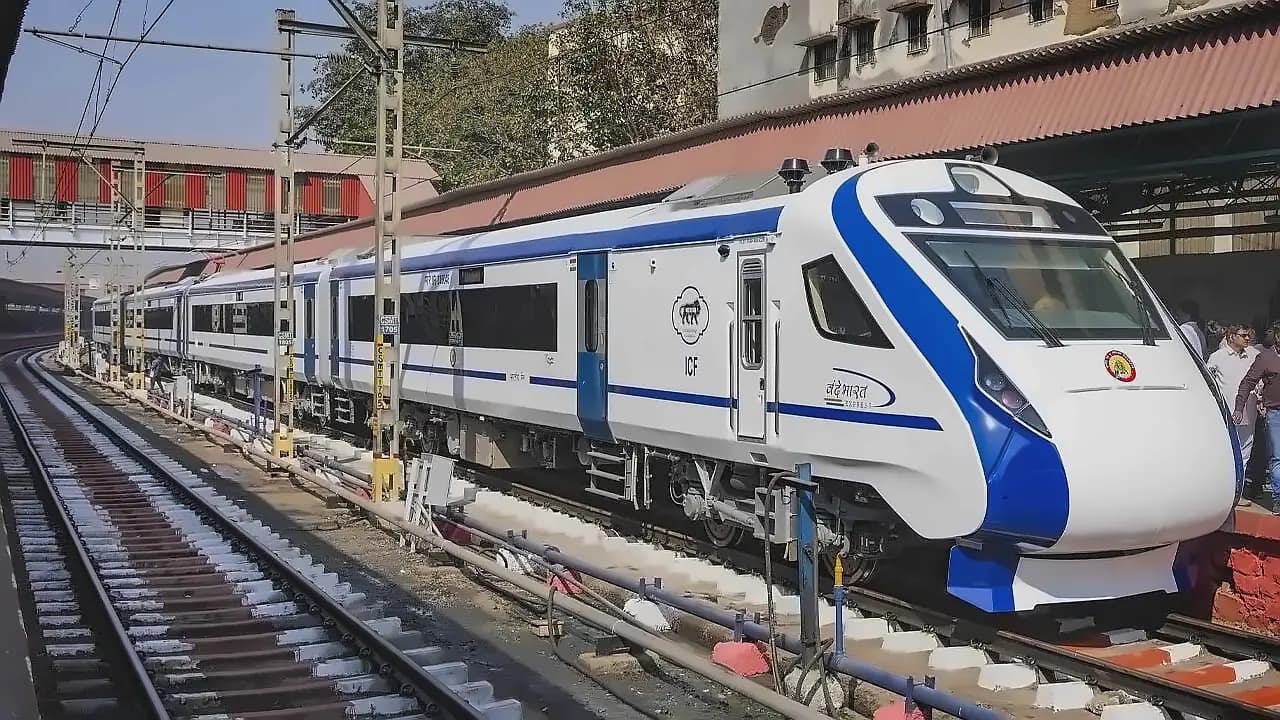
Indian Railways is preparing to roll out one of the biggest changes to its ticket booking system in decades. Beginning in August 2026, train ticket reservations will gradually move to a new Passenger Reservation System (PRS) and replace the platform that has been in use since 1986. According to reports from Zee News, the move is aimed at making ticket booking faster, improving the system's capacity and giving passengers a smoother experience. Union Railway Minister Ashwini Vaishnaw recently reviewed the progress of the project at Rail Bhawan and instructed officials to ensure that passengers do not face any inconvenience during the transition. The high-level briefing was also attended by Ministers of State for Railways V Somanna and Ravneet Singh Bittu. As reported by ITR Filing, the modernization trajectory was finalized following this review, with directives issued to technical wings to ensure zero operational downtime or traveler disruption during the multi-stage system cutover.
One of the most significant additions to the railway booking ecosystem is an artificial intelligence-based waiting list prediction tool that has undergone substantial improvements. According to the Railways, the accuracy of this prediction system has significantly improved from an initial accuracy rate of around 53 percent to 94 percent. The feature estimates the chances of a waiting-list ticket getting confirmed, helping passengers make travel plans with greater confidence before their journey. The next-gen PRS natively integrates a machine-learning algorithm designed to calculate the exact mathematical probability of a waitlisted ticket transitioning to "Confirmed" status, building on predictive models trialed earlier this year. The system upgrade fully synchronizes with newly introduced consumer policies, including the recently authorized 30-minute window allowing commuters to digitally alter their designated boarding stations post-chart preparation.
The new reservation platform has been built using modern enterprise technology and can handle a much larger volume of bookings compared to the existing system. Railway officials believe it will offer faster processing and better performance as the number of digital users continues to rise. As reported by Zee News, the existing PRS was introduced in 1986 and has served as the backbone of railway ticket bookings for nearly four decades, with upgrades added over the years but the core system largely continuing in the same form. In contrast, the upcoming platform has been entirely re-engineered to handle the massive volumes of traffic typical of contemporary digital commerce. According to ITR Filing, the rebuilt cloud-native architecture introduces key upgrades tailored to heavy traffic handling and data-driven passenger utilities, with the core database architecture structurally expanded to eliminate systemic crashes during high-velocity windows such as the daily opening of Tatkal booking quotas.
The way people book train tickets has changed significantly since Indian Railways introduced online ticket booking in 2002. According to railway data reported by Zee News, nearly 88 percent of all ticket bookings are now made online. The RailOne app, launched in July 2025, has been a major component of Indian Railways' digital push and has crossed 3.5 crore downloads in less than a year. Railway officials say the app is being used extensively across the country, with around 9.29 lakh tickets booked through it every day. The app serves as a centralised digital portal enabling travelers to secure or cancel berths, monitor train schedules in real time, view platform and coach arrangements, file service grievances and access peripheral amenities. Railways data shows around 9.29 lakh tickets are booked daily through the app, including 7.2 lakh unreserved tickets and 2.09 lakh reserved tickets. The transition highlights a massive behavioral shift among Indian commuters toward digital-first booking channels.
The phased rollout will begin gradually across select zonal operations in August to monitor database stability before a complete nationwide transition is executed. As reported by ITR Filing, this approach ensures that the system can handle the massive passenger volumes while maintaining operational integrity. The legacy Passenger Reservation System architecture was initially commissioned in 1986 and has undergone incremental updates, including the introduction of internet-based ticketing in 2002, but the underlying core framework has struggled under the weight of modern digital demand. With the launch of the new PRS from August, Indian Railways hopes to make ticket booking faster, smarter and more dependable for hundreds of millions of rail travelers nationwide, featuring enhanced booking capacity and elimination of peak-hour transactional bottlenecks. The railways is also moving towards advanced chart preparation, with reservation charts for trains departing before 2 pm expected to be prepared by 9 pm on the previous day, reducing uncertainty for waitlisted passengers and giving travellers more time to make alternate arrangements.