The Indian hospitality sector is in the middle of a fascinating showdown. On one side stands Indian Hotels Company, a giant with a pan-India network and the iconic Taj brand. On the other is Leela Palaces Hotels & Resorts, a pure luxury player chasing explosive growth. Meanwhile, Oriental Hotels, an IHCL group company, is trying to find its footing in the South. The recent Q1 FY27 results and Q2 updates reveal a story of resilience, pricing power, and strategic bets on the coming months.
The West Asia Shock and Q2 Rebound
The April-June quarter wasn't easy. The US-Iran conflict (which companies diplomatically call the "West Asia crisis") threw a spanner in the works. Higher fuel prices, reduced airline capacity, and expensive airfares hit international travel hard. For IHCL, this meant Dubai properties running at 60-80% of their previous revenue levels, with knock-on effects in Maldives, Sri Lanka, London, and Cape Town because traffic routes through Emirates. Oriental Hotels, with its Southern India focus, saw consolidated EBITDA margins slip to 20.7% from 23.5% a year ago, though standalone profit still jumped 30% thanks to lower finance costs. Transcript
But here's the thing: domestic demand held up remarkably well. IHCL's consolidated revenue still grew 15% to ₹2,419 crore, with domestic RevPAR up 14%. Leela reported that international room revenue, which fell 10% in March, had recovered to +1% by June. The damage was real but temporary. Axis Securities expects a strong Q2 turnaround, driven by improving metro demand and events like the BRICS Summit. IHCL management itself noted that July was trending ahead of Q1, expressing confidence in at least matching that growth. Transcript +2
The BRICS Boost and Metro Momentum
The BRICS Summit in Delhi during September became a significant demand driver, particularly for premium properties. Leela, with about 20% of its palace keys in Delhi, was well-positioned to capture an "outsized share" of this demand, including pre- and post-event stays. Management cited the AI conference as a precedent for the kind of rate compression and optimization such events enable. The result? Leela's Q2 RevPAR surged 30% year-on-year to ₹17,225, entirely driven by a record 30% jump in Average Daily Rate (ADR) to ₹25,046, even as occupancy stayed flat at 69%. Transcript +1
For IHCL, the BRICS impact is less quantified in available transcripts, but the broader metro recovery is clear. Mumbai and Delhi grew 12%, and Bangalore 13% in Q1. Properties like Taj Lands End and Western Taj Mansingh in Delhi are running at 95%+ occupancy, fueled by staycation demand and full weekends. This metro strength is crucial because it's where the corporate and MICE (Meetings, Incentives, Conferences, and Exhibitions) money is. While MICE was subdued in Q1 due to event cancellations, management expects it to pick up in the latter half of the year. Transcript +2
The Wedding Season and H2 Outlook
The industry is now looking toward the second half of the fiscal year with anticipation. The wedding season, concentrated in H2, is traditionally a goldmine. IHCL's management noted that room revenue grew faster than food and beverage in Q1 precisely because wedding dates are bunched in the later months. They expect F&B and MICE to catch up as the year progresses. Palace weddings, booked far in advance, show no sign of slowing down. Transcript +2
Leela expects H2 to be "as strong as historically," citing international business, incentives, and high-impact conferences. The company has reiterated guidance for double-digit RevPAR growth and mid-to-high teens EBITDA growth for FY27. For Oriental, the H2 outlook is less clear in available commentary, but as an IHCL group company, it likely benefits from the group's broader demand recovery. Transcript +1
Leela's Pricing Power vs. IHCL's Scale
Leela's Q2 performance was a masterclass in pricing power. A 30% ADR increase with flat occupancy means the company isn't just filling rooms—it's charging significantly more for them. This is supported by robust demand across retail, corporate, and leisure segments, and a more than 700 basis point improvement in suite occupancy. The non-room revenue (F&B, spas, etc.) exceeds 50% of total revenue, showing a diversified income stream.
IHCL's strategy is different. It's playing the long game with a multi-brand portfolio. Taj sits at the luxury top, but brands like Vivanta, SeleQtions, Gateway, and Ginger cover upscale, mid-market, and economy segments. This diversification provides resilience. Ginger, for instance, grew revenue 20% in Q1 with a 39% EBITDA margin. The Taj brand itself is a powerhouse, ranked India's strongest for five consecutive years with a brand value nearing $900 million. This brand equity helps sustain premium occupancy even during disruptions, as seen in Q1 when domestic demand filled the gap left by international travelers. Transcript +2
The Asset-Light Advantage
Both companies are aggressively pursuing asset-light expansion, but IHCL is further along. About 55% of its operational keys are under management contracts, and a staggering 81% of its signed pipeline is managed. This model boosts operating profitability because managed contracts typically offer higher contribution margins with less capital tied up. CARE Ratings noted this mix "provides boost to its operating profitability" and reduces volatility during downturns. Investor Presentation +1
Leela is also ramping up its asset-light side. Hotel Management Agreement (HMA) fees jumped 76% in Q2, reflecting the "strong ramp-up of managed properties and a growing brand footprint". The company's pipeline includes 1,038 keys across 10 properties, spanning wildlife, heritage, and spiritual destinations.
This shift matters for returns. IHCL's ROCE has climbed to around 17% in recent years, up from 5% in 2017. Leela's management has set a target of high-teens ROCE by FY2029-30, up from 13.5% currently. Asset-light models are key to achieving these goals. Other +1
Financial Strength and Market Validation
The financial markets are noticing. On October 16, IHCL and Oriental stocks rallied up to 6%, hitting 52-week highs, while the BSE Sensex managed a modest 0.38% gain. Leela has been on a tear, with its stock up about 40% over the past year.
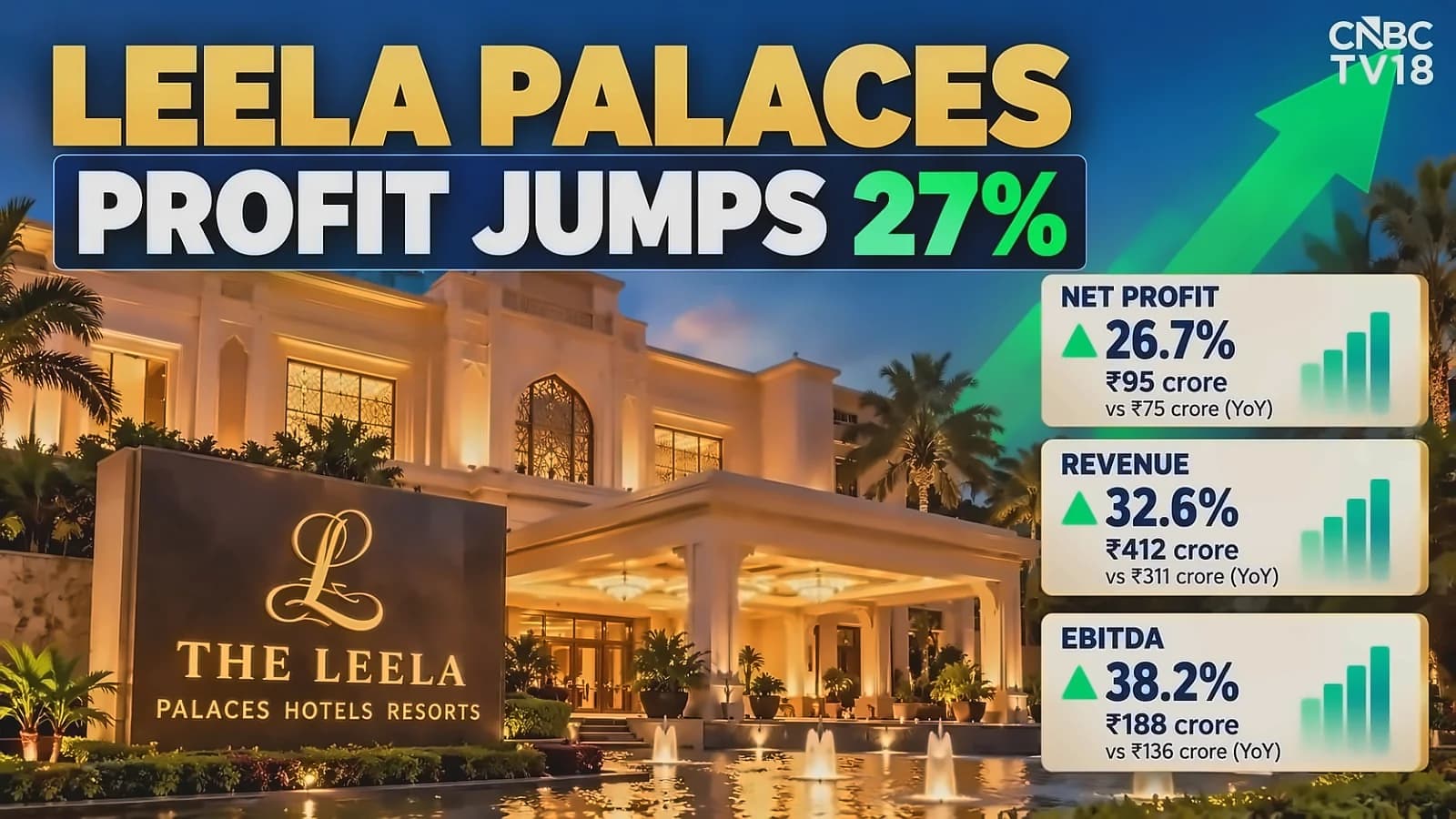
CARE Ratings upgraded IHCL's long-term rating to CARE AAA in October, citing revenue growth of over 3x in four years and a 16.3% jump in FY26. The agency also highlighted the company's robust liquidity, with cash and cash equivalents of ₹4,325 crore as of March 2026, which provides a buffer against sector risks like the Mumbai Port Trust litigation. Axis Securities projects Q2 revenue growth of 12.8% and PAT growth of 20.3% for IHCL. While these estimates are lower than Leela's actual Q2 performance (33% revenue growth, 27% PAT growth), they reflect the challenge of sustaining growth at IHCL's massive scale compared to Leela's smaller, luxury-focused base.
The Trade-Offs
There's no clear winner here, just different paths. Leela's pure luxury focus delivers superior margins and explosive growth when the cycle is favorable. IHCL's diversified, asset-light model offers stability, scale, and resilience across demand cycles. Oriental, caught in the middle, needs to prove it can leverage its IHCL connection to accelerate growth beyond its current Southern footprint.
As the sector moves into the all-important H2 wedding and leisure season, the key watch will be sustainability. Can Leela maintain its 30% rate hikes beyond marquee events? Can IHCL convert its strong metro demand and brand equity into consistent market share gains? The answers will determine who ultimately checks out with the bigger prize.