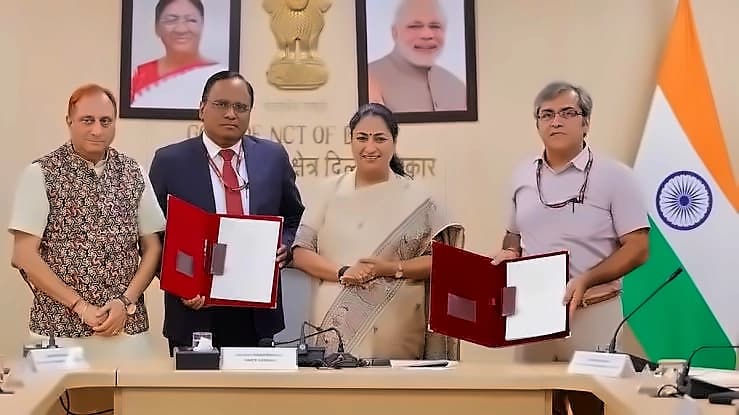
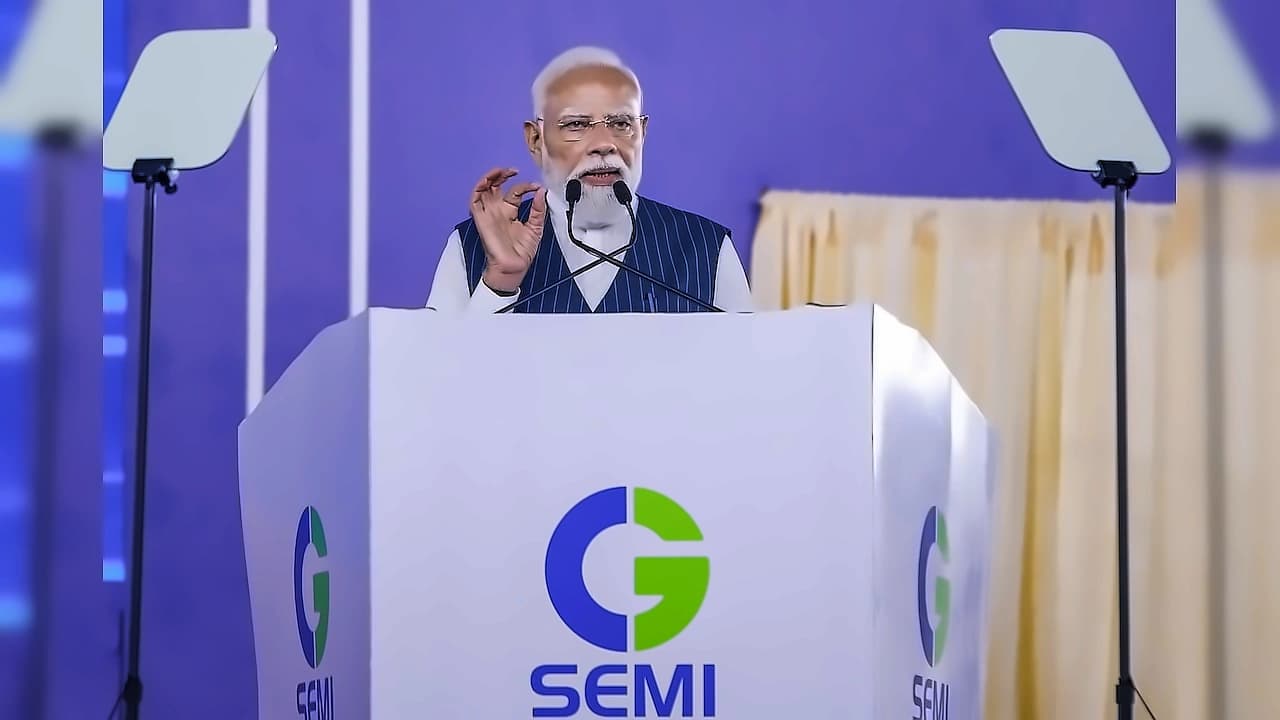
Prime Minister Narendra Modi inaugurated projects worth approximately ₹1.06 lakh crore during his visit to Rajasthan and Gujarat on Saturday. According to reports from Business Standard, Modi inaugurated the country's first greenfield integrated refinery-cum-petrochemical complex in Balotra, Rajasthan, and a semiconductor assembly and test facility in Sanand, Gujarat. The refinery project at Pachpadra in Rajasthan's Balotra was originally scheduled for inauguration in April but was postponed due to a major fire outbreak. Modi dedicated the project by pressing a remote button after touring the refinery complex, with Governor Haribhau Bagade, Union Petroleum and Natural Gas Minister Hardeep Singh Puri, and Chief Minister Bhajnlal Sharma present on the occasion.
The inauguration comes at a crucial time for India's energy landscape, as the country imports more than 85% of its crude oil. As reported by The Times of India, PM Modi highlighted how 60% of India's LPG requirements were met through imports, with 90% of that supply coming from Gulf nations, passing through Hormuz, when war conditions brought supply to a near-halt. The 9-million-tonnes-per-annum (mtpa) refinery-cum-petrochemical complex has been developed as a joint venture between Hindustan Petroleum Corporation Ltd (HPCL) and the Rajasthan government, built at an investment of over ₹79,450 crore. The complex features a petrochemical production capacity of 2.4 mtpa and is expected to transform the economy of western Rajasthan and emerge as one of the country's largest integrated refinery-cum-petrochemical complexes. The project's ability to process multiple grades of crude gives India greater flexibility to source oil from Russia, the Gulf, the United States and other suppliers depending on prices and geopolitical developments.
Modi laid the foundation stone for Phase II of the Jaipur Metro Rail Project, estimated to cost over ₹13,000 crore. According to Business Standard, the 41-km north-south corridor comprising 36 stations will connect Prahladpura with Todi Mod, linking key industrial, residential and commercial areas including Jaipur Airport, Sitapura Industrial Area, Vishwakarma Industrial Area, SMS Hospital and Vidyadhar Nagar. In Gujarat, the Prime Minister inaugurated the CG Semi Outsourced Semiconductor Assembly and Test (OSAT) facility in Sanand, developed with a total investment of over ₹7,500 crore.
Modi inaugurated the new terminal building of Jodhpur Airport on July 4, 2025, built at a cost of ₹480 crore and designed to handle 20 lakh passengers annually with a peak-hour capacity of nearly 1,000 passengers. As reported by Business Standard, the Prime Minister shared images of the terminal, describing it as a major boost for tourism and connectivity. The terminal, spread over more than 23,000 square metres, is architecturally inspired by Rajasthan's royal heritage and blends traditional elements such as arches and jharokhas with contemporary design. Modi also launched the modified UDAN scheme from Jodhpur, which carries an allocation of ₹28,840 crore over the next decade to develop 100 aerodromes from existing unserved strips with an investment of over ₹12,000 crore. According to The Times of India, Modi congratulated around 54,000 people in Rajasthan who received government appointment letters across various departments.
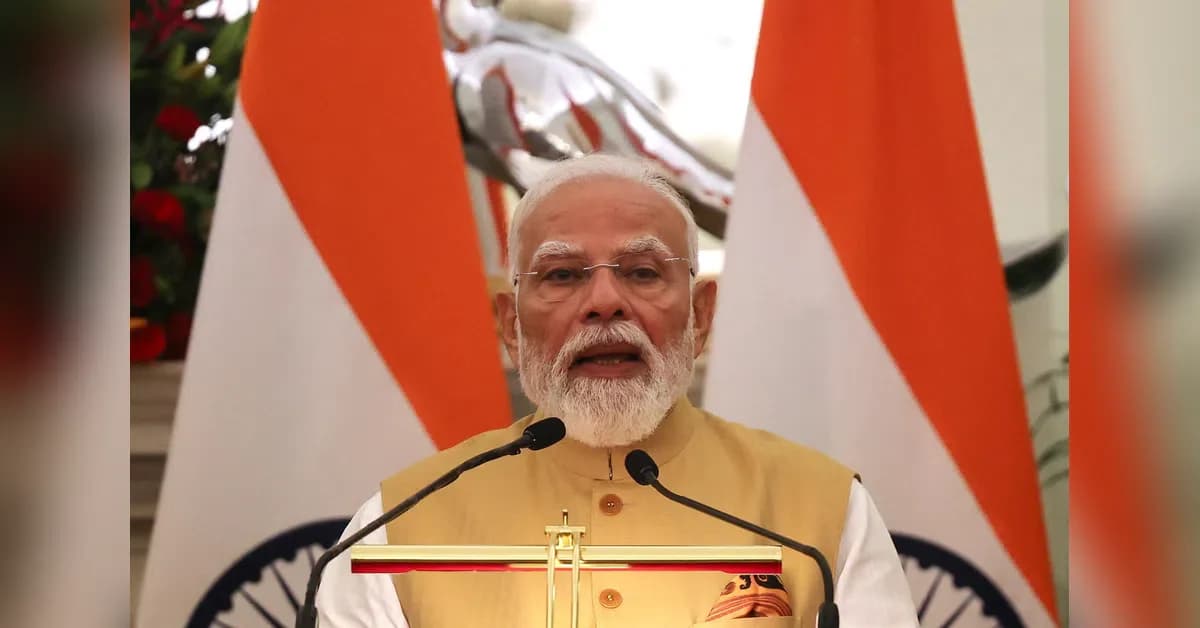
Union Petroleum and Natural Gas Minister Hardeep Singh Puri described the refinery as far more than an infrastructure project, emphasizing its strategic importance for India's energy security. As reported by The Times of India, Puri highlighted that no greenfield refinery had been built in the United States in the last 50 years, while Europe's refining capacity continues to decline by 2 lakh 20 thousand barrels per day. In contrast, India's refining capacity is set to increase from around 270 million metric tonnes per annum to between 310 and 320 million metric tonnes by 2030. Puri credited India's quick response to the Hormuz disruption, where domestic LPG production increased from 35,000 metric tonnes to 54,000 metric tonnes within seven days, while the government connected over 1.1 million households to PNG and ensured domestic LPG cylinders remained available for less than ₹950 despite market predictions of ₹2,000.