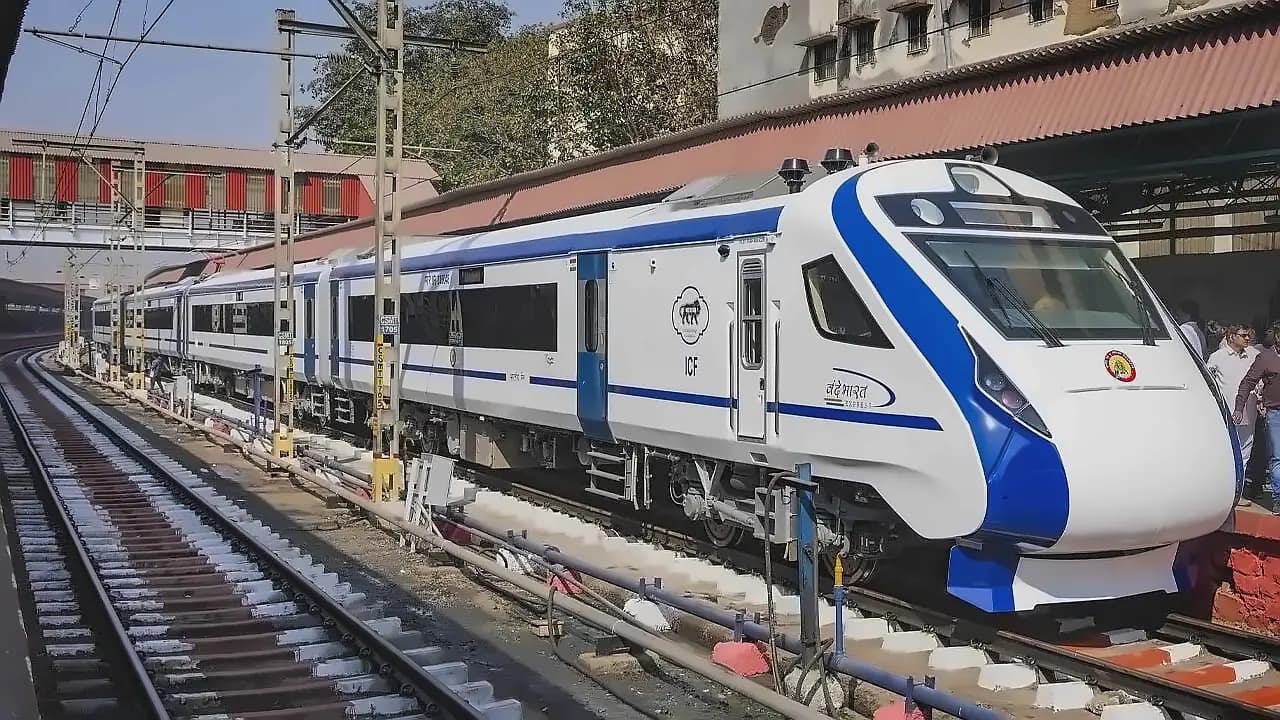
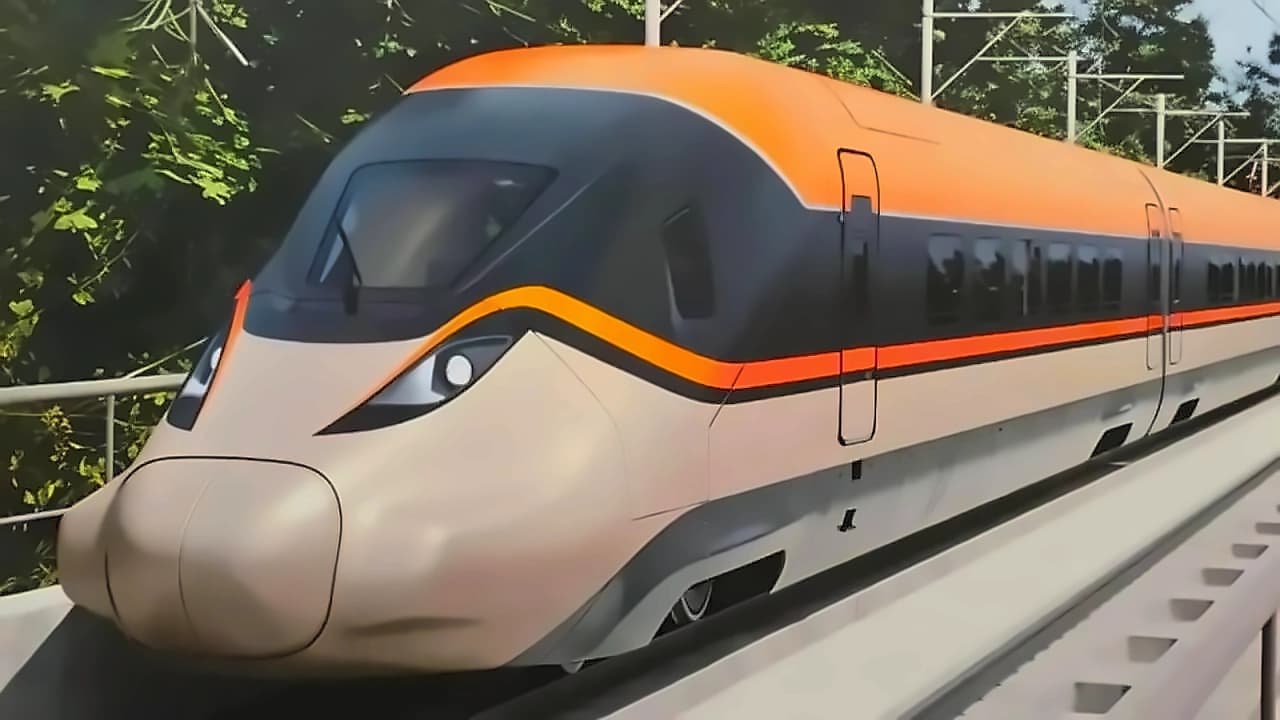
The National High-Speed Rail Corporation Limited (NHSRCL) is deploying advanced railway technology on India's first bullet train corridor, the 508-km Mumbai-Ahmedabad High-Speed Rail corridor. According to reports from Moneycontrol, the technology includes a specialised track mechanism known as a canted turnout, designed to maintain stability during track changes while allowing high-speed trains to switch between tracks smoothly at speeds of up to 320 km/h. The system is being used as a solution to the major challenge of changing tracks at high speed, where conventional trains generally need to significantly reduce their speed while changing tracks. The canted turnout technology maintains the required inclination, or cant, of the track even at the section where the train changes tracks, helping reduce sudden forces acting on the train and its wheels. As per NDTV, this helps reduce sudden changes in forces acting on the train and its wheels, ensuring that even when travelling at hundreds of kilometres per hour, passengers can experience a smoother and more comfortable track change.
On conventional railway networks, trains generally need to slow down significantly when switching tracks due to flat turnout designs that do not provide the same banking found on standard curved sections. As reported by Moneycontrol, when a train passes through a flat turnout at high speed, passengers can experience sudden lateral forces that cause vibrations and discomfort while increasing stress on the train and track. Conventional turnout designs present significant challenges for high-speed rail operations, making specialized solutions necessary for safe and comfortable passenger travel. The conventional section of railway track that allows a train to shift from one track to another is not constructed with a uniform gradient, and when a train's wheels encounter a sudden change in track geometry, this can generate greater forces and cause vibrations and discomfort for passengers. According to NDTV, at higher speeds, this can result in increased forces, vibration and passenger discomfort, making conventional trains have to slow down considerably when negotiating certain track changes.
A canted turnout addresses these challenges by maintaining the track's banking profile through the turnout where tracks diverge. According to Moneycontrol, on conventional curves, the outer rail is raised relative to the inner rail to counteract outward forces generated when trains travel around curves at speed. The canted turnout maintains this elevation profile through the switching section, allowing high-speed trains to switch from one track to another while gradually managing lateral forces and improving stability during transitions. As per NDTV, on a normal curve, the outer rail is raised relative to the inner rail, and with a canted turnout, the geometry of the track is designed so that the train can negotiate the transition between tracks while retaining appropriate cant. This system helps reduce vibrations and manage lateral forces as trains move through track transitions, ensuring that even when travelling at hundreds of kilometres per hour, passengers can experience a smoother and more comfortable track change. Under this system, the outer rail is positioned higher than the inner rail on curves, with the inclination helping control the forces generated when a train travels through a curve.
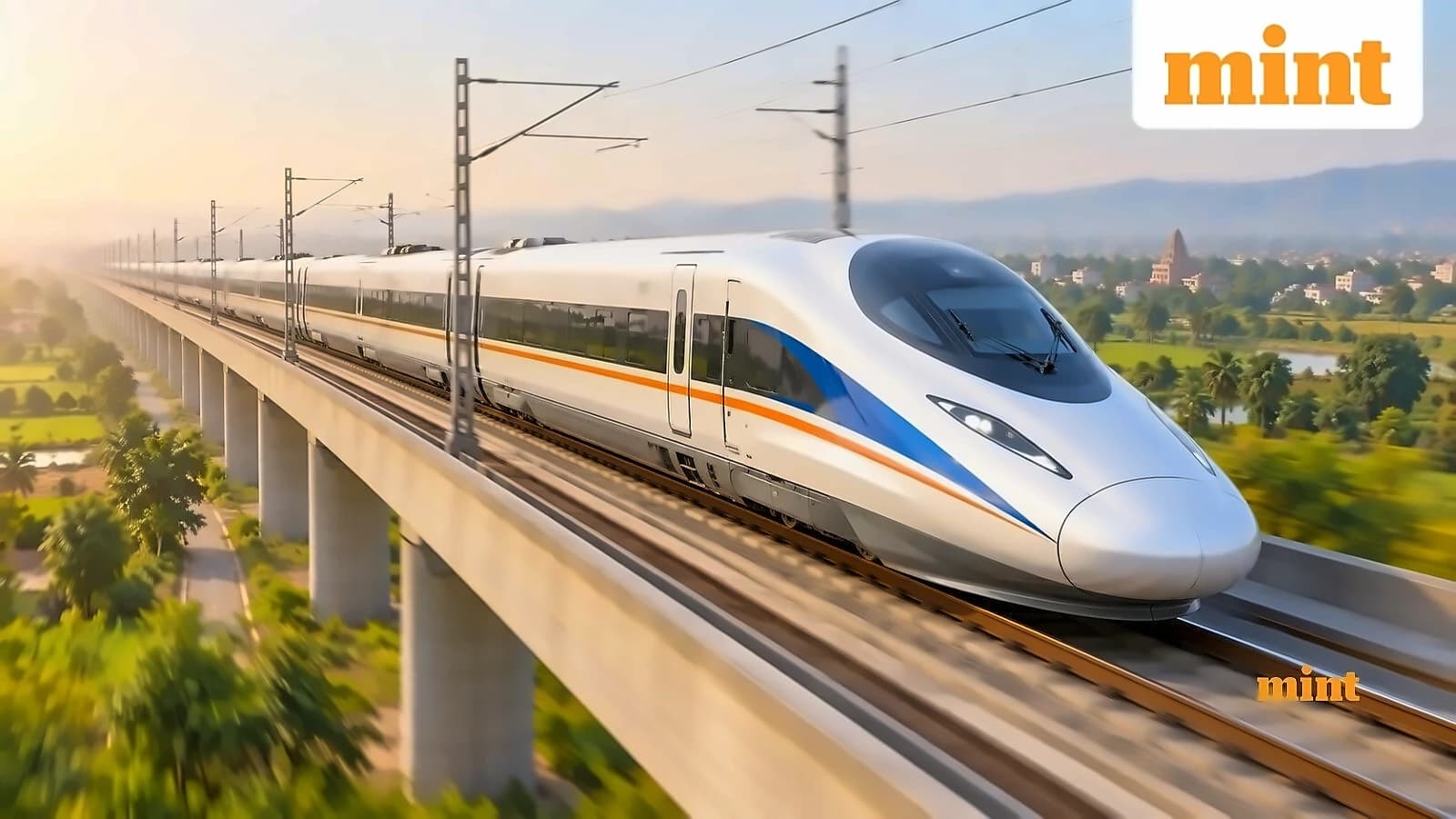
On high-speed rail corridors, turnout and point-machine systems must meet stringent engineering and safety requirements because even small deviations can have greater impact at high speeds. As reported by Moneycontrol, turnouts are sections of track that allow trains to move from one line to another using movable rail components operated and secured by point machines. The Mumbai-Ahmedabad corridor is designed for train speeds of up to 320 km/h, making track geometry and alignment particularly important because small irregularities can generate significant dynamic forces. According to NDTV, the Mumbai-Ahmedabad corridor will operate at speeds of up to 320 km/h, making track geometry and switching systems particularly important. The bullet train project is presently undergoing various tests, including the 'squeeze test', ensuring that the advanced technology meets all safety and operational requirements. NHSRCL has confirmed that components including the car body, bogies, propulsion system, vehicle electronics, wheels and pantograph are being tested during this phase.
According to the latest project information, construction of the first section is targeted for completion by December 2026. The government aims to commence the first service on the approximately 100-kilometre Surat–Vapi section on August 15, 2027, with the train expected to cover this distance in around 20 minutes. The entire 508-kilometre corridor from Bandra-Kurla Complex in Mumbai to Sabarmati in Ahmedabad is targeted for completion by December 2029. The project was officially launched on September 14, 2017 when Prime Minister Narendra Modi and then Japanese Prime Minister Shinzo Abe jointly laid its foundation stone. The canted turnout system helps reduce vibrations and manage lateral forces as trains move through track transitions, potentially helping lower maintenance requirements over time and ensuring that the bullet train experience remains smooth and comfortable for passengers throughout the entire journey. As per NDTV, the technology can also reduce wear on wheels and rails, potentially lowering maintenance requirements over the life of the railway.