Capital expenditure linked to mining and construction equipment is projected to rise from ₹5.5 trillion in 2025 to ₹10 trillion by 2030, according to a joint report by the Confederation of Indian Industry (CII) and Boston Consulting Group (BCG). The report, released at an industry event organised by CII in New Delhi on Tuesday, projects the domestic MCE industry to expand from around $17 billion in 2025 to $180-200 billion by 2047, driven by sustained investments in infrastructure, manufacturing, mining and the energy transition. As per BCG's Managing Director Abhishek Bhatia, "India will go through, over the next 15, 20, 25 years, one of the most comprehensive and one of the largest infrastructure build-outs we have seen in human history."

The technology landscape is rapidly evolving with electrification, connected fleet management, autonomous machines and new ownership models reshaping the global industry. While BEML launched its first electric dump truck in 2025 and Coal India's SECL rolled out real-time fleet monitoring, domestic original equipment manufacturers are lagging behind global leaders. The report emphasizes that keeping pace is crucial not only for export competitiveness but also to ensure Indian infrastructure projects can access the most productive and safest equipment.
Despite overall localisation in construction equipment reaching 50%, the report highlights significant shortfalls in high-value components. Backhoe loaders are 85-90% localised, while excavators stand at 55-60% localisation. The critical shortfall remains in high-value parts such as hydraulics, electronic controls and undercarriages, which are still largely imported. The report flagged China's dominance in critical mineral processing equipment as a strategic vulnerability for India, calling for building a deeper domestic supplier ecosystem to reduce import dependence.
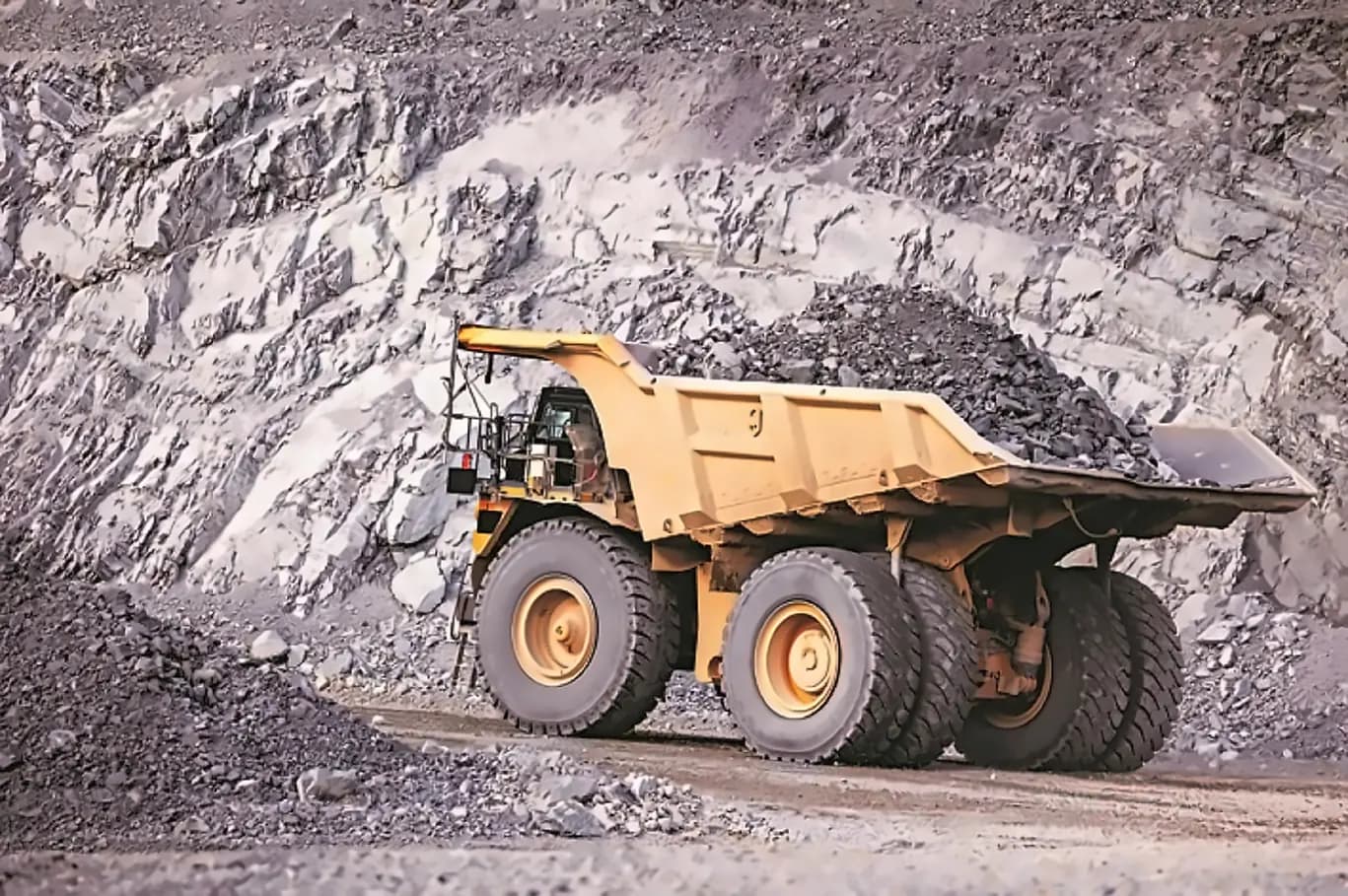
India's mining transition will significantly reshape equipment demand, with the government targeting increasing underground coal production from around 30 million tonnes to 100 million tonnes by 2030, raising overall coal output to 1.5 billion tonnes. The report points to the government's plan to auction more than 100 critical mineral blocks over the next five years under the National Critical Mineral Mission. While surface mining will continue requiring large excavators, shovels and dump trucks, underground mining and critical mineral extraction will increasingly drive demand for specialised equipment such as continuous miners, longwall systems, roadheaders, drill rigs and mineral-processing machinery, much of which India currently imports.
Despite emerging as a net exporter of mining and construction equipment in 2025, India still imports around $4 billion worth of equipment and components annually, particularly specialised underground mining and critical mineral processing machinery. The report recommends India should target a 20% share of the global mining and construction equipment export market by 2047, translating into an export opportunity of more than $75 billion. India's exports have nearly tripled over the past decade to around $4.9 billion in 2025, though the country still accounts for less than 4% of global import demand. The report suggests focusing on Southeast Asia, Africa, the Gulf and South America, while strengthening government-backed buyer financing to compete with Chinese manufacturers.
Speaking at the same event, CII's Mining and Construction Equipment Division Chairman Vivek Bhatia reported that the industry recorded gross sales of more than 140,000 units in 2025-26, up 3% from the previous year, while exports registered a record 31.5% year-on-year growth, reflecting increasing global competitiveness. The growth is driven by accelerated work on national highways, metro rail, ports, airports and critical mineral extraction projects, with the sector's current contribution to India's economy standing at around USD 430 billion, representing close to 11% of GDP and supporting the livelihoods of over 70 million people across the value chain.