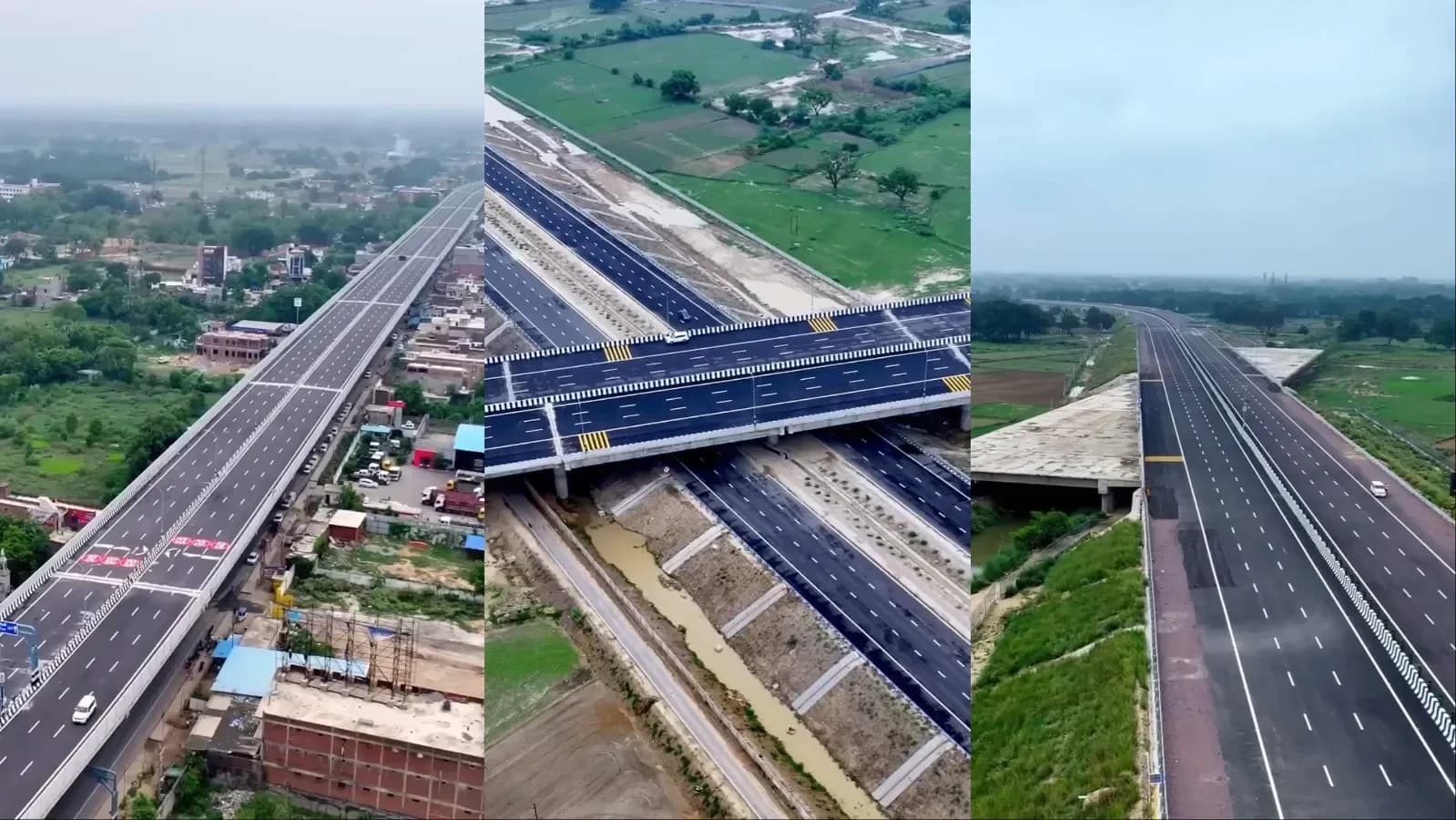
An expert assessment by an IIT Kharagpur professor has identified weak and highly plastic soil as the primary cause of premature failures on the Lucknow-Kanpur Expressway. According to reports from The Times of India, the assessment examined severely damaged portions of the expressway and found that the highway stretch itself did not show any major deficiency in the thickness of its different layers. The report specifically noted that plastic soil, which can be easily moulded when wet, was a significant contributing factor to the structural issues. The expert assessment has now recommended rebuilding the affected stretches from bottom up at places with major depressions and slippage, particularly where tests show that the strength of the underlying soil is substantially below the level assumed in the original design.
The inspection revealed that water getting trapped in deeply depressed sections was restricting proper drainage along the expressway. As reported by The Times of India, this water accumulation was partly attributed to unpaved portions of the shoulders meant for future expansion. The assessment found that water was generally present at the level of the lower concrete layer and in the soil beneath it, but there was no widespread accumulation of water in the upper layers of the road. Waterlogging was primarily concentrated in deeply depressed portions of the expressway. The report has also identified a possible drainage problem near the paved shoulders, where a layer of soil between the concrete drainage layer and the hard shoulders appeared to be restricting the movement of water, potentially slowing its flow into the drainage system.
The expert panel has recommended a detailed survey to identify stretches with weak or highly plastic soil at the earliest, along with tests to assess the actual strength of the highway and determine whether additional strengthening is required. The assessment has stressed that identifying weak soil and addressing the issue quickly would be crucial for preventing further premature failures and ensuring the long-term durability of the expressway. The report also noted that it needed to be examined whether the soil had been inadequately compacted and whether the road's design assumptions about the strength of its base layer were achieved on the ground. The expert emphasized that the presence of water in the soil alone could not explain the kind of failures witnessed on the stretch, with the use of highly plastic soil appearing to be one of the primary causes of the failures.
Toll collection on the entire expressway has been suspended following the structural failures. According to reports from The Times of India, the National Highways Authority of India (NHAI) has set a target to complete the repair works by September end. The suspension of toll operations reflects the severity of the structural issues that have affected the expressway's operational capacity.