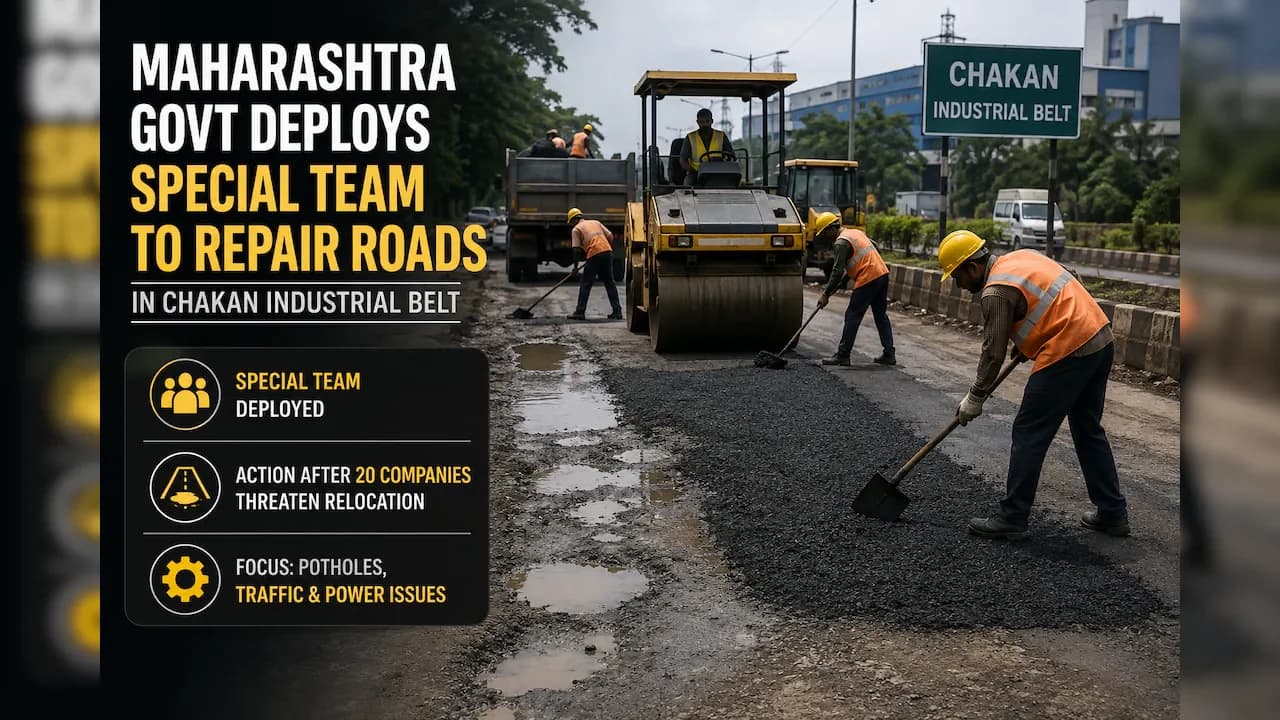
The Maharashtra government has deployed a special team to repair deteriorating roads in Pune's Chakan industrial belt following a severe infrastructure crisis. According to reports from NDTV, 20 companies threatened to relocate out of the area citing severe potholes, traffic congestion and power issues. The move follows a government review of the crisis after industrialists warned they were considering shifting operations out of Chakan over the worsening infrastructure conditions.
Teams are currently levelling damaged road surfaces and shoulders across the Chakan industrial area using advanced polymer techno-patch techniques, aimed at addressing the extensive wear on roads used heavily by industrial traffic. As reported by NDTV, authorities are installing four-tonne M-60 pre-cast concrete patches designed to quickly fill severe potholes while withstanding the weight of vehicles carrying loads of up to 50 tonnes. The technique is intended to provide rapid, heavy-duty restoration capable of handling the scale of industrial traffic that passes through the belt daily.
Chakan, one of Maharashtra's key automobile and manufacturing hubs, hosts a large number of domestic and multinational companies, making the condition of its road network critical to the smooth movement of goods and raw materials. According to NDTV, the threatened exodus had raised concerns over potential job losses and a dent in the region's standing as an industrial destination, prompting swift government intervention. The companies had flagged multiple issues, including traffic snarls and garbage accumulation, alongside the poor state of roads.
Earlier this week, the companies had put their exit plans on hold following assurances from the minister concerned, and the deployment of repair teams marks the follow-through on that commitment. As reported by NDTV, the immediate focus is on road repairs, though the companies had flagged multiple issues including traffic snarls and garbage accumulation alongside the poor state of roads. The government's swift response demonstrates the critical importance of maintaining infrastructure in key industrial zones.