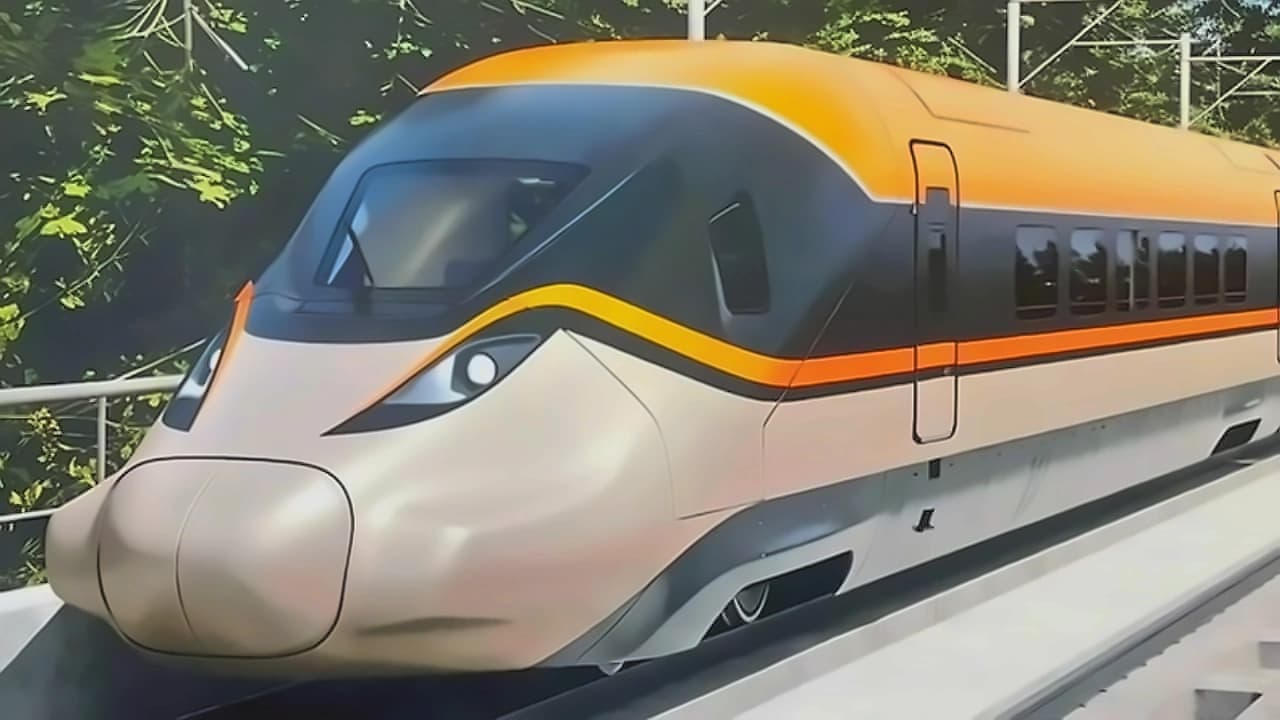
Union Minister Ashwini Vaishnaw announced on Saturday that 60 next-generation trains would be introduced for the Kolkata Metro in the next five years. According to reports from Business Standard, the railway minister made this announcement during a meeting with Chief Minister Suvendu Adhikari at the state secretariat Nabanna. Vaishnaw stated that the government will revamp the Kolkata Metro network as part of this expansion initiative. As per The Economic Times, the minister emphasized that "In the next five years, 60 next-generation trains will be introduced for Kolkata Metro. Today, I took the Kolkata Metro. We will revamp the Kolkata Metro."
The minister highlighted the significant acceleration in Kolkata Metro development since 2014. As reported by Business Standard, Vaishnaw noted that only 28 km of the Kolkata Metro network was completed in 42 years, while 45 km of metro lines have been added since Narendra Modi became Prime Minister in 2014. The railway minister expressed hope that railway projects in West Bengal would receive a fresh impetus under the current double-engine government. According to The Economic Times, Vaishnaw noted that "railway projects in West Bengal will receive a boost" under the current administration. Vaishnaw also alleged that the previous TMC government had blocked development, stating that "the previous government had blocked all forms of development. Prime Minister Narendra Modi has plans for Bengal, and that is evident from the ₹14,205 crore allotted for railway projects in the state. Under the UPA government, Bengal got ₹4,000 crore."
During the same meeting, Vaishnaw outlined ambitious bullet train connectivity plans for West Bengal. According to News18, the minister announced a new bullet train corridor connecting New Delhi to Siliguri via Lucknow, Varanasi, and Patna. If implemented, this project could reduce travel time between the national capital and North Bengal from nearly 20 hours to around six hours, significantly improving connectivity to the northeastern region. As per The Economic Times, Vaishnaw stated that "these high-speed corridors will connect Siliguri with New Delhi in six hours" to sharply reduce travel time between the regions. He also referred to the East-West Dedicated Freight Corridor, stating that "this dedicated East-West freight corridor from Dankuni to Surat will greatly benefit states like West Bengal, Odisha, Chhattisgarh and Madhya Pradesh."
Vaishnaw claimed that railway projects in West Bengal had faced repeated hurdles under the previous TMC regime, which he dubbed "vikas virodhi" (anti-development). According to Business Standard, the minister alleged that "the TMC government, unfortunately, never gave us permission for many projects. In some cases, they even moved courts." He cited the Chingrighata stretch of the Kolkata Metro lines as an example, stating that "For the Kolkata Metro project at Chingrighata, we planned as per the Kolkata Police's advice. Despite that, the TMC moved the Calcutta High Court and later approached the Supreme Court. They did not want commuters to get the benefits of the Metro rail." However, Vaishnaw expressed confidence that the situation has changed following the first BJP government formation in the state last month. As per Business Standard, he noted that "Now, when a change has come in Bengal, it has become our responsibility to fulfil the dreams of PM Modi, and we will work together."
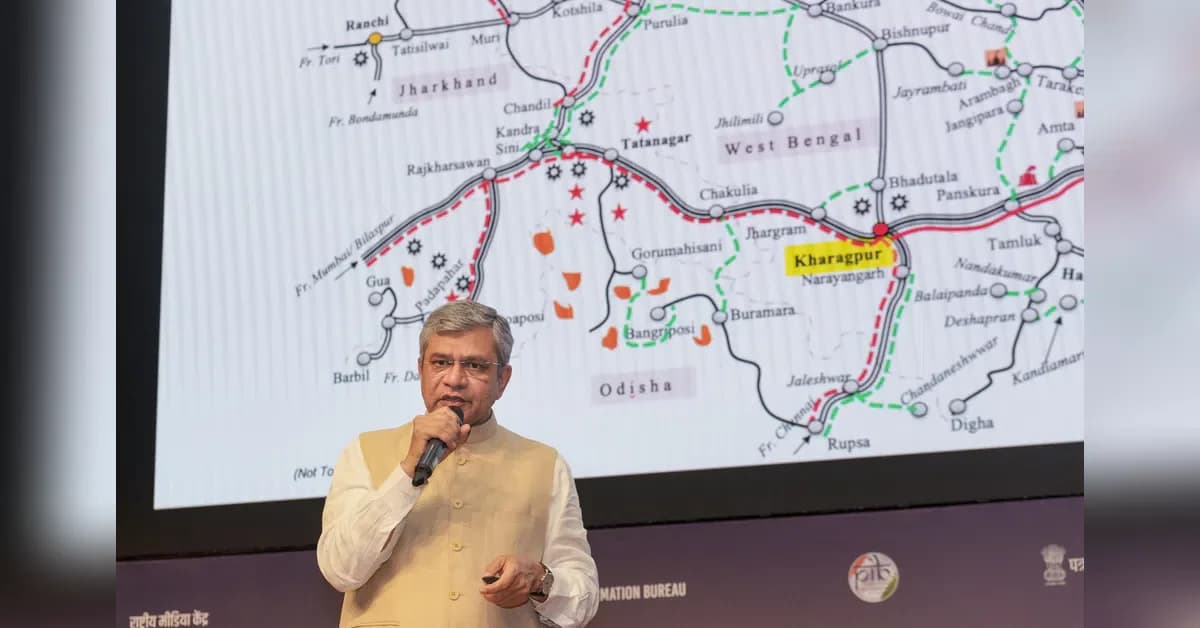
Vaishnaw announced significant infrastructure expansion plans for West Bengal's railway network. According to Business Standard, he stated that "Reconstruction of 102 railway stations will be carried out" and expressed confidence that long-pending procedural bottlenecks were being cleared. The minister highlighted that 100 per cent railway electrification has been achieved in the state and assured continued investment in new trains and infrastructure. He noted that "In the coming days, we will introduce new trains, new stations and facilities." Additionally, Vaishnaw highlighted the expansion of premium train services in the state, stating that "Vande Bharat sleeper train and Amrit Bharat train were first introduced in West Bengal. Today, nine Vande Bharat Express (normal/seater) trains and one Vande Bharat Express (sleeper) train are operational in Bengal, and 13 Amrit Bharat trains."