India's peak electricity demand crossed a significant milestone on Thursday, reaching 270.82 GW at 3:45 pm, marking the fifth consecutive day of record-breaking power consumption. However, the latest data reveals that India's peak power deficit stood at about 2.57 GW late on Thursday evening, according to national regulator Grid-India, indicating supply constraints despite record demand levels. This surpassed the earlier peak of 265.44 GW recorded on Wednesday, and the all-time high of 265 GW that occurred during solar hours the previous day. The current demand level represents a substantial increase from India's previous record high of 256.1 GW on April 25 at 3:38 pm, which was successfully managed without any shortage. The Ministry of Power confirmed that despite the surge, the demand was successfully met without any disruption, indicating improved grid management and supply readiness. The latest figure also surpassed the earlier record of 257.37 GW on May 18, demonstrating the sustained nature of the demand surge.
Several regions are now experiencing power cuts as the record heatwave conditions push electricity demand beyond the system's capacity. Gurugram witnessed one of the worst disruptions in recent days when a fire broke out at a 220-kV transformer substation on Friday (May 22), disrupting electricity supply in several parts of the city and halting Rapid Metro services. As per Business Standard, residents in Faridabad report power cuts lasting more than an hour every day have become frequent in the past week, with some days seeing cuts for two hours. Cities in West Bengal such as Bangaon have witnessed 2–3 hours of power cuts in the past one week, while Prayagraj in Uttar Pradesh is another city where power cuts are frequent. Chennai and other metro cities are also reporting outages, with residents complaining of disruptions making it difficult to work from home. The power ministry has responded by urging citizens to use electricity wisely and judiciously, stating that due to the intense summer, let us all try to use electricity wisely and judiciously. Shortages are particularly chronic during evening hours as supply then relies heavily on thermal and hydropower sources, while daytime demand is partly met through solar generation.
The record power demand coincides with severe heatwave conditions across multiple regions, as reported by the India Meteorological Department (IMD). Thursday marked the fifth consecutive day of heatwave conditions in Delhi, with the IMD stating that heatwave conditions are likely to continue over Delhi during the next seven days. From Friday to May 27, weather authorities have forecast 'heatwave to severe heatwave conditions' for the national capital, New Delhi, along with large parts of northern and eastern India. The India Meteorological Department (IMD) has issued a red alert for 10 districts in Uttar Pradesh, as temperatures climbed above 45 degrees Celsius. The national capital, too, is under the grip of a spell of heatwave conditions, with Thursday recorded as the warmest May night in nearly 14 years. With temperatures crossing 45°C in several regions, the usage of air conditioners, coolers, and fans has increased significantly, particularly in major cities like Delhi, Jaipur, and Lucknow during peak afternoon hours. According to Shyamasis Das from the Centre for Social and Economic Progress, the current year is registering prominent heatwave conditions characterised by El Nino, which has driven up cooling requirements and consequently power demand.
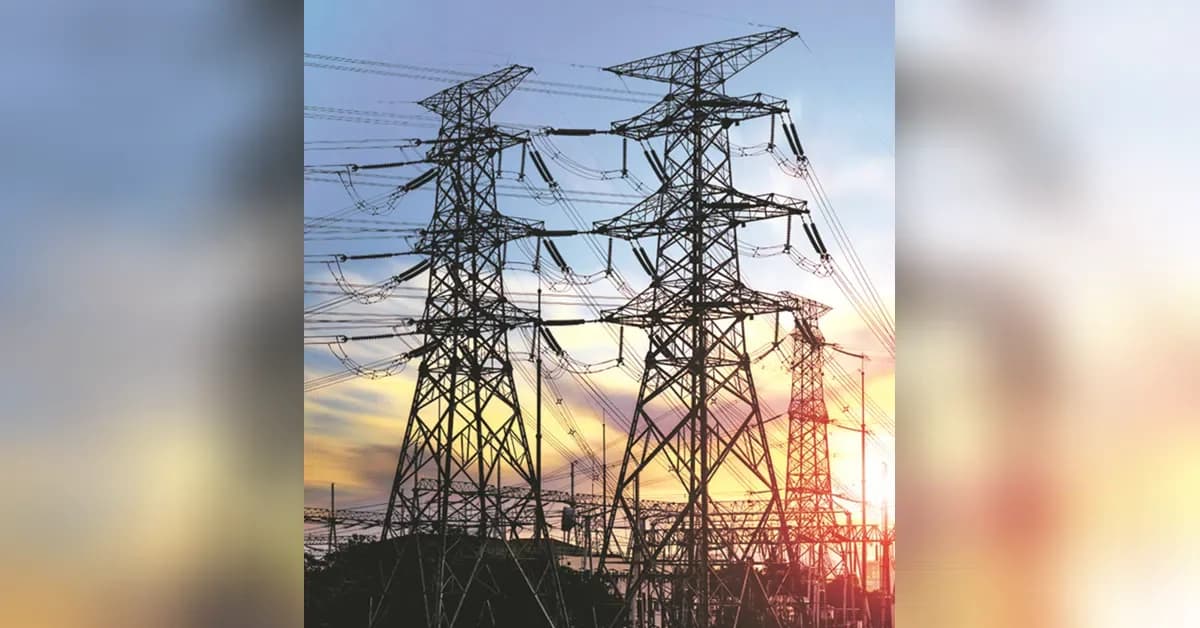
Despite adequate generation capacity at the national level, power outages are occurring due to multiple infrastructure and transmission constraints. Grid India data show 36.2 GW of generation capacity was offline on May 22, primarily due to forced outages caused by equipment failures, according to experts. Ageing distribution infrastructure and transmission bottlenecks are preventing surplus power from reaching deficit regions, as noted by Vibhuti Garg from IEEFA. Demand forecast underestimation is another culprit, with actual growth closer to 9 per cent compared to official projections of around 6 per cent, according to Rohit Vijay from CSEP. The National Load Despatch Centre's Short-Term National Resource Adequacy Plan projected 15–20 GW of unserved demand in May 2026, while PSP reports showed only up to 2.57 GW of shortfall, suggesting a significant gap between actual shortages and officially reported figures. Thermal plants have to run at minimum levels of up to 55 per cent PLF during the day when solar generation is high, but then ramp up sharply in the evening when solar generation falls, causing additional stress on equipment.
The heatwave also pushed Delhi's electricity demand beyond the 8,000 MW mark for the first time this season, with the city's power demand peaking at 8,231 MW on Thursday, the highest ever in the first 21 days of May. BSES stated that its distribution companies are geared up to ensure reliable power supply to over 53 lakh consumers and nearly 2.25 crore residents across South, West, East and Central Delhi. While BRPL met the load of 3,762 MW, BYPL met demand of 1,838 MW. Tata Power-DDL met the season's peak demand of 2,331 MW across its network, implementing advanced technologies including statistical and machine learning forecasting models. The Power Ministry projects that India's peak electricity demand could reach 271 GW this year, with temperatures expected to remain particularly high during the second and fourth weeks of May across northwest, central and western India, along with parts of the east coast. Disha Aggarwal from energy think tank CEEW noted that the record heat and surging electricity demand are testing India's power system, adding that India needs to urgently fast-track commissioning of battery storage systems to utilise surplus solar energy at night.