India achieved a significant milestone in its civil nuclear programme on April 6, 2026, when the 500 megawatt electric Prototype Fast Breeder Reactor (PFBR) at Kalpakkam in Tamil Nadu attained 'first criticality', marking the start of a controlled nuclear fission chain reaction. Prime Minister Narendra Modi termed the development a 'defining step' in India's nuclear journey, noting that it advances the second stage of the country's three-stage nuclear power programme. The reactor was indigenously designed by the Indira Gandhi Centre for Atomic Research (IGCAR) and built by state-run Bharatiya Nabhikiya Vidyut Nigam Ltd (BHAVINI), both under the Department of Atomic Energy. The PFBR represents India's most advanced nuclear reactor to date, designed and built entirely in India by more than 200 Indian industries, including MSMEs. In a social media post, Modi emphasized that the indigenously designed and built reactor reflects 'the depth of our scientific capability and the strength of our engineering enterprise', positioning it as a key step towards harnessing India's thorium reserves under the third stage of the programme.
The criticality was achieved after the reactor met all safety stipulations set by the Atomic Energy Regulatory Board (AERB), which granted clearance following a 'rigorous review of safety of the plant systems', as reported by the power ministry. The criticality was achieved in the presence of Department of Atomic Energy Secretary and Atomic Energy Commission Chairman Ajit Kumar Mohanty, IGCAR Director Sreekumar G Pillai, BHAVINI CMD-in-charge Allu Ananth, and former BHAVINI CMD K V Suresh Kumar. First criticality represents the point at which a reactor becomes self-sustaining, with each fission event triggering, on average, another, signalling that the reactor's core and systems are functioning as designed. Once a sustained nuclear fission chain reaction is achieved, a series of low-power physics experiments will be conducted to further assess and understand reactor behaviour before the reactor is connected to the grid.
The PFBR operates on uranium-plutonium Mixed Oxide (MOX) fuel, which are ceramic pellets made by blending uranium and plutonium oxides together. The plutonium in these pellets comes from the spent, used-up fuel of India's existing first-stage reactors. Surrounding the reactor core is a blanket of uranium-238, the abundant but ordinarily non-reactive form of uranium that makes up 99 per cent of all natural uranium. When intense neutron bombardment from the core strikes this blanket, it converts the otherwise inert uranium-238 into fresh plutonium, which can be extracted and used as new fuel. Unlike conventional nuclear reactors, which use water as a coolant, the PFBR circulates liquid sodium kept molten at around 200 degrees Celsius, which transfers heat far more efficiently and does not slow down the fast-moving neutrons that make this reactor special. The reactor incorporates a negative void coefficient, a design feature in which the nuclear reaction rate decreases if the coolant density drops due to overheating. The PFBR is a pool-type, sodium-cooled fast breeder reactor with a capacity of 500 MWe (1,253 MW thermal) and is designed to create more fuel than it burns, running on mixed oxide fuel combining uranium-238 and plutonium-239, allowing the reactor to convert fertile material into fissile fuel during operation.
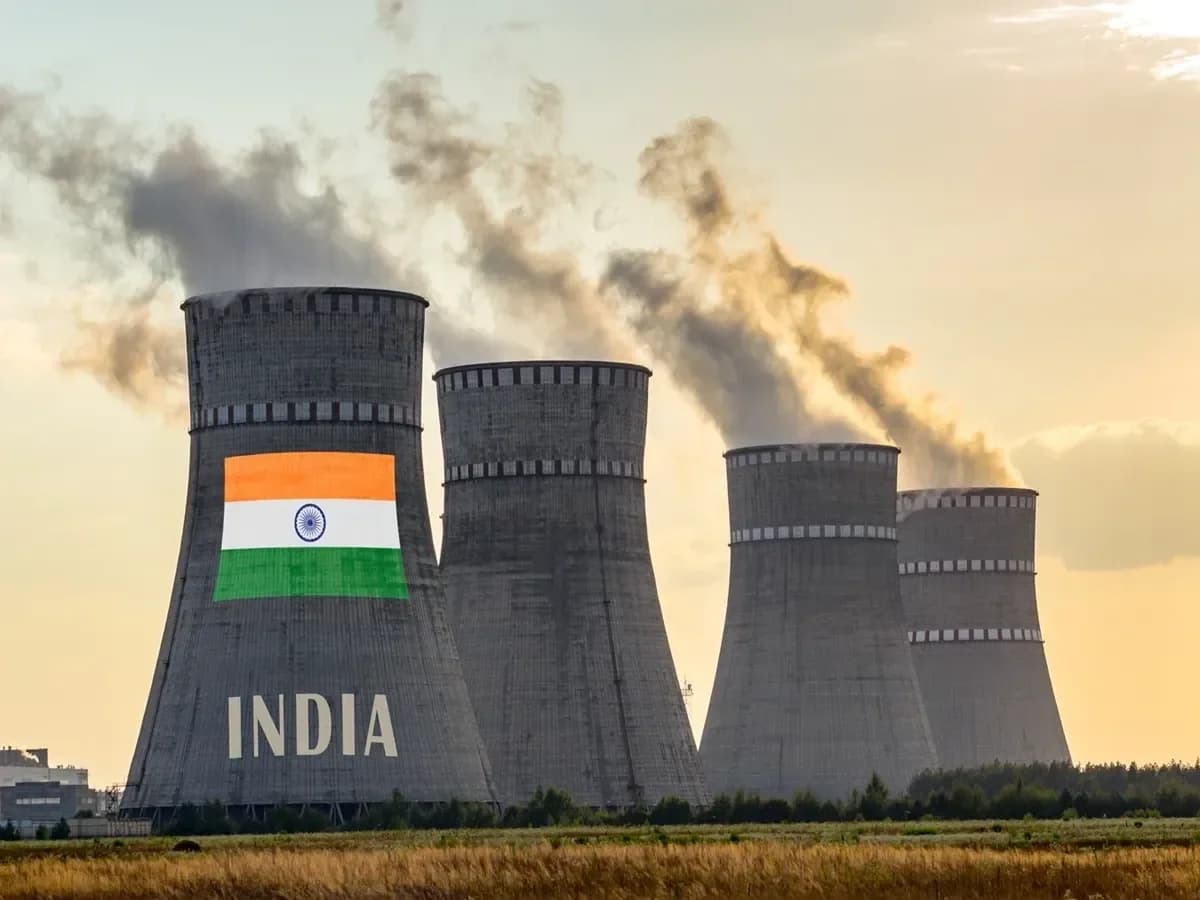
The PFBR is central to India's three-stage nuclear programme, which aims to maximise limited uranium resources and eventually tap the country's vast thorium reserves. The reactor is positioned in the second stage of India's nuclear programme, where it uses plutonium-based fuel to generate additional fissile material. India's nuclear energy strategy is structured in three stages to optimise limited uranium resources and utilise abundant thorium reserves. In the first stage, pressurised heavy water reactors (PHWRs) produce plutonium from natural uranium. The second stage, where the PFBR is positioned, uses that plutonium in fast breeder reactors to generate additional fissile material. The third stage aims to deploy thorium-based reactors that produce uranium-233, enabling a long-term, closed fuel cycle. The PFBR is expected to convert thorium-232 into uranium-233, which is central to this third-stage objective. The Department of Atomic Energy has proposed the construction of additional fast breeder reactors at Kalpakkam after a year of successful PFBR operation, with further reactors planned beyond 2030. India has only around 1-2 per cent of global uranium reserves but one of the largest shares of global thorium reserves at about 25 per cent of the world's known thorium reserves. According to the Indian nuclear establishment, the country could generate a staggering 500 GW of electricity for the next four centuries using only its economically extractable thorium reserves, compared to India's entire current nuclear installed capacity of just 8.18 GW.
The PFBR project has seen significant delays since its inception, with construction beginning in 2004 and initial cost estimates of ₹5,677 crore rising to around ₹7,600 crore. The Atomic Energy Regulatory Board (AERB) granted approval for first fuel loading in July 2024, with core loading activities beginning in March 2024. Government sources and project updates had earlier indicated that first criticality was targeted during the 2025–26 period. The reactor has been designed and built domestically with participation from more than 200 Indian industries, according to government communications. Officials have stated that India is among a limited number of countries to have developed fast breeder reactor technology at this scale, with Russia being the only other country operating commercial-level fast breeder reactors. This milestone strengthens India's push for reliable, low-carbon baseload power with higher thermal efficiency, according to the power ministry, with the development expected to significantly enhance the utilisation of India's limited uranium resources while paving the way for large-scale deployment of thorium-based energy systems.