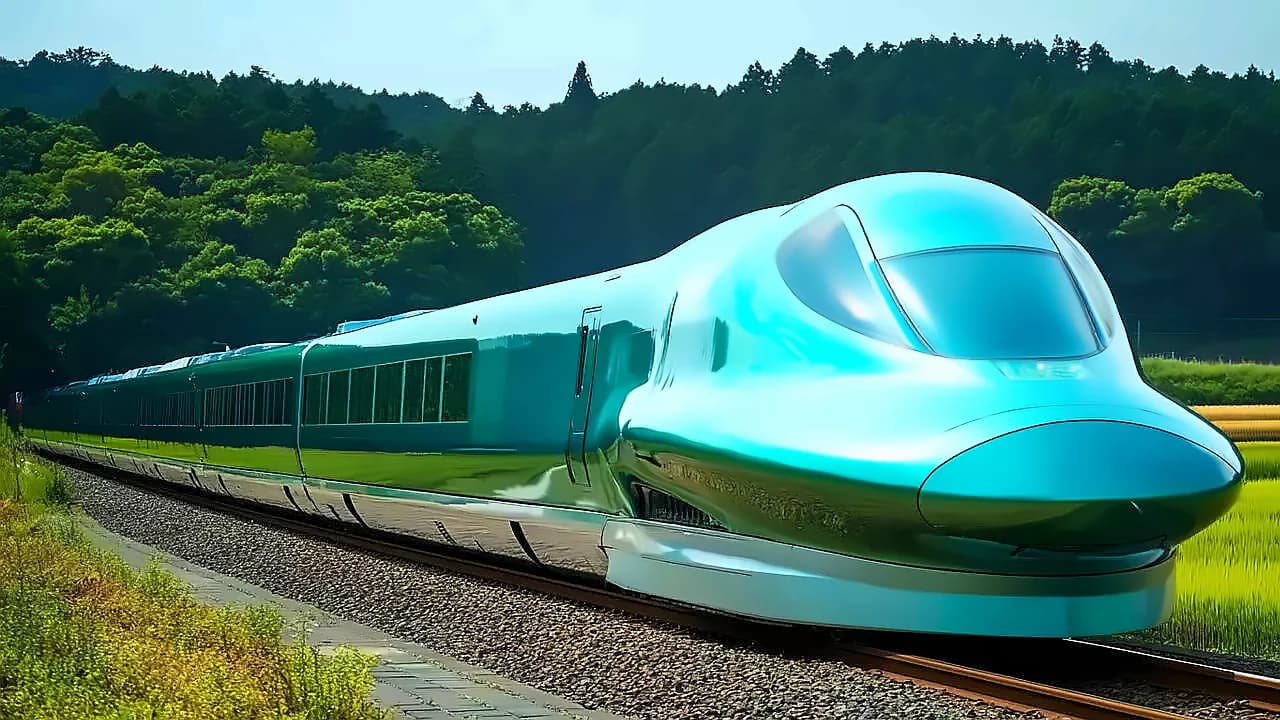
Union minister for electronics and information technology and railways Ashwini Vaishnaw unveiled a comprehensive roadmap for transforming southern India's transportation infrastructure on Tuesday. Speaking at the groundbreaking ceremony of the Google Cloud India AI Hub in Visakhapatnam, Vaishnaw outlined plans for a high-speed bullet train network that will connect Amaravati with Hyderabad, Chennai, Bengaluru, Pune and Mumbai, creating a 'high-speed diamond' for southern India. The minister described this as a 'dream project' that will drastically reduce travel times and establish stronger economic corridors across the region. Vaishnaw emphasized that this connectivity will create a 'high-speed diamond' across southern states, with the bullet train network serving as a foundation for future economic growth and stronger regional connectivity.
The proposed bullet train routes will deliver significant time savings across major southern cities. As reported by ETInfra, the Amaravati-Hyderabad route will take 70 minutes, while the Amaravati-Chennai route is estimated at 112 minutes. The Hyderabad-Pune corridor will be completed in 1 hour and 55 minutes, and the Pune-Mumbai route will take 48 minutes. The Chennai-Bengaluru route will take 73 minutes, and the Hyderabad-Bengaluru route will take 2 hours and 8 minutes. These travel times compare favorably with the Ahmedabad-Mumbai project, which will complete the 500-kilometer stretch in 1 hour 57 minutes. Vaishnaw stated that "the bullet train, the dream project for all of us" and emphasized that "that same magic will now happen in Andhra also, Amravati to Hyderabad in 70 minutes". The Chennai-Bengaluru route is particularly significant for tech professionals, as it will connect the Silicon Valleys of India and reduce commuting time between major technology hubs.
Beyond bullet trains, Vaishnaw announced significant railway infrastructure developments for southern India. According to ETInfra, the South Coast Railway Zone will be notified soon, fulfilling a long-standing promise linked to state reorganization. The minister also outlined plans to expand the existing Kolkata-Chennai double railway line into a four-line network, creating capacity for nearly 500 more trains covering both freight and passenger movement. This upgrade will improve access to ports, tourism circuits and cultural centers across the region. Vaishnaw highlighted that existing double railway lines from Kolkata to Chennai will be upgraded to four lines, enabling the operation of around 500 new trains, including cargo and passenger services. The expansion is expected to significantly improve connectivity to ports, tourism destinations and cultural centers along the eastern coast.
Andhra Pradesh has received substantial increases in railway investment allocation. As reported by ETInfra, Andhra Pradesh alone is now allocated ₹10,134 crore, compared to when Andhra Pradesh and Telangana together received ₹886 crore. The minister highlighted that projects exceeding ₹1,06,000 crore are currently under implementation in Andhra Pradesh, while 74 railway stations are being rebuilt under a larger station modernisation programme. Vaishnaw emphasized that the scale of budgetary support for Andhra Pradesh has grown substantially, with the state set to benefit from the transformative bullet train network that will connect it to major economic centers. The ₹10,134 crore allocation for Andhra alone represents a massive jump from the previous combined allocation, providing the state with the infrastructure boost it desperately needed.
Vaishnaw used the platform to promote domestic technology manufacturing and sustainable practices. According to ETInfra, he urged businesses, including data centre operators, to manufacture servers in India and align with the India AI mission. The minister stressed that data infrastructure growth must be matched by sustainable practices, calling for better power efficiency, lower water consumption, recycling and wastewater utilisation. He emphasized that the government is ready to support industry initiatives in areas such as energy efficiency, recycling, and wastewater use, adding that sustainable practices must be a priority as India expands its digital infrastructure. Vaishnaw called for efforts to reduce water consumption in data centre operations and improve power efficiency, with the government ready to support industry initiatives in these areas. The integration of digital infrastructure and railway connectivity is positioned as a smart move that could make Andhra Pradesh a major tech destination.