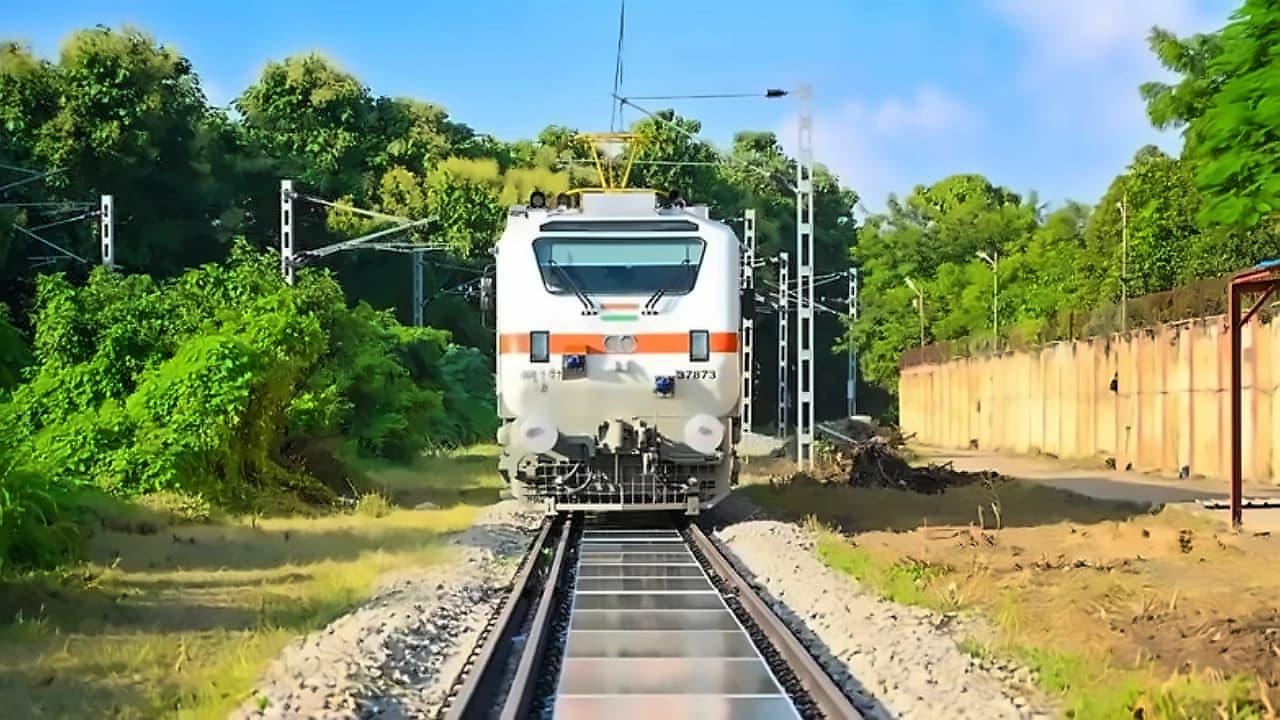
India's first hydrogen-powered train has been officially notified by Indian Railways, with Prime Minister Narendra Modi expected to flag off the service from Jind on July 17. According to state minister Krishan Kumar Bedi, PM Modi will also unveil a series of other infrastructure projects across Haryana during the flag-off ceremony. The hydrogen-powered train will operate on the Jind-Sonipat section of Northern Railway in Haryana, serving as a demonstration project before any wider deployment across the railway network. This project underscores Indian Railways' wider focus on technological innovation, improved energy efficiency and environmentally sustainable transportation, while supporting India's national objectives on clean energy and achieving net-zero carbon emissions.
The hydrogen-powered train features a 1,200 kW hydrogen fuel cell propulsion system that generates electricity through a chemical reaction between hydrogen and oxygen, producing only water vapour as emissions. The train has two driving power cars and eight passenger coaches, with each driving power car generating 1,200 kilowatts (kW) of power, equivalent to about 1,600 horsepower (hp). The train will operate two round-trip daily services between Jind and Sonipat, covering a total distance of 356 km with each one-way journey spanning 89 km. The train has 682 seats and a total passenger capacity of around 2,600, making it suitable for suburban and regional railway services. At maximum passenger load and operating conditions, it will consume about 300 kg of hydrogen per day. The train is designed to safely reach a maximum speed of 110 kmph, though its operational speed on the Jind-Sonipat route will be 75 kmph. The train was built by the Integral Coach Factory (ICF), Chennai, with system integration by Hyderabad-based Medha Servo Drives, while the hydrogen fuel-cell stacks are supplied by Canada's Ballard Power Systems, as India does not yet manufacture them.
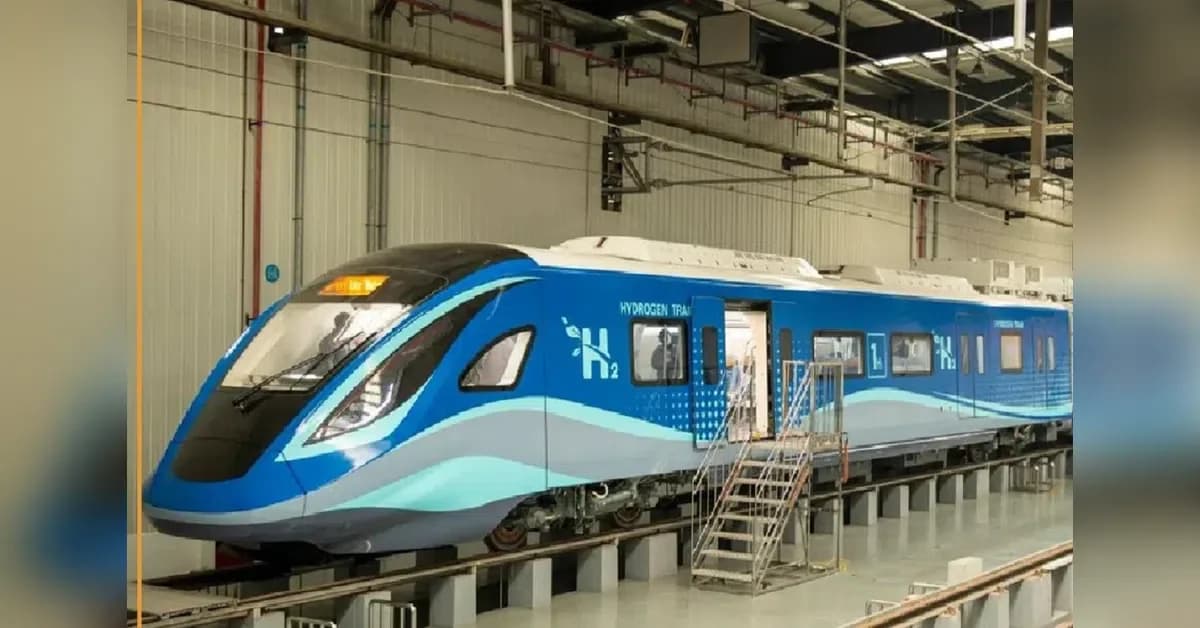
Indian Railways has sanctioned ₹111.83 crore for the pilot project, which includes retrofitting a Diesel Electric Multiple Unit (DEMU) into a hydrogen-powered train and building the necessary hydrogen production, storage, refuelling, and ground infrastructure. An indigenous hydrogen storage and refuelling facility has been set up at Jind with the Petroleum and Explosives Safety Organisation (PESO) granting the required licence for storage and dispensing of compressed hydrogen gas. The facility is capable of producing 420-430 kg of hydrogen a day with storage of up to 3,000 kg. The refuelling infrastructure includes a hydrogen compression system, along with essential technical support and critical spare components to ensure dependable and fail-safe operations, with a standby compressor unit also being provided. Maintenance facilities have been established at Shakurbasti in Delhi, with the hydrogen power system being shut down per safety protocol to bring it to a dead condition, and a diesel locomotive hauling the entire train to Shakurbasti for maintenance. Safety systems on board include hydrogen leak detectors, flame detectors, and other monitoring sensors across the hydrogen production, storage and dispensing facility, which will undergo regular inspection and cleaning to prevent dust accumulation and maintain safe operations.
This initiative marks a significant milestone for Indian Railways, introducing hydrogen fuel cell technology to the country's railway network and positioning India among a select group of nations exploring cleaner alternatives to diesel-powered trains. The hydrogen train offers zero tailpipe carbon emissions, lower dependence on fossil fuels, and reduced air pollution compared with diesel locomotives. The technology provides a potential pathway towards cleaner transport without requiring full railway electrification, making it particularly valuable for India's railway network where electrification remains incomplete. The railway sector is expected to serve as a key driver for hydrogen adoption due to its large energy requirements, with this demonstration project providing valuable operational experience that could shape future hydrogen-powered projects across the country. With this initiative, India joins an exclusive group of countries including Germany, Japan, China, and the United States that are exploring hydrogen fuel cell technology for rail transport, with the technology still at a nascent stage globally. If the pilot proves successful, Indian Railways could deploy hydrogen-powered trains on routes where full electrification remains challenging, complementing its broader electrification programme.
Indian Railways is planning significant expansion of hydrogen-powered services under the 'Hydrogen for Heritage' project, aiming to introduce 35 hydrogen trains, mainly on heritage and hill routes. According to railway officials, the estimated cost of one hydrogen train will be around ₹80 crore, while the infrastructure required for each route will cost about ₹70 crore. Along with developing new hydrogen trains, Indian Railways is also working on converting existing diesel trains into hydrogen-powered ones. The 10-coach trainset consists of two 1,200 kW driving power cars, providing a combined output of 2,400 kW, along with eight passenger coaches, making it the world's longest hydrogen-powered train operating on a broad-gauge network. If the technology proves reliable and commercially viable, hydrogen trains could become another tool in India's transition towards cleaner public transport alongside railway electrification. The launch of hydrogen trains is part of Indian Railways' plan to modernise its network and move towards cleaner energy, supporting the railway's goal of achieving net-zero emissions by 2030 while providing a cleaner, reliable and eco-friendly mode of transport for passengers.