The Mumbai-Ahmedabad bullet train project faces a significant financial challenge with the project authority warning that enhanced land compensation awards could add nearly ₹40,000 crore to the ₹1.08 lakh crore corridor cost. According to The Times of India, the chief project manager has challenged three orders passed by the Land Acquisition, Rehabilitation and Resettlement Authority (LARRA) involving land parcels in Surat and Bharuch districts. Advocate General Kamal Trivedi told the Gujarat High Court that the enhanced compensation awards issued in January and February could substantially raise the cost of the high-speed rail corridor. "We will not have the bullet train, if this particular burden is cast upon us. I am making a very bold statement," Trivedi told the court, highlighting the project's vulnerability to these increased compensation demands.
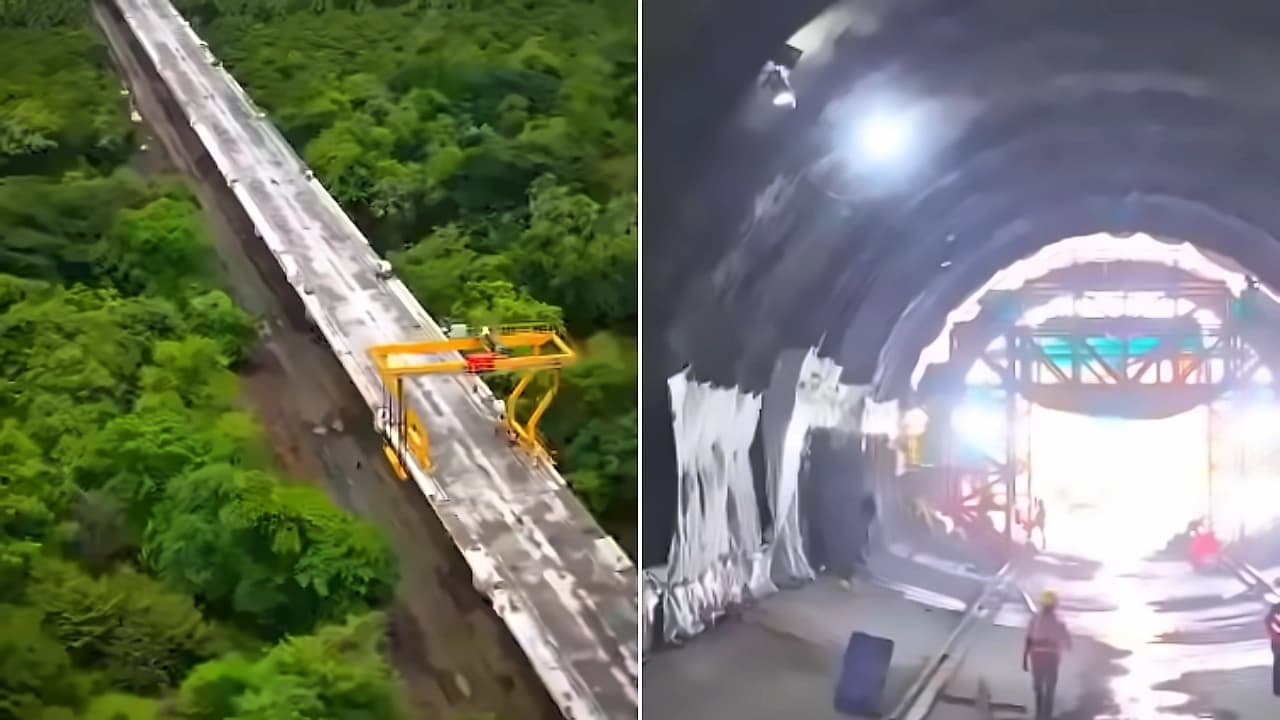
The Mumbai-Ahmedabad High-Speed Rail Corridor has achieved a significant construction milestone with the successful installation of all 13 heavy portal beams required for the high-speed rail corridor in Ahmedabad. The final beam, weighing 1,640 metric tonnes, was installed at Sabarmati and measures 34.5 metres in length with a cross-section of 5.5 metres by 4.5 metres. According to project officials, the beam was lifted and positioned using a 2,200-metric-tonne crawler crane, with the entire launching operation completed in around three hours. The work was carried out in close coordination with Indian Railways to ensure uninterrupted and safe train operations during the installation.
The financial challenge stems from land acquisition cases in Ochhan village in Amod taluka of Bharuch district, where compensation rates were dramatically increased. According to The Times of India, in one case, the land acquisition authority fixed compensation at ₹50 per square metre in 2020, based on assessed market value, with total compensation set at ₹85.86 lakh for a land parcel. However, after the landowner sought enhancement, LARRA increased the rate to ₹660 per square metre and raised compensation to ₹8.46 crore for the same parcel. The project authority challenged this increase, arguing that LARRA ignored sale transactions involving comparable land in villages near Ochhan and instead relied on jantri value from Simartha village, located about 14 km from the acquired property. The authority also contended that LARRA could not rely on an earlier award involving land in a different village under Explanation 3 to Section 26(1) of the Act.
The 508-km Mumbai-Ahmedabad high-speed rail corridor was initially scheduled for completion by December 2023, but delays in land acquisition, tendering and disruptions caused by the Covid-19 pandemic pushed back the schedule. The project is now expected to become operational in phases, with the first section in Gujarat targeted to open in 2027 while the entire Mumbai-Ahmedabad corridor is expected to be operational by 2029. As of November 30, 2025, the project had achieved physical progress of 55.63 per cent and financial progress of 69.62 per cent. Expenditure on the corridor had reached ₹86,939 crore by February 2026, with the project originally estimated to cost ₹1.08 trillion.
Beyond the Mumbai-Ahmedabad corridor, Vaishnaw highlighted future expansion plans, announcing three proposed bullet train corridors centred around Hyderabad. These include the Pune-Hyderabad, Hyderabad-Chennai and Hyderabad-Bengaluru routes, which are expected to enhance connectivity across southern India. A Hyderabad-Mumbai high-speed rail link is also planned, which would substantially cut travel time between the two cities. The minister emphasized that 'Prime Minister Narendra Modi has given three high-speed bullet train corridors to Hyderabad, which will change its landscape. This will transform the state, and large parts of Telangana will be covered by the bullet train project.'