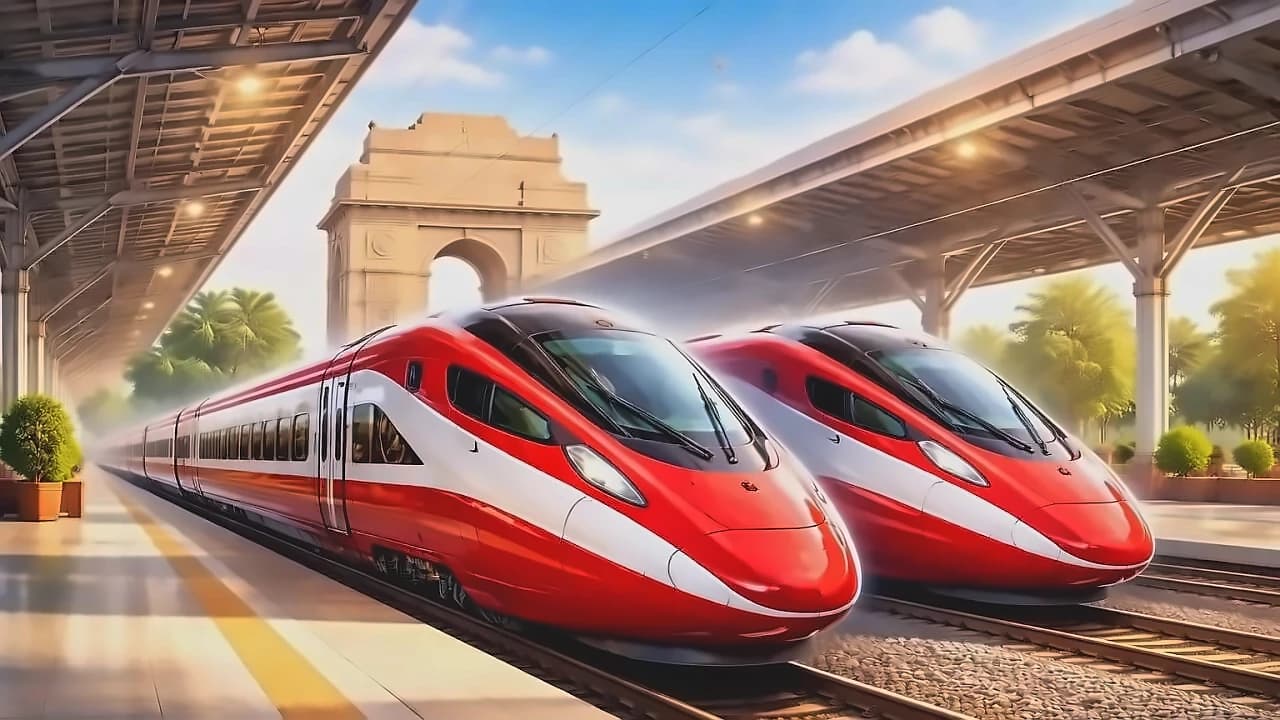
India's first bullet train project has experienced a dramatic cost escalation, with the estimated cost rising to ₹2.1 lakh crore, nearly double the original estimate of approximately ₹1.1 lakh crore. According to The Times of India, a proposal seeking approval for the revised cost of the 508-km high-speed rail corridor was placed before the Cabinet on Tuesday. The railway ministry has attributed the cost increase mainly to the prolonged land acquisition process in Maharashtra and delays in receiving the train sets from Japan. The full bullet train project between Mumbai and Ahmedabad is now expected to be completed in 2030, while the first section of the corridor is scheduled to become operational in August 2027, likely between Surat and Bilimora. As per Mint, the project's ₹1.1 lakh crore funding has come from the Japan International Cooperation Agency (JICA), with train sets arriving from Japan.
Railway Minister Ashwini Vaishnaw shared a glimpse of India's first bullet train project taking shape across Thane and Palghar districts, calling it 'a whole new vibe!' According to reports from The Times of India, the 135.45-km elevated section stretches from Shilphata in Thane district to Zaroli village on the Maharashtra-Gujarat border. The route cuts through varied terrain, with 124.027 km of the section comprising viaducts and bridges, as reported by the National High Speed Rail Corporation Limited (NHSRCL). Viaducts are taking shape across Gujarat and Maharashtra, with tunnel construction progressing near Mumbai and stations being built. As authorities prepare to launch the first leg of this project between Surat and Bilimora, the project witnessed time delays and cost overruns due to several factors, including delays in land acquisition, statutory clearances and finalisation of the trains.
The project is becoming a platform for India's own high-speed rail ambitions, with BEML and ICF developing India's first indigenous high-speed trainset. The Integral Coach Factory (ICF), Chennai, has awarded BEML Limited a ₹866.87 crore contract to design and manufacture two prototype bullet train sets capable of 280 kmph. Under the contract, BEML will be responsible for the design, manufacturing and commissioning of two eight-coach high-speed trainsets, with the trains scheduled to be rolled out in 2027. Each of the indigenously produced high-speed train is expected to cost around ₹390 crore to ₹400 crore. The trains will feature fully air-conditioned chair cars equipped with world-class passenger amenities, advanced onboard infotainment systems, reclining and rotatable seats and dedicated facilities for divyangjans. BEML has established a dedicated 'Aditya' High-Speed Rail Complex in Bengaluru for the production of the bullet trains, with the high-speed trainsets bearing the codename B-28.
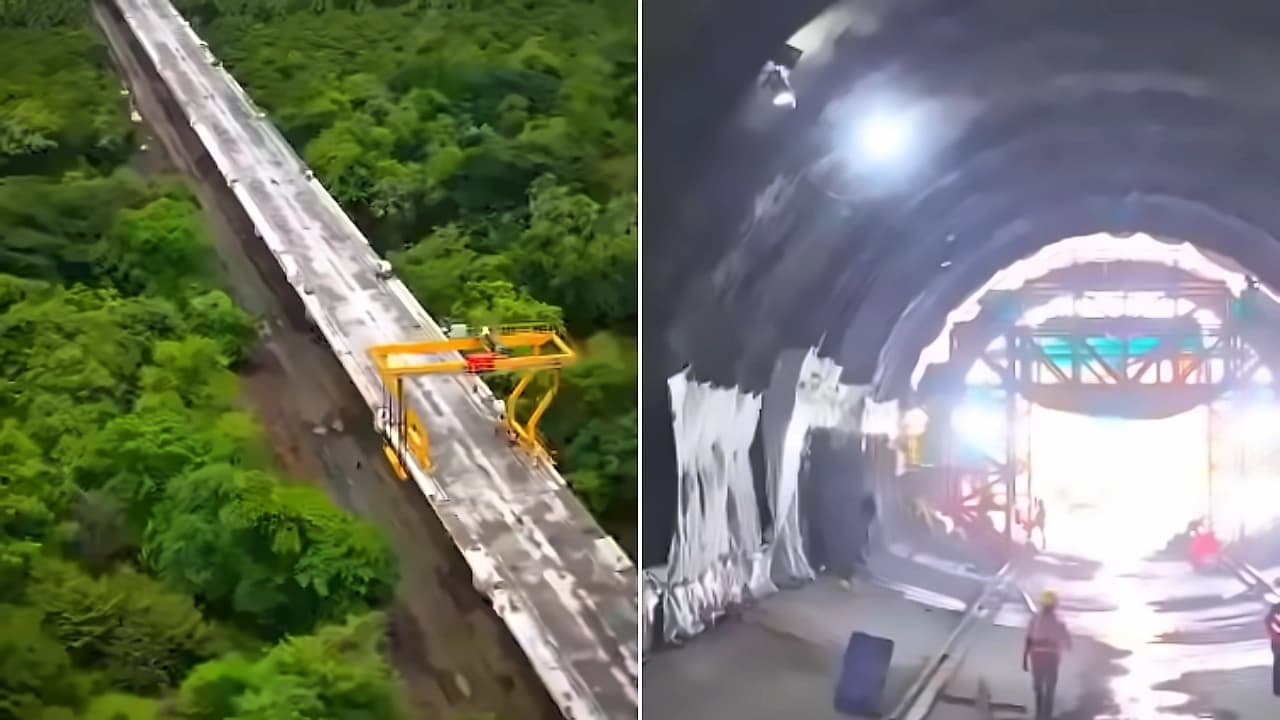
Construction is at different stages along the stretch, with pier work underway across more than 100 km, while nearly 74 km of piers have been completed and are ready for viaduct girders, as reported by The Times of India. The construction is being supported by nine casting yards, seven full-span launching gantries and eight SBS launching gantries, all currently operational in Maharashtra. Three elevated stations are also being constructed: Thane, Virar and Boisar. The corridor features significant engineering challenges including a 7-km undersea tunnel near Thane Creek, seven mountain tunnels and 17 river bridges, including a 460-metre bridge over the Ulhas River, a 2.32-km bridge over the Vaitarna River and a 510-metre bridge over the Jagani River.
The government is already looking beyond the first corridor, with seven additional high-speed rail routes under consideration, including Bengaluru-Chennai, Bengaluru-Hyderabad and Bengaluru-Pune-Mumbai. For the time being, Indian Railways plans to manufacture the bullet trains using stainless steel. Railway minister Ashwini Vaishnaw has already announced that the next generation of bullet trains will be designed to operate at speeds of 350 kmph. The high-speed trainsets, which carry the codename B-28, will be manufactured using advanced precision-driven technologies, with designs currently being finalised to account for Indian conditions involving heat and dust. Since India primarily experiences a tropical monsoon climate, the bullet train sets will be designed and manufactured to suit the local conditions involving heat and dust, unlike bullet trains running in countries like Japan and across Europe which are designed for cold climates.