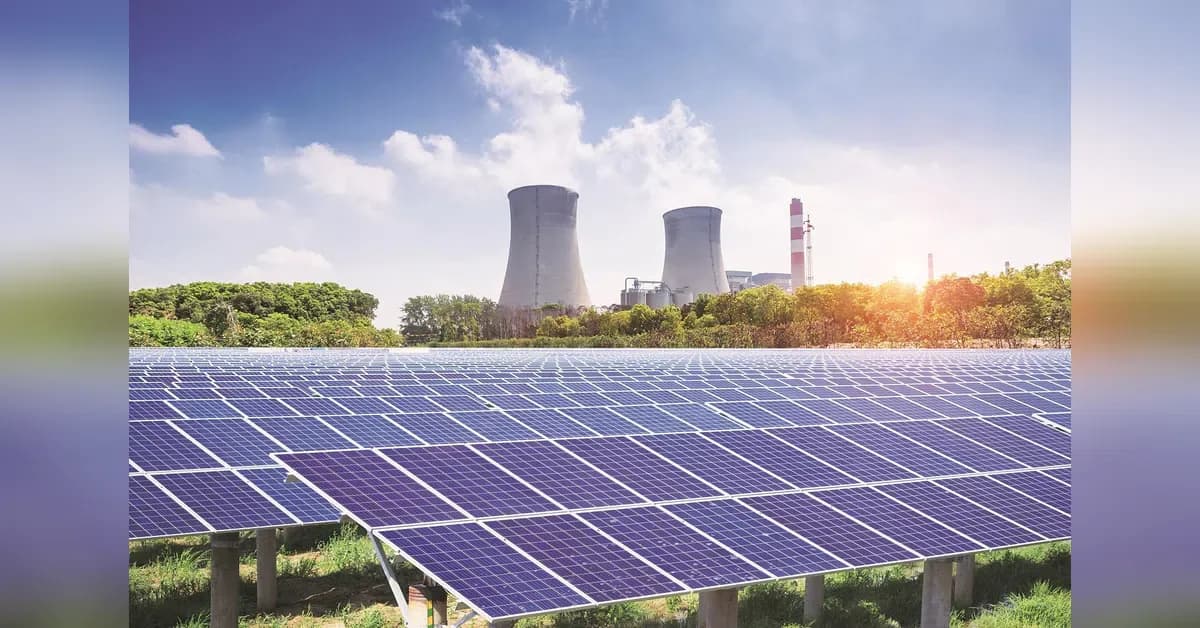
India's energy investment is projected to reach a record $170 billion in 2026, representing an 11% annual growth over the past five years, according to the International Energy Agency's World Energy Investment 2026 report. This sustained investment growth has been primarily driven by solar, coal, transmission and battery storage infrastructure expansion across the country's energy sector. The IEA report emphasizes that this record investment level is driven by a push towards renewable energy capacity addition, strengthening of transmission and distribution networks, and deployment of storage systems to support the grid and reduce curtailment. The investment surge comes as India navigates the global shift toward strategic interdependence in critical minerals supply chains, with countries competing for lithium, cobalt, nickel, and rare earth resources that power modern industry.
During the five-year period, solar photovoltaic investment grew annually by 25% and oil refining investment increased by 23%, contributing significantly to India's energy investment growth. These two sectors alone accounted for one-fourth of India's total energy investment growth during this timeframe, as reported by the IEA. The solar boom reflects India's accelerated transition toward renewable energy, with solar photovoltaic capacity investment reaching around $20 billion and making it one of the biggest growth drivers. The IEA notes that the increasing share of electricity from solar and wind projects has created the need for transmission infrastructure, storage systems and flexible power sources to avoid curtailment and maintain grid stability. Oil refining investments support the country's energy security amid global supply chain disruptions.
Coal supply investment in India is set to reach $13 billion in 2026 to achieve the target of 1.5 billion tonnes of production by 2030. The country maintains its position as the world's second-largest investor in coal supply, with investments having tripled over the past decade. Coal transport infrastructure investment has increased from $5 billion to $7 billion, while India continues expanding its coal gasification capabilities to produce chemicals. This investment aligns with the global trend of strategic competition over critical minerals supply chains, where countries are treating these materials as instruments of economic security rather than commodities.
The power sector accounts for approximately half of India's total energy sector spending, with investment in nuclear and hydropower both tripling between 2021 and 2025. Transmission and distribution investment is set to reach $26 billion in 2026 after growing 15% annually for the previous five years. The IEA report highlights that India is investing heavily in grid upgrades, energy storage and dispatchable power generation to support the rapid rise in renewable capacity. The Central Electricity Authority has announced plans to invest $91 billion in transmission by 2035-36, as reported by the IEA. Supportive policies have been introduced to promote grid investment, with investments in hydropower and nuclear energy tripling between 2020 and 2025 following announcements of new projects. India plans to raise nuclear power capacity to 100 GW by 2047 from about 9 GW currently, with the Shanti Act paving the way for private investment in the highly regulated sector.
Investments in battery energy storage systems reached $700 million in 2025, driven by the need to avoid curtailment of the country's rapidly growing variable renewable energy generation. Tender volumes for standalone and co-located projects nearly tripled from 2024, as reported by the IEA. Additionally, there are early signs of consumer electrification, with induction cookstove sales growing 10-15 times year-on-year in the January-March 2026 period, responding to supply disruptions. The battery storage growth aligns with the global trend of strategic competition over critical minerals supply chains, where countries are securing supply chains for lithium, cobalt, and other battery materials essential for electric vehicles and renewable energy systems.