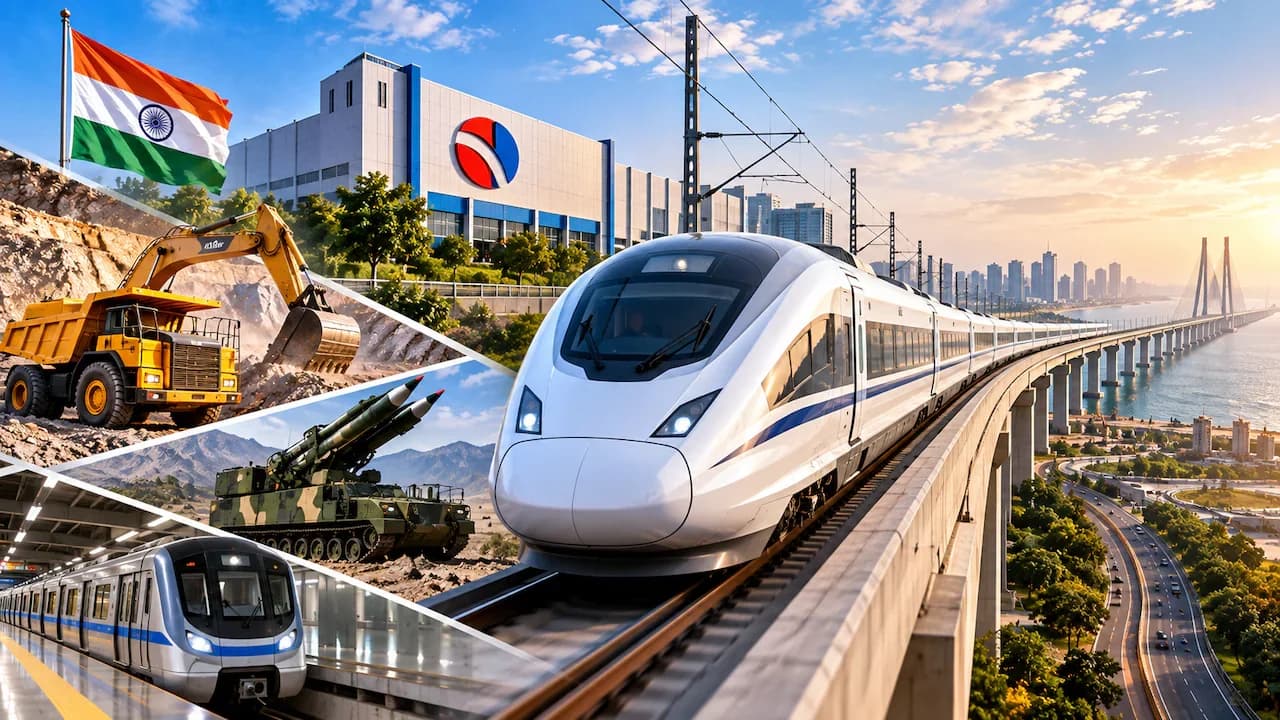
Railway stocks experienced significant gains following the government's announcement of a ₹16 lakh crore plan to develop seven high-speed rail corridors across the country. According to Business Standard, RailTel Corporation of India climbed 3.82%, Rail Vikas Nigam (RVNL) rose 3.62%, Ircon International gained 2.82%, Container Corporation of India advanced 2.22%, Indian Railway Finance Corporation (IRFC) added 1.99%, Texmaco Rail & Engineering moved up 1.97%, Titagarh Rail Systems increased 1.74%, while BEML edged 1.06% higher. The ambitious infrastructure push, including the Delhi–Varanasi and Varanasi–Siliguri routes, is expected to boost rail infrastructure and domestic manufacturing capabilities.
India's first bullet train is moving toward a launch timeline with services on the Mumbai-Ahmedabad corridor expected by August 15, 2027. According to the latest reports from the Ministry of Railways, the Surat to Bilimora first phase will be completed by December this year, with the inauguration planned for August next year. Railway Minister Ashwini Vaishnaw has confirmed that the project extends beyond this single corridor, with seven more bullet train routes in the pipeline. The network is being developed as the beginning of a high-speed rail system that will eventually connect major cities including Delhi, Mumbai, Bengaluru, Chennai and Varanasi.
The bullet train network promises dramatic reductions in travel time across major routes. As reported by the Ministry of Railways, Mumbai to Ahmedabad is expected to take 1 hour and 57 minutes with the completed corridor. Mumbai to Pune could be covered in 48 minutes, while Bengaluru to Chennai is planned at around 73 minutes and Bengaluru to Hyderabad may take just over two hours. Delhi to Lucknow is expected at about two hours, and Delhi to Varanasi around 3.15 hours. Railway Minister Ashwini Vaishnaw has assured that affordable ticket prices will be announced for the middle class and the poor, with fares to be announced soon. The train, based on Japan's advanced E5 Shinkansen model, is known as Hayabusa and will run at speeds of 320 kilometers per hour. The entire project spans 508 kilometers and will pass through Maharashtra, Gujarat, and Dadra & Nagar Haveli, with 12 stations planned including Mumbai, Thane, Virar, Boisar, Vapi, Billimora, Surat, Bharuch, Vadodara, Anand, Ahmedabad, and Sabarmati.
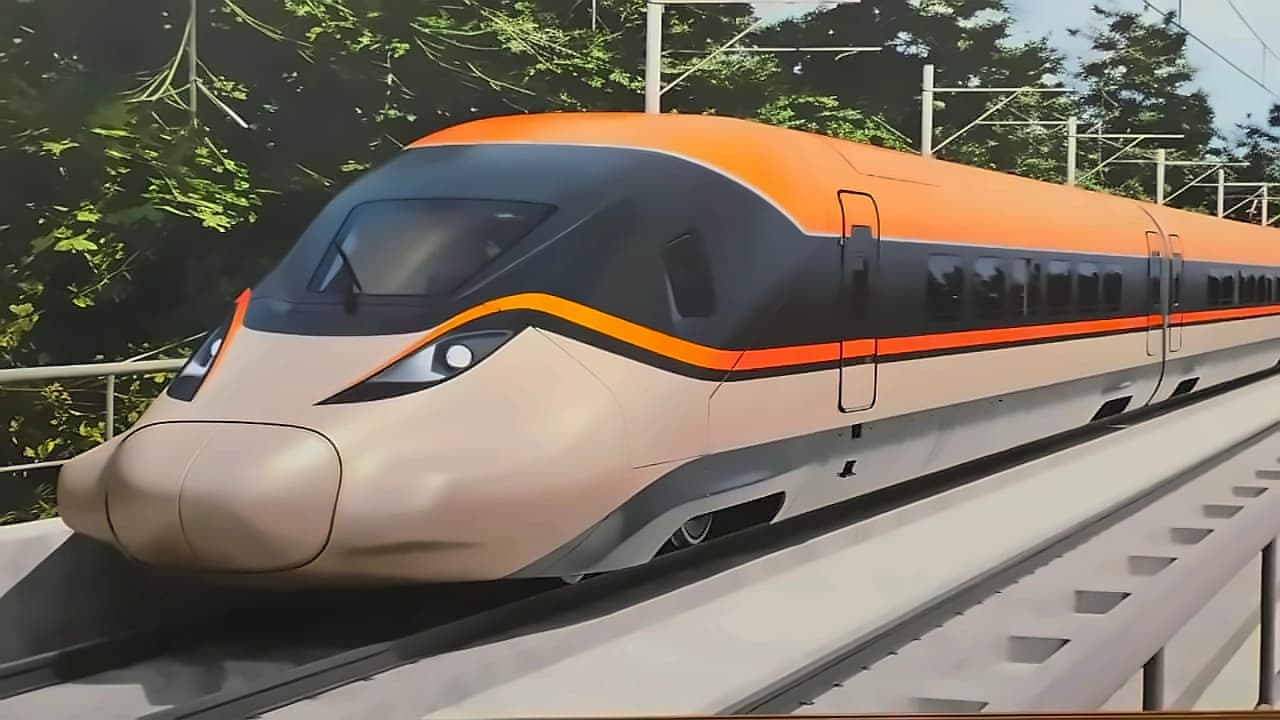
The upcoming bullet train projects will emphasize Indian technology and locally manufactured components, as confirmed by Railway Minister Ashwani Vaishnaw. According to Business Standard, BEML is currently building the country's first domestically manufactured bullet train, designed to operate at speeds of up to 280 kmph. The train is expected to begin trial operations on a 100-km section between Surat and Bilimora on the Ahmedabad–Mumbai corridor in August 2027. BEML Chairman and Managing Director Shantanu Roy indicated that future versions of these trains could run even faster, with speeds potentially increasing from 280 kmph to 350 kmph as technology advances. Railway officials are working to standardise construction methods, signalling systems and rolling stock production, which is expected to reduce costs, speed up execution and strengthen domestic manufacturing capabilities. The government has repeatedly emphasised the use of indigenous technology and local manufacturing to create long-term opportunities for domestic railway equipment manufacturers, engineering firms and infrastructure developers.
The bullet train network is designed to fundamentally change how cities are lived in, particularly addressing the challenges of high costs and crowded living in major urban centers. According to the Ministry of Railways, if travel time drops to one or two hours between major cities, daily commuting from smaller towns becomes practical. This could allow people to stay in their home cities while working in major urban centers without permanent relocation, potentially easing pressure on metros and stabilizing demand for housing, transport and basic services.
The shorter travel times are expected to transform daily work patterns significantly. According to the Ministry of Railways, many professionals may no longer need to stay overnight in big cities, with a same-day return model becoming common. This change could cut hotel costs and make jobs in metros more accessible to people living in smaller towns, fundamentally altering work-life balance and commuting patterns across the country. Railway Minister Ashwini Vaishnaw hopes the bullet train will become an affordable, fast, and safe public transport option accessible to the middle class and the poor as a means of travel.