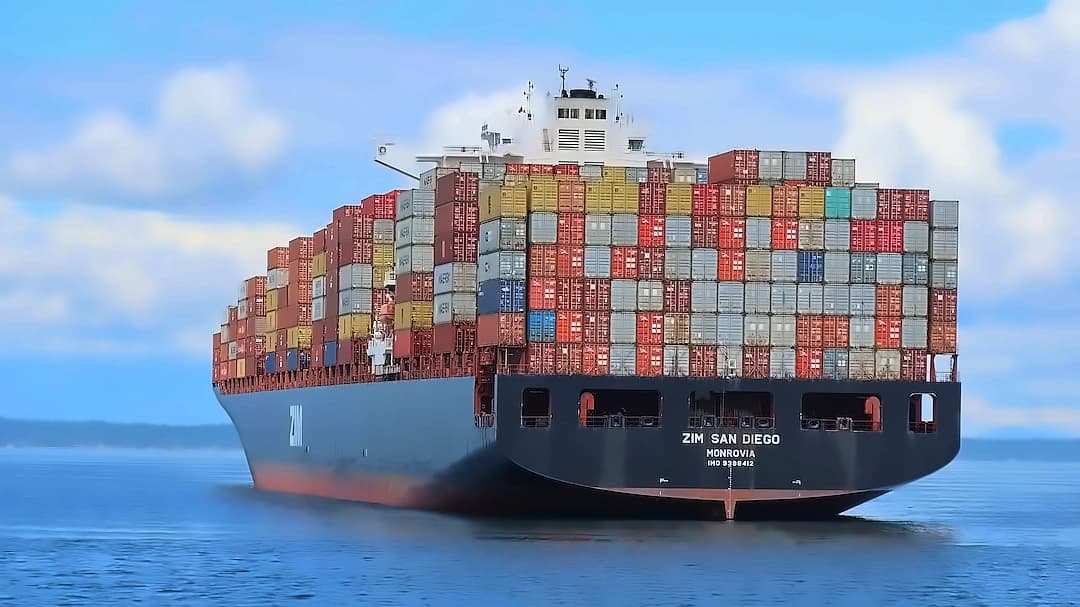
India plans to add 62 vessels in 2026–27 with an investment of ₹51,383 crore as part of its push to become self-reliant in the maritime sector, Union Shipping Minister Sarbananda Sonowal announced. According to latest reports, the proposed addition is expected to create 2.85 million gross tonnage (GT) capacity in the current fiscal, strengthening India's shipping capabilities amid evolving global trade uncertainties. The expansion will include vessels across multiple segments including container ships, LPG carriers, crude carriers, green tugs, dredging vessels and tankers to ensure resilience against external disruptions and maintain supply chain stability. As per The Economic Times, Sonowal emphasized that India must act with urgency to strengthen fleet, shipbuilding capacity, port infrastructure, and the broader maritime ecosystem, positioning shipping at the core of India's economic resilience under the visionary leadership of Narendra Modi.
The expansion comes as the government has convened a high-level inter-ministerial meeting to review the evolving situation in the Strait of Hormuz, while pivoting towards accelerating India's shipping capabilities. As reported by The Economic Times, the meeting underscored a renewed focus on building a robust and future-ready maritime ecosystem to safeguard the country's trade interests. Sonowal emphasized that India is positioning shipping at the core of India's economic resilience, with the journey towards Atmanirbhar shipping being a strategic necessity. The minister also reviewed cargo flows, vessel movements and operational preparedness across key maritime segments, with a strong focus on ensuring supply chain continuity in the face of external disruptions. According to the official statement, the need for expansion of container fleet, green tugs, LPG carriers, crude carriers, dredging vessels and tankers was underscored to combat any future global challenge and sustain the country's supply chain.
The meeting assessed the status of the proposed joint venture between the Shipping Corporation of India and oil public sector undertakings to acquire 59 vessels. According to the official statement, the Shipping Corporation of India is equipped to build specialised vessels, including those required for transporting ammonia. Sonowal also emphasized the need to ensure safety and security of Indian seafarers, directing agencies to maintain heightened vigilance in sensitive maritime zones. The minister stressed that reiterating the importance of maritime safety, with the meeting concluding with a call for stronger alignment and execution across ministries to position India as a globally competitive maritime nation.
Calling for a coordinated national effort, the minister directed all concerned departments to prepare a comprehensive white paper outlining existing gaps, clear targets and a time-bound roadmap for the maritime sector. As reported by The Economic Times, this exercise will involve close coordination with key ministries, including Petroleum and Natural Gas, Chemicals and Fertilisers, and Commerce and Industry, given their critical linkage to maritime supply chains. The meeting was attended by senior officials from the ministries of petroleum and natural gas, chemicals and fertilisers, as well as representatives from the Directorate General of Shipping, National Shipping Board and the Directorate General of Foreign Trade. The document will form the basis of the next review on a larger inter-ministerial platform, with the meeting concluding with a call for greater alignment, coordination and execution across ministries and stakeholders to position India as a globally competitive maritime nation.
The fleet expansion addresses critical geopolitical risks, as Strait of Hormuz tensions pose significant threats to India's energy security. According to recent analysis, when problems arise in the Strait, crude oil prices can surge 25-30% and India's import costs can reach billions, creating pressure on the rupee and current account deficit. Currently, 98% of India's trade still depends on foreign-flagged ships, with USD 90 billion flowing overseas annually. India's current fleet of 14.2 million GT remains significantly smaller than China and Japan, highlighting the urgent need for expansion. The government's ₹25,000 crore Maritime Development Fund announced in FY 2025-26 budget, along with Maritime India Vision 2030 and Maritime Amrit Kaal Vision 2047, demonstrates strong commitment to transforming India into a globally competitive maritime nation.