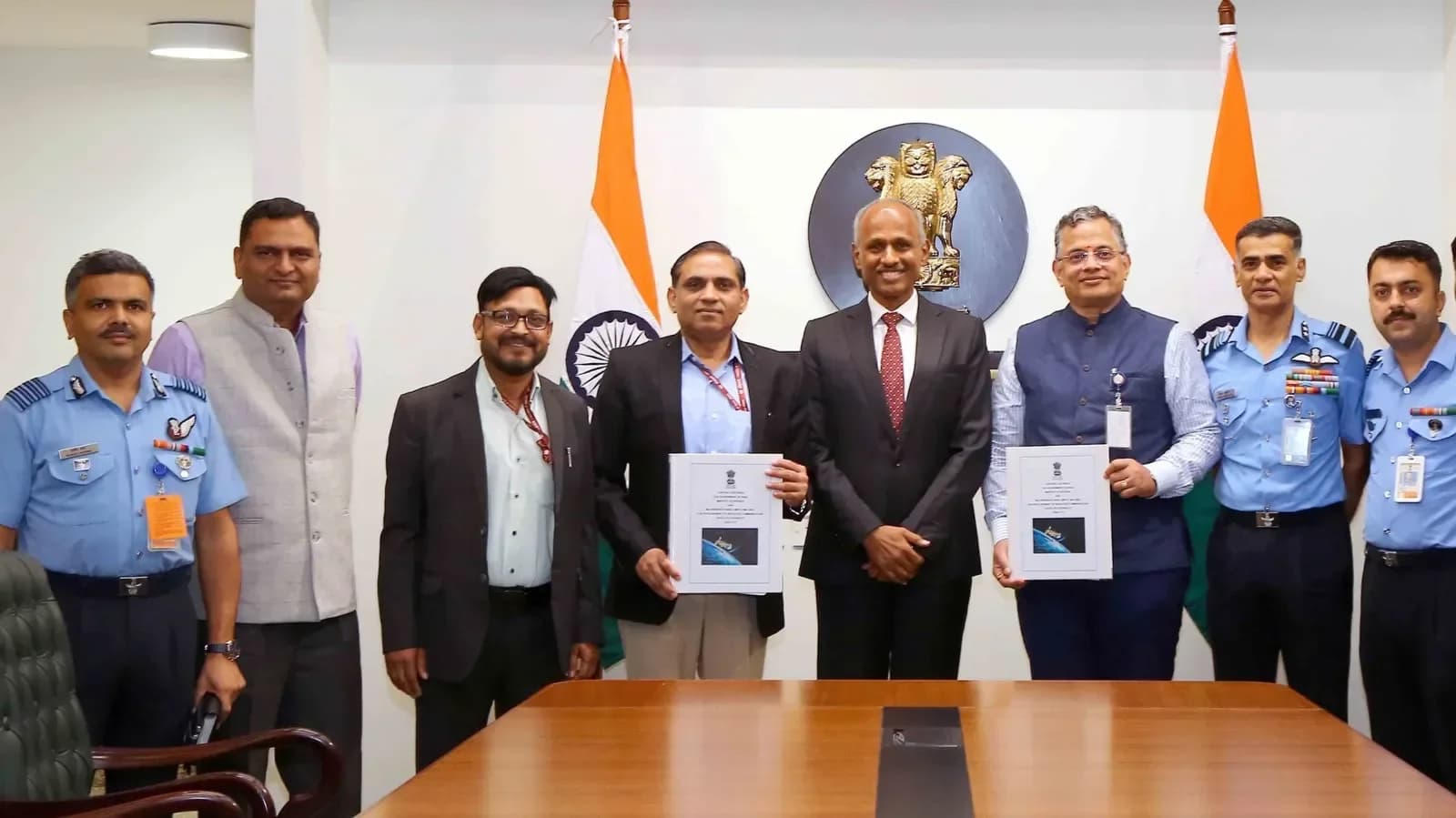
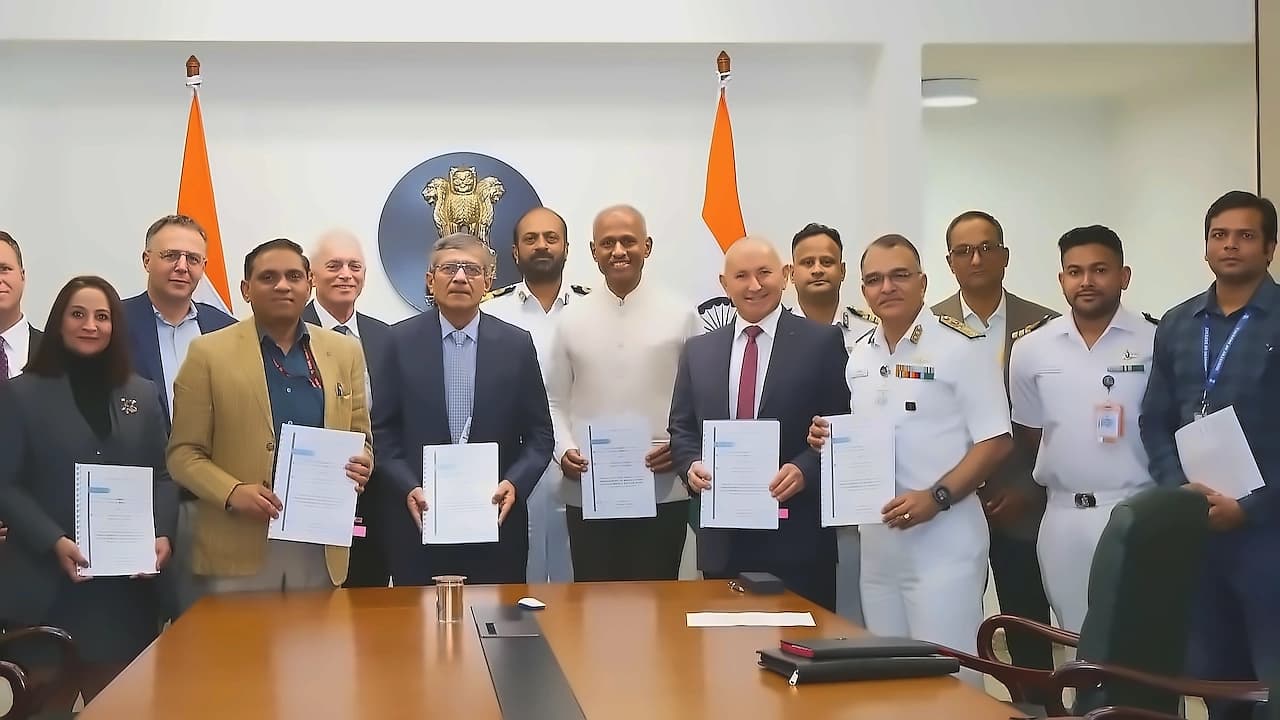
India's Ministry of Defence has signed a significant contract worth ₹1,976.40 crore with Israel Aerospace Industries for the upgrade and obsolescence management of Barak Point Defence Missile Systems onboard Indian Navy ships. According to the Defence Ministry, the contract was signed in the presence of Defence Secretary Rajesh Kumar Singh in New Delhi on November 18, 2026. The upgradation involves a comprehensive overhaul of the system's hardware and software to enhance its features and provide Indian Navy platforms with potent, extended-range air defence capability. The Barak Point Defence Missile System is a naval air defence system designed to protect warships against aerial threats and is currently deployed onboard Indian Navy ships. The agreement was signed under the government's Other Capital Procurement Procedure, as confirmed by the Defence Ministry.
Shares of defence companies, including Bharat Dynamics Ltd (BDL) and Bharat Electronics Ltd (BEL), are expected to remain in focus following India's signing of the ₹1,976.40 crore agreement with Israel Aerospace Industries. According to market reports, the contract signing has created renewed interest in defence sector stocks, particularly given BDL's presence in the missile manufacturing segment. However, the Defence Ministry's announcement does not identify any listed Indian company as a direct beneficiary of the order, as the contract has been awarded to Israel Aerospace Industries. The development comes amid the government's broader push to strengthen domestic defence manufacturing capabilities and reduce dependence on imports.
Defence Secretary Rajesh Kumar Singh highlighted the government's efforts to diversify India's missile manufacturing ecosystem by bringing more private sector companies into the segment. As reported by market sources, the government does not want to rely predominantly on state-owned Bharat Dynamics Ltd (BDL), which has traditionally been the country's primary missile manufacturer, and is looking to expand the ecosystem by inducting more private sector players. This strategic shift reflects the government's commitment to reducing dependence on a single state-owned entity while strengthening the overall defence manufacturing base. The development comes as part of India's broader push to strengthen domestic defence manufacturing capabilities.
India has witnessed considerable growth in defence goods exports from ₹686 crore (US$ 113.39 million) in FY14 to an all-time high of ₹38,424 crore (US$ 4.35 billion) in FY26. According to the India Brand Equity Foundation (IBEF), in FY26, private sector entities accounted for ₹17,353 crore (US$ 1.96 billion) (45.16%) of the country's defence exports, while DPSUs accounted for ₹21,071 crore (US$ 2.38 billion) (54.84%). By March 2026, there were 834 licenses regulating the defence industry, where about 500 defence firms and around 17,000 MSMEs had licenses for defence production. The amount of money invested in research and development for defence went up from ₹13,716 crore (US$ 2.24 billion) in FY15 to ₹29,100 crore (US$ 3.08 billion) in FY27.
The Barak-1 modernization comes as India continues developing an indigenous alternative through the Defence Research and Development Organisation's (DRDO) vertical launch short-range surface-to-air missile (VL-SRSAM) programme. Designed specifically for shipborne applications, the new weapon is intended to intercept aircraft, helicopters, unmanned aerial vehicles and low-flying anti-ship missiles, potentially replacing the Israeli-origin Barak-1 on Indian warships in the future. The indigenous missile underwent a successful flight trial on March 26, 2025, when it intercepted a high-speed aerial target at very close range and low altitude during a test at Chandipur in Odisha. The demonstration validated its ability to perform the rapid manoeuvres needed to engage threats approaching a ship at short distances, an essential requirement for modern naval point-defence weapons. Defence industry assessments suggest that the VL-SRSAM could eventually offer a considerably greater engagement envelope than the original Barak-1, although its operational performance will depend on further testing, integration and induction.
The ₹1,976.40 crore agreement reflects the Navy's need to balance the modernization of its existing weapons with the gradual introduction of new-generation systems. It also underlines the continuing importance of India's defence relationship with Israel, even as New Delhi seeks to increase indigenous production and reduce dependence on foreign suppliers for critical military technologies. India and Israel also maintain a substantial defence partnership in longer-range naval missile systems, notably through their collaboration on the Barak-8, which forms the basis of the long-range surface-to-air missile system used aboard several Indian warships. Unlike the Barak-1, which is primarily intended for close-in protection, the Barak-8 provides a wider defensive envelope against aerial threats and forms part of the Navy's layered air-defence architecture. This contract is part of the Indian government's accelerated push to modernise and expand domestic naval shipbuilding and repair infrastructure through major public sector shipyard contracts.