India has crossed 300 GW of non-fossil fuel capacity, representing a remarkable transformation from approximately 81 GW a decade ago. According to the ministry of new and renewable energy, this milestone was achieved during the first half of 2026, with the country adding 30.58 GW of renewable capacity - a 25% increase compared to the corresponding period last year. As reported by The Times of India, the latest data shows 300.50 GW of installed non-fossil electricity capacity as of July 31, 2026, comprising 164.59 GW of solar, 58.14 GW of wind, 57.24 GW of large and small hydropower, 11.75 GW of bio-power and 8.78 GW of nuclear power. The ministry emphasized that this achievement represents more than 60% of India's target of 500 GW by 2030, with non-fossil sources now accounting for more than 54% of India's total installed power capacity. As per Upstox News Desk, the ministry stated that this monumental achievement highlights India's rapid progress towards building an Aatmanirbhar energy ecosystem and securing the target of 500 GW non-fossil capacity by 2030.
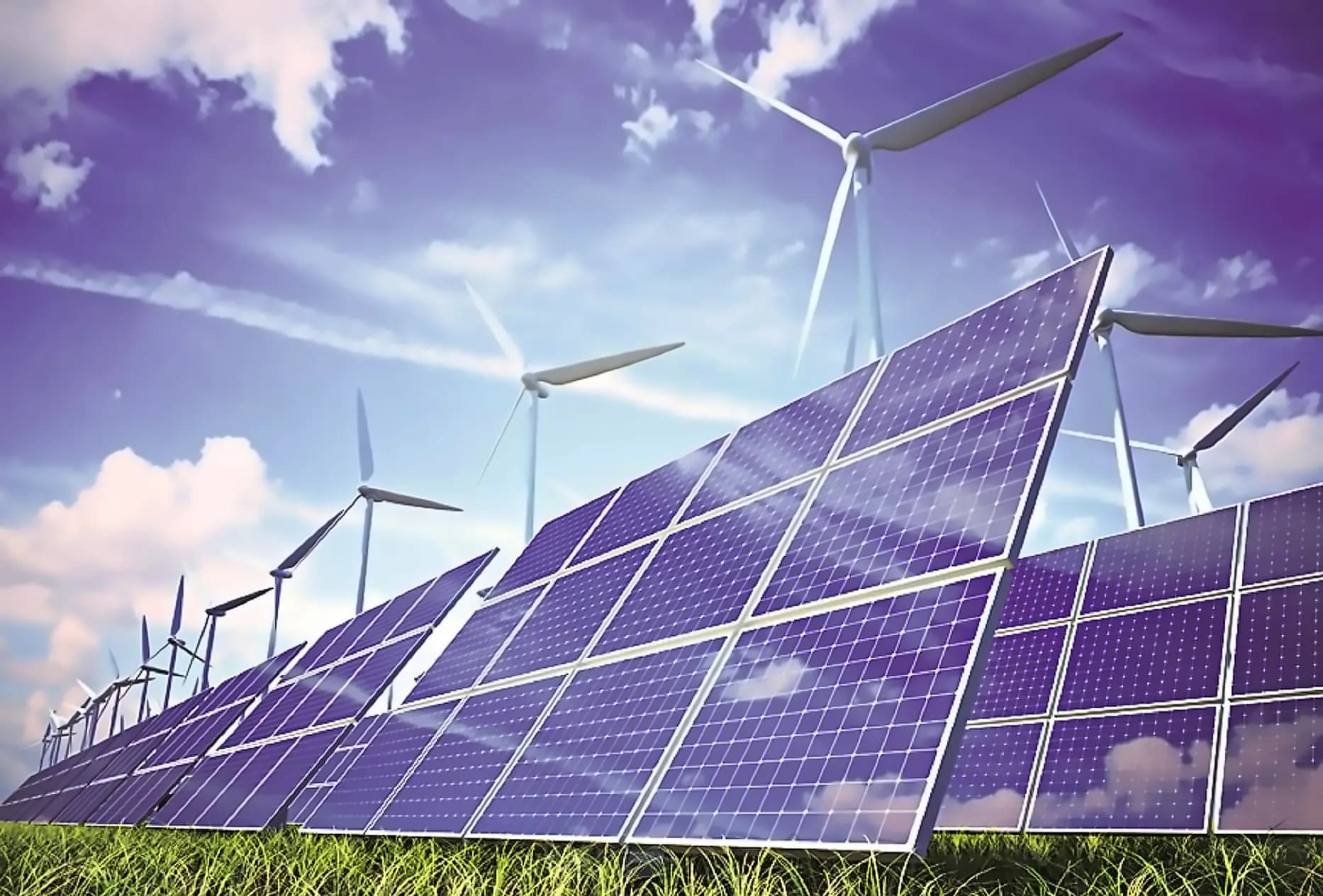
India achieved a historic milestone with record 55.29 GW of non-fossil electricity capacity added during 2025-26 alone, including 44.6 GW of solar and 6 GW of wind capacity - the highest annual addition of non-fossil capacity recorded in the country. As reported by The Times of India, this brings India's total installed power generation capacity to around 552 GW as of July end. The ministry noted that renewable energy generation increased from 190.96 billion units (BU) in 2014-15 to 477.79 BU in 2025-26, demonstrating the growing contribution of clean energy to India's power mix. Solar power remains the largest component at 164.59 GW, followed by wind power at 58.14 GW and hydro power at 57.24 GW, with solar capacity having increased sharply from 2.8 GW in 2014 to around 165 GW currently. Wind capacity has also shown significant growth, increasing from 21 GW to over 58 GW during the same period, as reported by Upstox News Desk.
The government has demonstrated significant financial commitment to renewable energy infrastructure development and cost reduction measures. ₹787 crore was released last year for transmission infrastructure to support renewable energy evacuation, with over 10,000 circuit kilometres of Green Energy Corridor lines charged and 85 packages under implementation. The minister announced that the reduction in goods and services tax on renewable-energy devices and manufacturing components from 12% to 5% could lower utility-scale solar project costs by ₹20-25 lakh per MW. A 500-MW solar park could save over ₹100 crore, while annual procurement savings for distribution companies are estimated at ₹2,000-3,000 crore. For households, a typical 3-kW rooftop solar system has become ₹9,000-10,500 cheaper, and the cost of a 5-HP solar pump has declined by about ₹17,500, translating into potential savings of nearly ₹1,750 crore if 10 lakh pumps are installed. As per Upstox News Desk, the ministry noted that clean energy transition is no longer just a climate commitment—it is central to shaping India's industrial competitiveness, energy independence, and economic resilience.

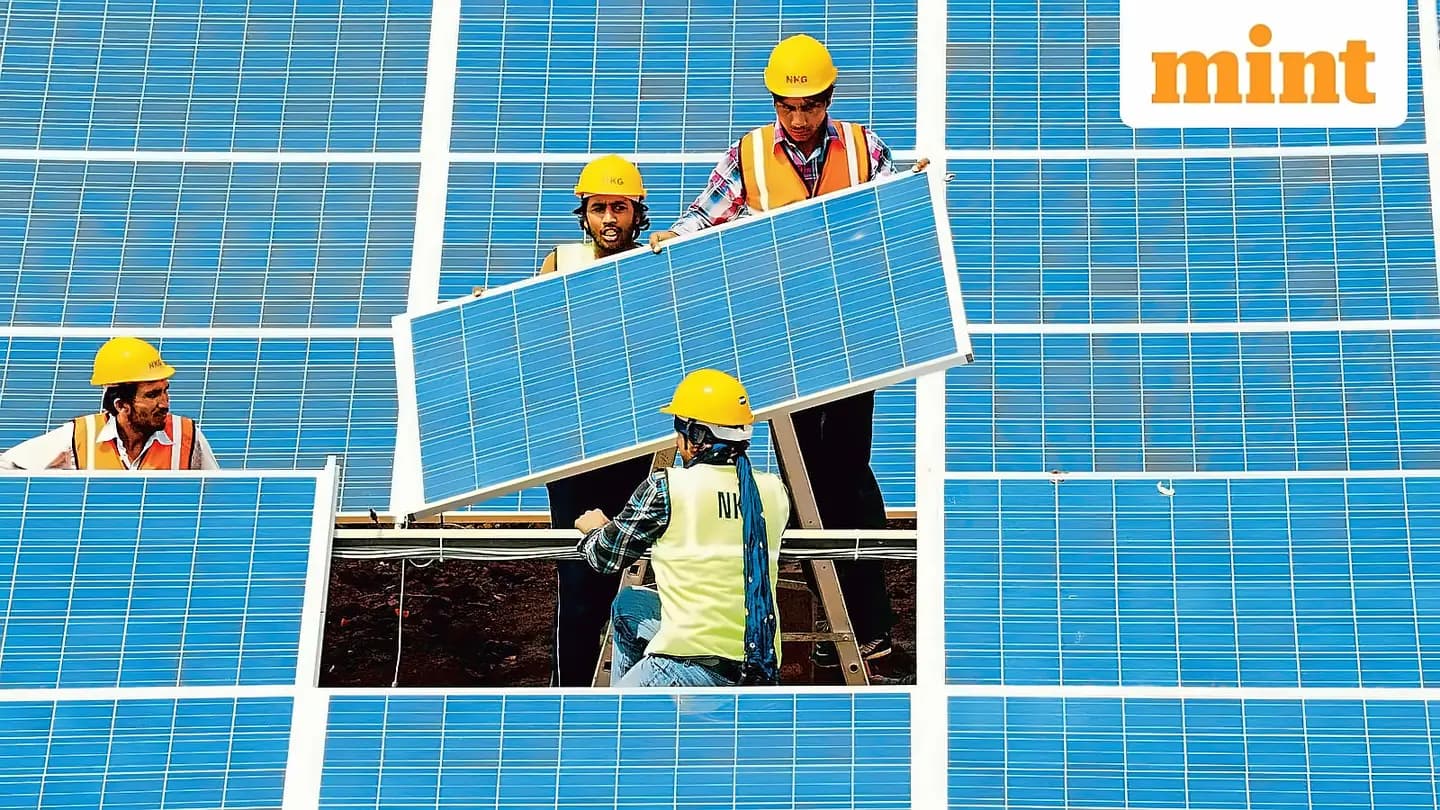
The government has implemented several measures to boost domestic manufacturing and reduce dependence on imports. The Centre has extended the basic customs duty exemption on capital goods used for lithium-ion cell manufacturing until March 31, 2028, aimed at reducing dependence on imported battery packs, particularly from China. Eight of the 12 companies selected under the production-linked incentive scheme for high-efficiency solar modules have started production, with the Approved List of Models and Manufacturers (ALMM) capacity for solar photovoltaic modules crossing 200 GW, compared with 2.3 GW in 2014. MNRE-supported research at IIT Bombay has achieved 30% efficiency in silicon tandem solar cells and 26% in perovskite cells, while IIT Roorkee is developing sodium-ion battery technology as a lower-cost alternative to lithium systems. The ministry attributed the expansion to measures including the Production Linked Incentive (PLI) scheme, which supports domestic manufacturing of high-efficiency solar modules.
As India transitions from rapid capacity addition to building a dependable energy system, the focus shifts from gigawatts to reliability and integration capabilities. At the recently held Mint Sustainability Summit 2026, sector players highlighted that the challenge is becoming more acute as renewable capacity expands and tariffs remain lower than those of conventional power. As per The Times of India, the ministry noted that with non-fossil capacity at 300.50 GW as of July 31, India needs to add roughly 199.5 GW to reach its stated target of 500 GW by 2030. The expansion is being accompanied by efforts to reduce industrial emissions and develop the green hydrogen sector, with the ministry implementing the National Green Hydrogen Mission to develop India as a hub for the production, use and export of green hydrogen and its derivatives. The next generation of India's power system is expected to combine solar and wind with battery energy storage systems, pumped storage and digital technologies to improve reliability and efficiency.