Union Minister Nitin Gadkari announced the rollout of India's first Multi-Lane Free Flow (MLFF) barrier-less tolling system at the Chorayasi Toll Plaza on the Surat–Bharuch stretch of NH-48 in Gujarat. According to reports from PTI, the minister shared the update on X, describing this as a state-of-the-art solution that enables seamless toll collection without requiring vehicles to stop. The minister emphasized that "Delighted to announce that the country's first Multi-Lane Free Flow (MLFF) barrier-less tolling system has been launched today at the Chorayasi Toll Plaza on the Surat–Bharuch section of NH-48 in Gujarat." This marks a significant milestone in the digitisation of the country's highway infrastructure, representing a shift towards global standards in highway management, with a focus on efficiency, transparency and improved user experience. The system uses Automatic Number Plate Recognition (ANPR) technology integrated with FASTag to enable seamless toll deduction without physical intervention. Under the new system, vehicle numbers are detected using ANPR cameras and checked with the VAHAN database to ascertain the right vehicle has been identified through an AI-based system. The system is expected to significantly reduce travel time, decongest highways, improve fuel efficiency, lower vehicular emissions, and minimise human intervention in toll operations.
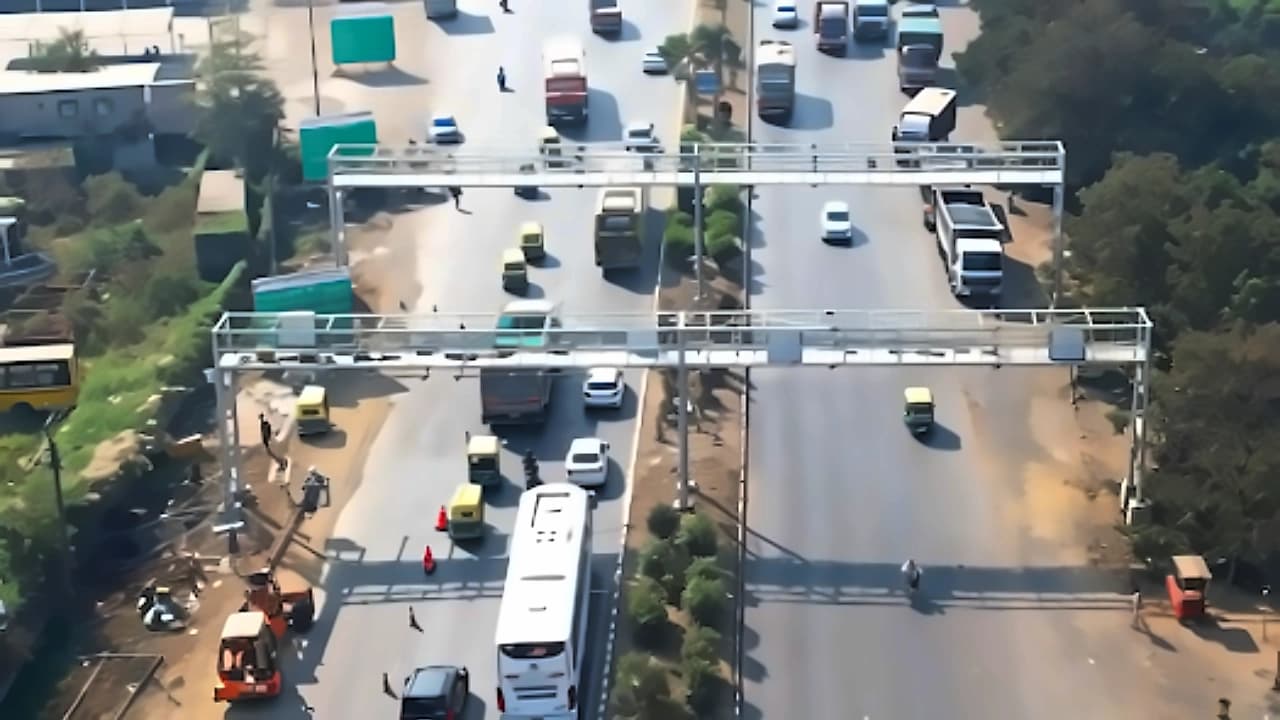
The barrier-less system represents a major technological advancement in highway toll collection, as reported by PTI. Vehicles can pass through at speeds of up to 80 km/h without stopping, making the process completely contactless and free from human intervention. According to NHAI estimates, the barrier-free system could save fuel worth ₹1,500 crore and generate an additional ₹6,000 crore in revenue. The system is designed to reduce congestion, cut travel time, improve fuel efficiency, and lower vehicular emissions. Union Minister Nitin Gadkari emphasized that the barrier-less system will enhance 'Ease of Living' and boost 'Ease of Doing Business' by enabling faster movement of passengers and goods. The minister noted that "Barrier-less tolling will enhance 'Ease of Living' for citizens while strengthening 'Ease of Doing Business' by enabling faster and more efficient movement of goods and logistics."
The Chorayasi toll plaza pilot has been operational since February 2, 2026, after nearly two months of trials by the National Highways Authority of India (NHAI). According to PTI, toll charges will be deducted automatically using ANPR technology - high-resolution cameras scan vehicle number plates and the amount is directly debited from the FASTag-linked account. The system is situated between Surat and Bharuch on the Mumbai–Delhi Highway (NH-48). The Ministry of Road Transport and Highways plans to convert over 1,050 toll plazas across India to AI-based multi-lane free-flow systems by the end of 2026. The minister described the system as "transformative" and noted that "This transformative system will reduce travel time, ease congestion, improve fuel efficiency, lower vehicular emissions, and minimise human intervention in toll operations."
In a significant development, the National Highways Authority of India (NHAI) has revised FASTag annual pass fees for financial year 2026-27 to ₹3,075 from the earlier ₹3,000, with the new rates effective from April 1, 2026. As reported by GoodReturns, the revised rate is applicable for eligible non-commercial vehicles with a valid FASTag seeking to avail the Annual Pass facility at about 1,150 fee plazas on National Highways and National Expressways. The FASTag Annual Pass eliminates the need to frequently recharge FASTag through a one-time fee payment for one-year validity or 200 toll plaza crossings. The pass is applicable for all non-commercial vehicles with a valid FASTag, and gets activated within two hours on the existing FASTag linked to the vehicle after payment of the one-time fee through the Rajmarg Yatra App or the National Highways Authority of India website.