India's hydropower generation has experienced significant declines due to the El Niño effect, with July 2026 showing a 19% year-on-year decrease compared to the corresponding period last year. According to Central Electricity Authority data, hydropower generation on July 12 stood at 550.24 million units, declining 22% Y-o-Y from 706.2 MU on the same day in 2025. From April to July 12, total hydropower generation was 43,441.28 MU, down 9% from 47,690.28 MU during the same period last year. The decline represents the sharpest reduction since February 2024, with June 2026 showing a 21% year-on-year decline marking the most significant drop in recent years. While the narrowing rainfall deficit has eased immediate concerns, experts say it is far too early to conclude that El Niño's influence has weakened.
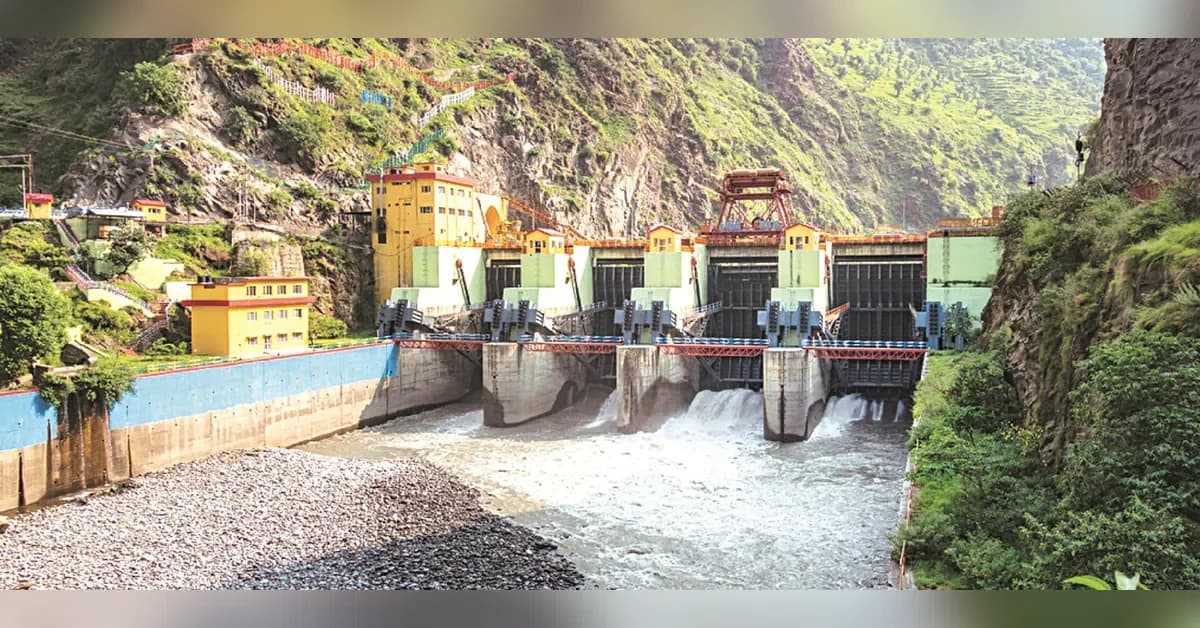
Reservoir storage levels across the country have deteriorated compared to last year, with 20 of the 166 reservoirs for hydroelectric projects showing storage levels below normal capacity. According to reports from Business Standard, these reservoirs have a total live storage capacity of 35.299 billion cubic metres, with seven reservoirs now showing storage below normal levels compared to four last year. The weak monsoon rains linked to El Niño have directly affected hydropower generation by reducing reservoir levels and curbing hydropower output across hydro-rich regions including Himachal Pradesh, Uttarakhand, Jammu & Kashmir, Karnataka and the Northeast. India's monsoon has weakened, increasing the rainfall deficit to eighteen percent, which threatens kharif sowing momentum and impacts agricultural output across many states, particularly in eastern regions.
The Central University of Rajasthan has announced a temporary shift to online classes for its upcoming odd semester, running from July 15 until August 14, due to weather forecasts predicting El Niño conditions and below-normal rainfall. As reported by The Economic Times, the university aims for prudent water management on campus during this period, with faculty conducting virtual classes from campus or their residences as scheduled. This proactive measure demonstrates how educational institutions are adapting to weather-related challenges, particularly as El Niño conditions continue to impact water availability across the country.
Despite reduced hydropower generation, India's electricity demand has reached unprecedented levels, with peak power demand touching an all-time high of 271 GW in May 2026. As reported by Business Standard, this record was broken on four consecutive days within a week in May, driven by heatwave conditions and higher cooling demand. Power demand in June also exceeded last summer's peak of 243 GW, with the market clearing price in the day-ahead market on the Indian Energy Exchange jumping 32% year-on-year to ₹5.2 per unit in June 2026. Power Minister Manohar Lal indicated that the country will need to prepare for peak power demand of about 300 GW next year.
The reduced hydropower output has forced increased reliance on coal generation to meet rising electricity demand. According to S&P Global reports cited by Business Standard, India's hydropower generation fell by 6.3 GW year-on-year in June 2026, accounting for almost half of the 13 GW decline in key Asian markets due to El Niño. A 24.3 GW year-on-year rise in power demand, combined with the hydropower decline and a 0.8 GW reduction in gas-fired output, was balanced by a 20.7 GW increase in coal-fired generation. While solar and wind generation rose by a combined 9.4 GW in June, hydropower's rapid ramping capability helps balance these intermittent sources and meet peak demand.