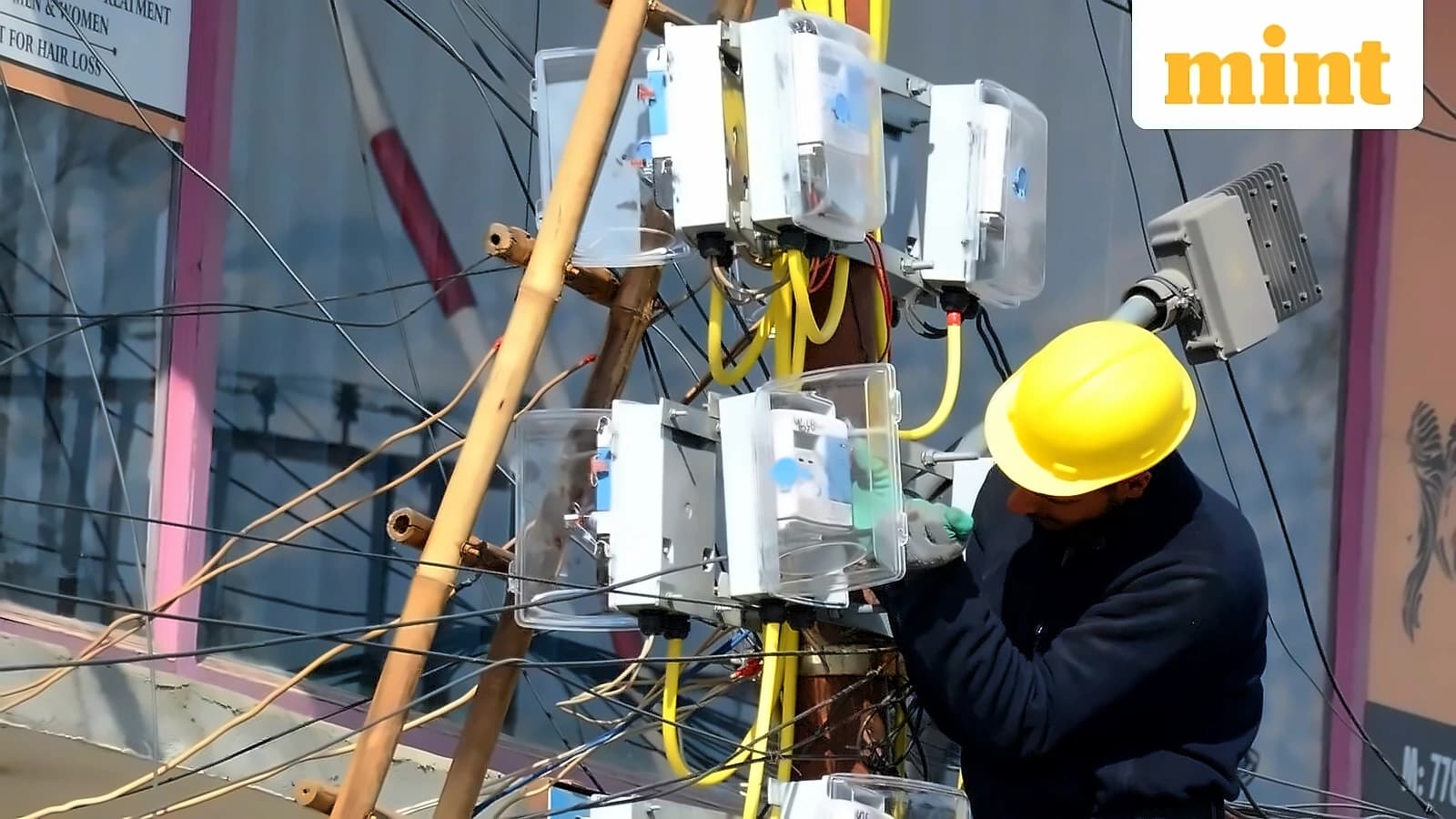
The Centre plans to allow government-authorized private laboratories to test electricity meters, ending the near-exclusive control of power distribution companies (discoms) over meter testing. According to reports from Mint, the proposal being prepared by the Department of Consumer Affairs through its Legal Metrology Division would allow Government Approved Test Centres (GATCs) operated by private entities to test electricity meters. If implemented, consumers disputing the accuracy of their electricity meters would be able to approach authorized private laboratories for independent assessment instead of relying solely on tests conducted by the concerned discom.
Consumer forums across states regularly receive complaints relating to sudden spikes in electricity bills, alleged fast-running meters, defective smart meters and disputes over replacement charges. Under the current system, consumers who suspect a faulty meter submit it to the distribution company for testing, which is generally carried out in laboratories operated or designated by the utility itself. Consumer organizations have long argued that the process lacks independence, and in many cases, if the meter is found to be accurate, consumers have to bear the testing charges.
The reform comes as India undertakes one of the world's largest smart metering programmes, targeting around 250 million smart meters. According to the Ministry of Power's reply to the Lok Sabha on 12 March, smart metering works have been sanctioned for 197.9 million consumers under the Revamped Distribution Sector Scheme (RDSS). As of February 2026, 45.5 million smart meters had been installed under RDSS, compared with 59.7 million installed across the country under various schemes. In Uttar Pradesh, Maharashtra, Bihar, Rajasthan and other states, consumers have reported unexpectedly high bills after smart meter installation, prompting utilities to conduct inspections and awareness drives.
India's electricity meter market is dominated by companies such as Genus Power Infrastructures, Secure Meters, HPL Electric & Power, Larsen & Toubro, Schneider Electric, Adani Energy Solutions, Polycab India, Genus Electrotech and several advanced metering infrastructure (AMI) solution providers. According to Vijay Kumar, partner at law firm Fox Mandal, independent verification of electricity meters would enhance the evidentiary value of test reports and inspire greater confidence among consumers in the fairness of the process. Vinit Mishra from EY India noted that the framework must include robust regulatory oversight, transparent empanelment, periodic audits and safeguards against conflicts of interest to ensure consumer confidence in meter accuracy is not compromised.