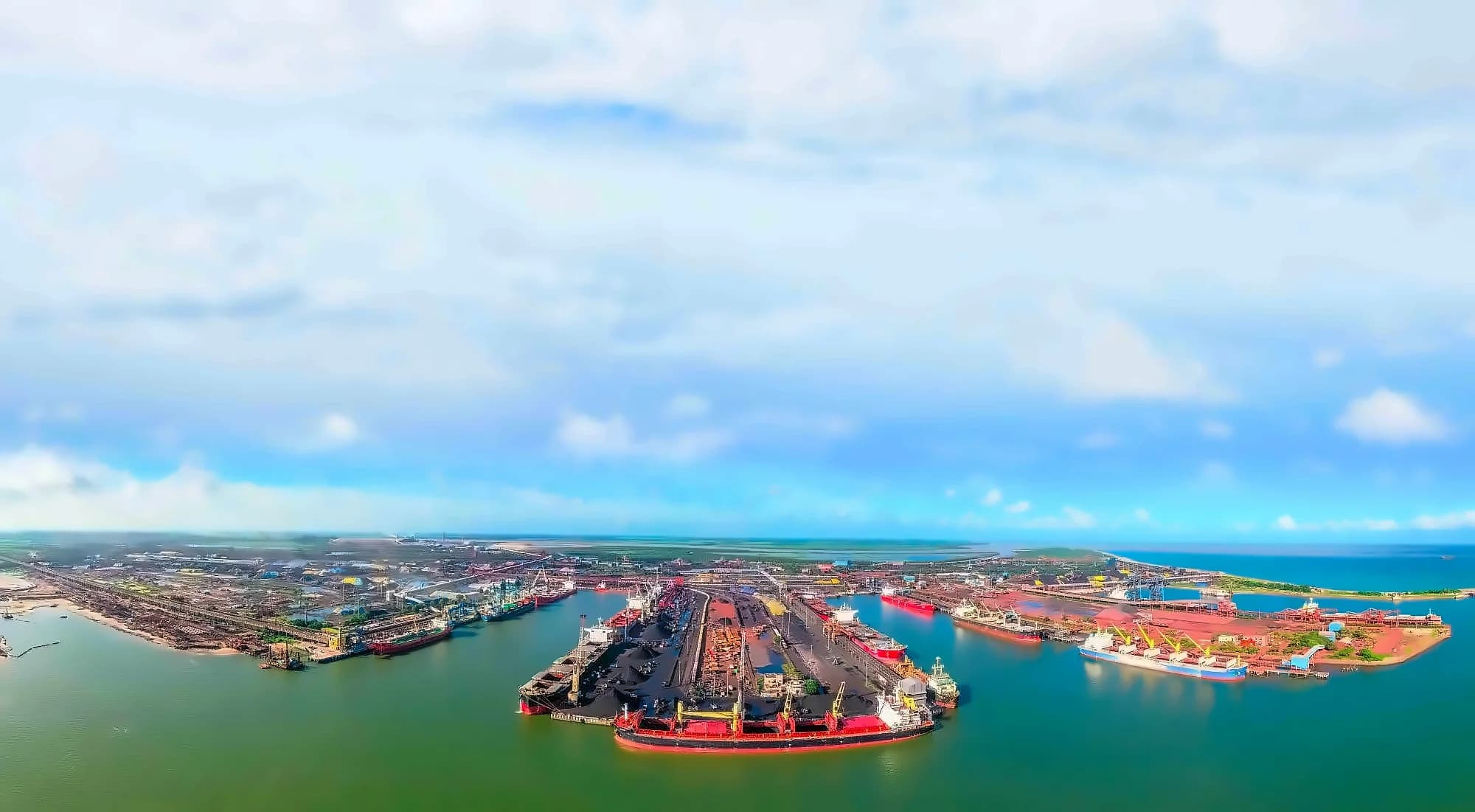
The International Finance Corporation (IFC) has announced a $70 million investment in Jawaharlal Nehru Port Authority's (JNPA) shore power supply infrastructure project. According to the latest announcement, this marks India's first blue financing framework for the maritime sector. The project will enable ships berthed at JNPA to switch off their diesel engines and connect to land-based electricity, with expected carbon emissions reduction of 63% and air pollution reduction of up to 90%. The initiative is also described as the first labelled blue financing for port infrastructure in the Asia-Pacific region and the first investment by a development finance institution in India's state-owned major port authorities. As per JNPA, the project is expected to create more than 400 jobs and will be implemented across the port's five container terminals and 277-hectare multi-product special economic zone.
The Centre has officially notified four major ports as mega ports under the Indian Ports Act, 2025. According to the Ministry of Ports, Shipping and Waterways, the Deendayal (Kandla), Jawaharlal Nehru (Nhava Sheva), Paradip, and Adani Group's Mundra Port have been classified as mega ports after meeting the specified criteria. The classification was made under sub-section (1) of section 73 of the Indian Ports Act, 2025 (27 of 2025). As per the latest notification issued on September 25, 2026, the designation takes effect from the date of publication in the Gazette of India, formalizing the recognition of these ports as mega ports under the Central Government's prescribed criteria. This recognition marks India's entry into the Mega Port era, representing a significant development for the country's maritime and logistics sector.
India's port infrastructure comprises 12 major ports and more than 200 non-major ports. The 12 major ports include Deendayal (Kandla), Mumbai, Mormugao, New Mangalore, Cochin, Chennai, Ennore (Kamarajar), Tuticorin (V O Chidambaranar), Visakhapatnam, Paradip, and Kolkata (including Haldia), along with Jawaharlal Nehru Port. The newly notified mega ports represent significant infrastructure developments within this framework, with Paradip Port becoming the only notified Mega Port on India's East Coast, while Deendayal and Mundra give Gujarat two Mega Ports on the western coast. JNPA, India's key container gateway, completes the four-port network. These ports serve as important nodes in India's maritime network, handling major cargo-generating regions and providing connectivity to domestic as well as international trade routes. JNPA currently operates five container terminals — Nhava Sheva Free Port Terminals (NSFT), Nhava Sheva International Container Terminal (NSICT), Nhava Sheva International Gateway Terminal (NSIGT), Bharat Mumbai Container Terminals Private Limited (BMCT), and APM Terminals, along with a shallow water berth for general cargo, liquid cargo facilities and a coastal berth.
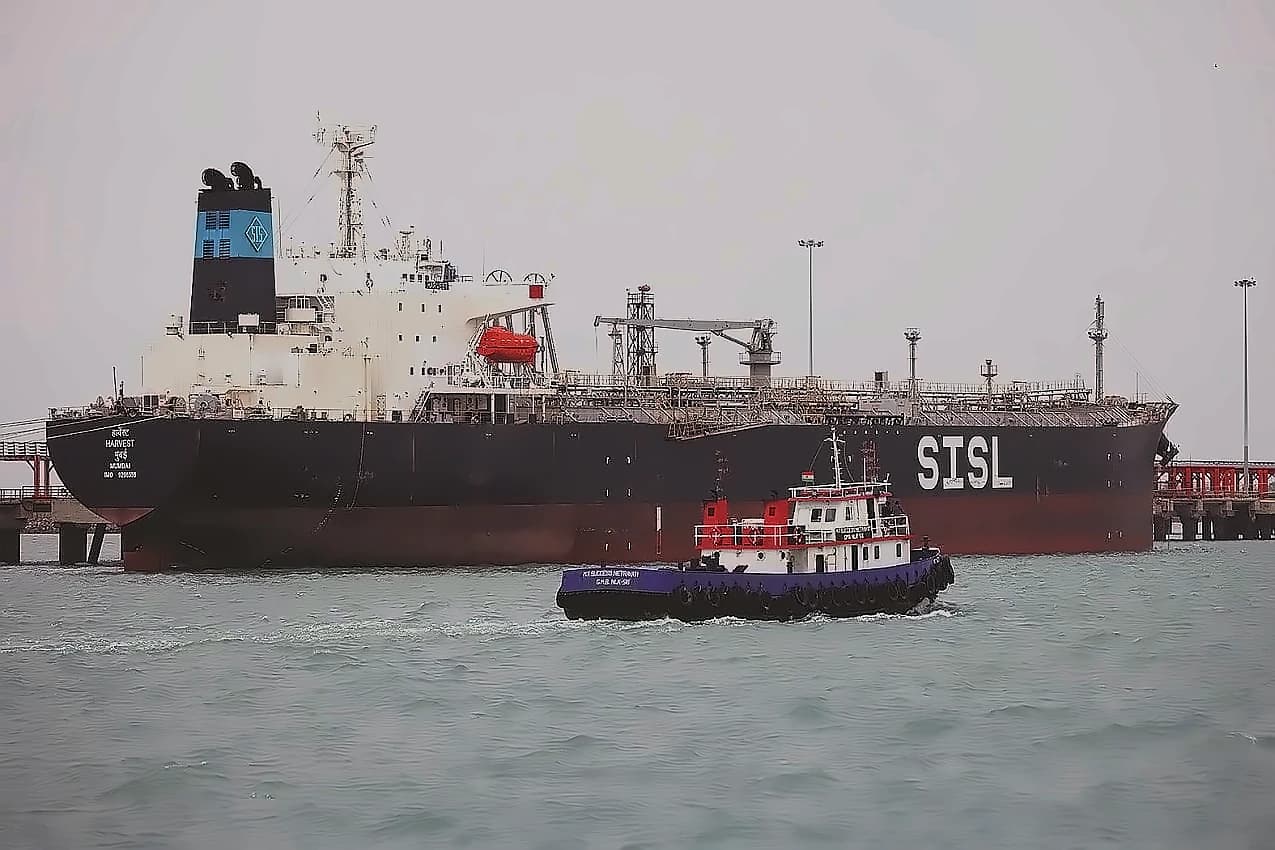
In a significant development for maritime decarbonisation, the government has launched India's first port-based e-methanol production facility at Kandla with a ₹2,300 crore investment. Union Shipping Minister Sarbananda Sonowal announced that this 150-tonne-per-day green fuel plant will supply cleaner fuel to international vessels navigating the Asia-Europe trade corridor. The facility is a joint venture between the Deendayal Port Authority (DPA) and Assam Petro-Chemicals Ltd (APCL), using renewable power, water and biogenic CO2 to produce e-methanol. The plant will position India as a global leader in green fuel production, with competitive pricing at USD 750 per tonne compared to the global rate of USD 1,300 per tonne. The project will be implemented in phases, with Phase I adding 50 tonnes per day capacity by January 2027 and Phase II adding 100 tonnes per day by March 2027, creating more than 3,500 direct and indirect jobs.
The classification criteria for mega ports were established under the Indian Ports Act, 2025, which provides the legal framework for port operations and classification. The latest notification issued on September 25, 2026 under Section 73(2) and 73(3) of the Indian Ports Act, 2025 represents the formal implementation of the Mega Port framework. The initiative is aligned with the Maritime India Vision 2030, which seeks to make Indian ports globally competitive, digitally advanced and environmentally sustainable by the end of the decade. The Harit Sagar Green Port Guidelines, the government's framework for decarbonising port operations and reducing pollution, identify shore power as one of its key interventions. IFC has also supported the development of JNPA's Sustainable Finance Framework, which is intended to help mobilise additional green and blue financing for future investments. Additionally, JNPA is developing the ₹76,220-crore Vadhvan Port, an all-weather, deep-draft greenfield port in Maharashtra, which will be the 13th major port in India.