The Union Cabinet on Thursday approved the development of a 135.871-km, four-lane access-controlled Guwahati-Tezpur corridor on National Highway-15 in Assam at a total cost of ₹8,970 crore. According to a press briefing by Union Minister of Railways Ashwini Vaishnaw, the project was approved by the Cabinet Committee on Economic Affairs (CCEA) that was chaired by Prime Minister Narendra Modi. The project will be implemented on a Build-Operate-Transfer (BOT) toll basis under the National Highways (Original) programme. The corridor excludes the 15.11-km Mangaldoi Bypass and will be constructed between Baihata Chariali near Guwahati and Tezpur in Assam. As reported by Business Standard, this marks the second major highway project in Assam proposed by the National Highways Authority of India (NHAI) under the BOT mode, following the Cabinet's approval of the ₹5,729 crore Guwahati Ring Road project in April 2025. The government has been actively trying to revive the BOT model to encourage private investment in Indian infrastructure, with developers bearing the entire project cost in exchange for toll collection rights over a specified period.
The project includes the construction of a 4.9-km Emergency Landing Facility (ELF) on the Tezpur bypass in coordination with the Indian Air Force, along with five major bypasses spanning 58.7 km to ease congestion in Baihata Chariali, Sipajhar, Kharupetia, Dekiajuli and Tezpur. According to Business Standard, the corridor will comprise 15 major bridges, 30 minor bridges, 19 flyovers, 46 underpasses, an elephant underpass on the Tezpur bypass and around 210 km of service roads to facilitate local traffic movement on the access-controlled highway. The facility will also help decongest the existing NH-27 East-West Corridor on the southern bank of the Brahmaputra River, improving overall regional connectivity and reducing traffic pressure on densely populated areas.
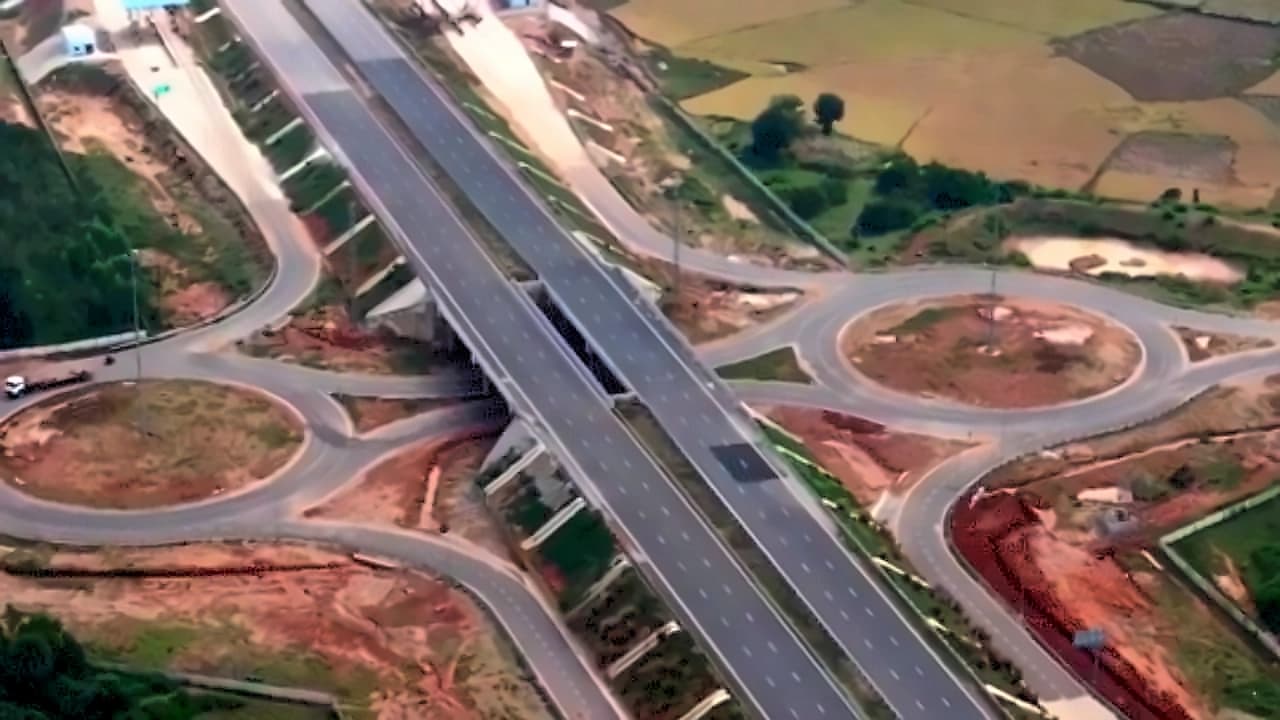
According to Business Standard, the project would double the average travel speeds and cut travel time by half, with the upgraded corridor expected to improve road safety, enhance fuel efficiency and reduce vehicle operating costs. These improvements are expected to boost regional mobility and contribute to socio-economic development in the Northeast. The enhanced connectivity will support the overall development of Assam and the wider northeastern region, with the project playing an important role in improving transport efficiency and promoting economic activity across the region.
According to Business Standard, the project will improve access to eight PM Gati Shakti economic nodes, including industrial parks; two aspirational districts of Darrang and Udalguri; three tourist destinations—Maa Kamakhaya Temple, Kaziranga National Park and Orang National Park; and seven logistics hubs, comprising three major railway stations, two airports and two inland waterway terminals. This comprehensive connectivity enhancement will facilitate faster movement of passengers and freight across the region, with the corridor designed to strengthen connectivity with key economic and strategic locations while supporting the overall development of Assam and the wider northeastern region.