West Bengal Finance Minister Swapan Dasgupta has outlined comprehensive power sector reforms as a 'low-hanging fruit' to attract investors. As reported by Business Standard, the state is considering an 'Open Access' policy that would give corporations the right to buy power from whichever source best suits their needs, including from other states. This reform is particularly significant for data centres, which require water and power, as Dasgupta noted that 'Water we have'. The Finance Minister emphasized that existing and potential investors know there is a need to bring tariffs down, with the Open Access policy designed to help lower electricity prices in the state and make West Bengal more competitive for industrial investments. Dasgupta explained that non-conventional solar energy generation in West Bengal is not optimum due to climatic and geographical reasons, making transmission from states like Rajasthan, Madhya Pradesh, and Gujarat viable options. He also suggested buying power from Odisha and Jharkhand, noting that 'We have come to this particularly on the question of data centres, which need two things: Water, which we have, and power.'
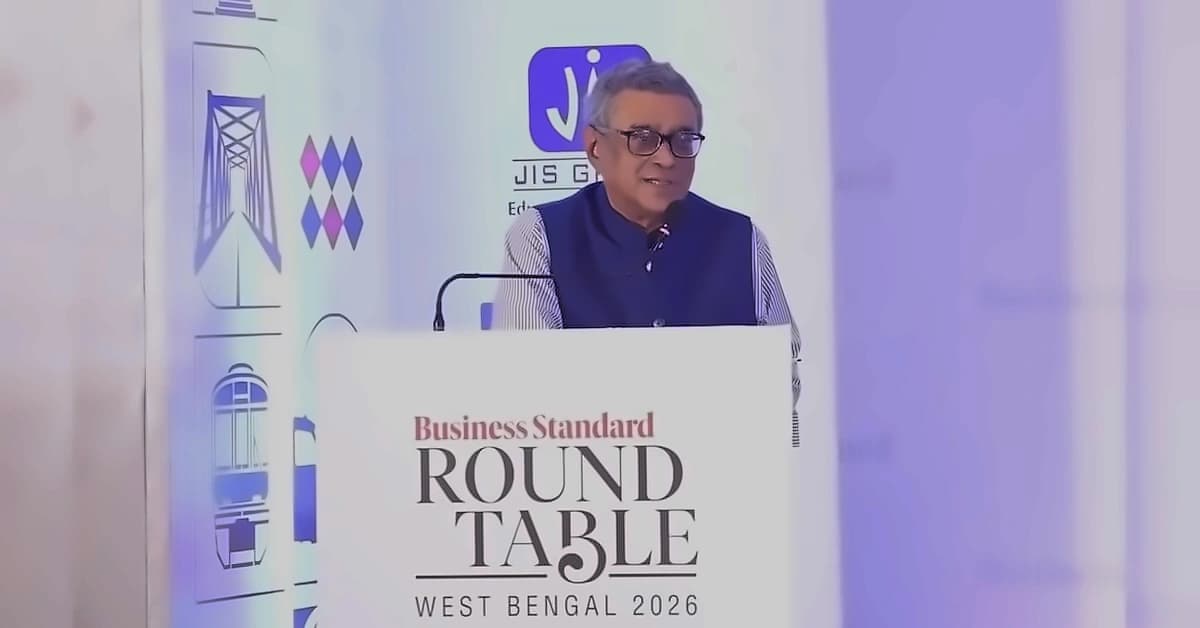
Business leaders and economists have reinforced West Bengal's need for competitive incentives, easier land acquisition, and stronger industrial ecosystems to attract investment and help MSMEs scale up. At a recent panel discussion on investment opportunities, experts emphasized that West Bengal needs not merely one or two marquee investments but a pipeline of large businesses and hundreds of ancillary and MSME units. As Business Standard reports, Umesh Chowdhary, vice-chairman and managing director of Titagarh Rail Systems, noted that the perception that West Bengal is not industry-friendly cannot be dismissed as merely a misconception, stating 'There is no smoke without fire' and pointing to the state's inability to attract and retain engineering talent as evidence of underlying problems. Dasgupta addressed the 'dilemma for corporates' regarding incentives, noting that 'Some have suggested that non-conventional energy inputs have been very feeble; others say that the monopoly situation cannot endure for too long.'
West Bengal's investment track record reveals decades of delays and complications that have undermined confidence in the state's business climate. The most prominent example is Haldia Petrochemicals, announced in 1985 as a ₹3,600 crore joint venture but taking 16 years to reach commercial production. The project involved multiple ownership disputes, with the Tata group exiting in 2008 after deciding petrochemicals was not strategic, and a complex 10-year battle for control between TCG group and WBIDC. Similarly, the Great Eastern Hotel acquisition by Lalit Suri's Bharat Hotels in 2005 failed twice due to worker union fears of layoffs, eventually selling for a mysteriously low price of ₹52 crore after state government underwriting of voluntary retirement schemes. Dasgupta addressed the state's 'inherited liabilities', explaining that 'We have a huge amount of inherited liabilities. They have won court cases. So we've got to take that into account.'
Dasgupta addressed concerns about the state's ₹8 trillion public debt, comparing it with Maharashtra's approximately ₹9 trillion public debt. As reported by Business Standard, he explained that 'Maharashtra is a going concern. West Bengal is yet to demonstrate that it's a fully going concern, and that's really what the difference is.' The Finance Minister emphasized that it's not the debt per se that would deter investment, but how the economy operates in the coming days. The state has also managed to bring various central schemes on board, which Dasgupta estimated could bring about ₹70,000 crore of central resources into West Bengal over the next seven or eight months. He added that the 'gamble' is based on the government's aim of seeing entrepreneurship, enterprise, business, and every other form of economic activity grow. Dasgupta noted that 'Our revenues are quite robust, though we are a bit over-dependent on how much people drink in the state.'
According to Business Standard, West Bengal Finance Minister Swapan Dasgupta advocated 'absolute cooperation' between West Bengal and its neighbouring states Odisha, Jharkhand, Assam, and Sikkim. In a fireside chat, he said such cooperation would allow West Bengal and Assam, for instance, to address the 'enormous crisis' in their tea gardens. Dasgupta emphasized that 'There is a commonality – for instance, the tea gardens are facing an enormous crisis. It cannot be addressed only by looking at West Bengal – Assam has its issues too. We need to move into a state of absolute cooperation so that we can view eastern India as one unit but separate culturally, and we can respect each other's relative differences but acknowledge the commonality.' He noted that 'Cooperation with Odisha, Jharkhand, Assam, Sikkim is absolutely important' and that 'We have come to this particularly on the question of data centres, which need two things: Water, which we have, and power.'
As reported by Business Standard, experts emphasized that West Bengal's strategy should not revolve solely around attracting a single large corporate investor, with Rudra Chatterjee, managing director of Luxmi Group and chairman of Obeetee, calling for 'a hundred other at least ₹1,000 crore businesses' beyond the large corporate investor. The challenge lies in enabling existing MSMEs to graduate into larger enterprises, with Abhirup Sarkar drawing a comparison between West Bengal and Kerala's different industrial approaches. While West Bengal focused on attracting large industries including the Tatas, Kerala concentrated more on medium-sized enterprises, with Kerala's per-capita income rising from around 60 per cent of the all-India level in the mid-1990s to almost twice the national average. Dasgupta highlighted that 'The entire first phase of the Left Front government was devoted to Lin Biao's approach of the countryside taking off and surrounding the cities. It didn't quite work — agriculture may have prospered but I don't think there was enough value addition to actually warrant it to lift the entire state.' He emphasized that 'Agriculture's share of GDP is on a declining trend. So it's basically services and manufacturing which are the most important things.'