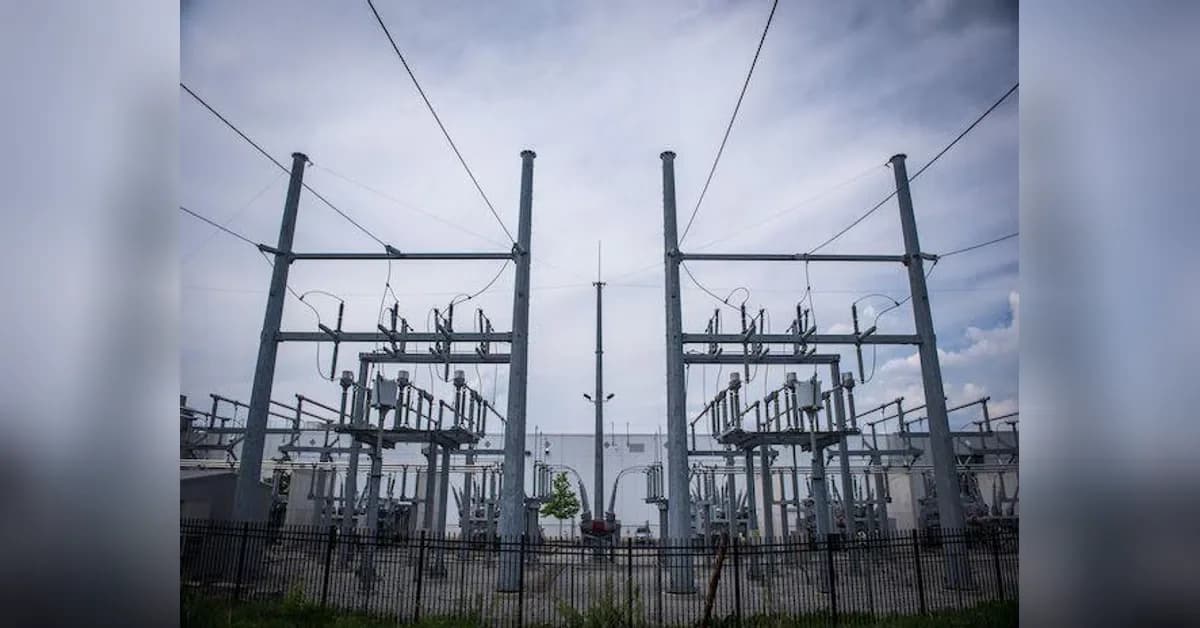
Odisha's power sector has undergone a significant transformation over the past two decades, emerging as a key driver of industrial growth. According to reports from NDTV Profit, the state's per capita electricity use reached 2,191 kWh in FY24, which is 57% above the national average of 1,400 kWh. Between FY20 and FY24, Odisha achieved a 9% compound annual growth rate, more than double the 4% all-India rate. This growth has been primarily driven by the industrial sector, as noted in the Economic Survey, indicating increased factory construction and expansion across various sectors. The state's reforms have turned its low-cost electricity into a clear industrial advantage, with more reliable distribution reducing operational risks for energy-intensive sectors.
The state's power sector reforms began in 1999 when Odisha privatised all four distribution companies (discoms). As reported by NDTV Profit, this initial attempt failed when private players inherited weak networks, high theft, and poor payment discipline. A super-cyclone damaged the grid, and the private sector player walked away, forcing the state to take the companies back. The root cause was a policy flaw where the state inflated Grid Corporation of Odisha's asset values two to three times before privatisation, resulting in sharp increases in annual charges to discoms and subsequent tariff hikes that consumers couldn't afford. Despite this first failure, the state didn't walk away from reform. It tried privatisation again around 2017, and this time Tata Power stepped in.
Between 2020 and 2021, Tata Power stepped in to take charge of all four discoms under a redesigned model. According to NDTV Profit, this new approach addressed previous issues through network strengthening initiatives including conductor replacement, new feeders, automation, and operational improvements. The model included smart metres, energy audits, and consumer indexing, which reduced losses and arrears while making systems more resilient, even sustaining severe events like Cyclone Yaas. This partnership proved successful in contrast to the earlier privatisation failures, demonstrating how resource-rich states can rewire their economies through sustained reform efforts.
Odisha has established a comprehensive power incentive structure to attract industrial investment. As reported by NDTV Profit, priority sectors including metal downstream units, agro-processing, IT services, and speciality steel receive no electricity duty for seven years, a ₹2-per-unit discount, and significant reductions on renewable power costs. Thrust sectors such as aerospace, defence, automobiles, chemicals, white goods, textiles, and white goods get the same benefits for 10 years plus higher capital support. Green hydrogen and ammonia receive the strongest package with a ₹3-per-unit discount, 20-year duty waiver, and long-term relief on renewable power costs. All of this turns Odisha's low-cost electricity into a clear industrial advantage, with the state no longer depending on tariff subsidies, leaving more financial room for welfare and industrial development.
Various industries have expanded their footprint in East India through Odisha, including metals, clean-energy manufacturers, EV-material makers, green fuel, lab-grown diamonds, food processing, textiles, electronics, pharmaceuticals, biotech, and port-based logistics. According to NDTV Profit, the state's reforms have turned its low-cost electricity into a clear industrial advantage, with more reliable distribution reducing operational risks for energy-intensive sectors. The numbers tell the story - in FY24, Odisha's per capita electricity use was 2,191 kWh, that is 57% above the national average of 1,400 kWh. Lower distribution losses have changed the economics of the grid, and the state's reforms show what happens when a resource-rich state keeps at reforms, even after initial failures. This demonstrates that a resource-rich state doesn't have to fall into the usual trap of relying on natural resources alone, but can rewire its economy through sustained reform efforts.