The Uttar Pradesh Electronics Component Manufacturing Policy, 2025 was notified on September 4, 2025, with an effective date of April 1, 2025. According to reports from the Department of Information Technology and Electronics, Government of Uttar Pradesh, the policy has a six-year validity period from April 1, 2025 to March 31, 2031. The Uttar Pradesh Electronics Corporation Limited serves as the nodal agency for implementing this framework, which aims to promote domestic manufacturing of specified electronic components and reduce import dependence. The policy aligns with the Electronics Component Manufacturing Scheme (ECMS) designed to drive this transition, focusing on critical components and materials that remain import-dependent including printed circuit boards, camera and display modules, connectors, capacitors, lithium-ion cells and rare-earth magnets.
The policy offers state top-up matching the Union government's Electronics Component Manufacturing Scheme and provides 20 per cent capital subsidy for certain units outside the central scheme. As reported by the policy documentation, additional localisation incentives include 2 per cent additional incentive for domestic sourcing or manufacturing of cathode active material for lithium-ion cells and 1 per cent additional incentive for domestic sourcing or manufacturing of laminates for multi-layer printed circuit boards. The policy also provides 30 per cent of eligible fixed capital investment excluding land and buildings or ₹50 crore, along with land subsidies of 25 per cent on land allotted by development authorities and up to 50 per cent in Bundelkhand and Purvanchal regions. The ECMS seeks to increase domestic value addition and reduce import dependence while strengthening resilience across India's electronics supply chain.
The policy covers display module sub-assemblies, camera module sub-assemblies, non-surface-mount passive components, electro-mechanical components, multi-layer printed circuit boards, lithium-ion cells for digital applications, enclosures, high-density interconnect boards, surface-mount passive components, and production equipment used in electronics manufacturing. According to the policy framework, new and expanding electronics component manufacturing units located in Uttar Pradesh are eligible to apply. The policy specifically supports printed circuit boards, display modules and lithium-ion cells manufacturing, while encouraging research, development, start-ups and micro, small and medium enterprises. The ECMS supports domestic manufacturing across components, sub-assemblies, supply-chain products and related capital goods, moving beyond assembly to domestic manufacturing of critical components and essential raw materials.
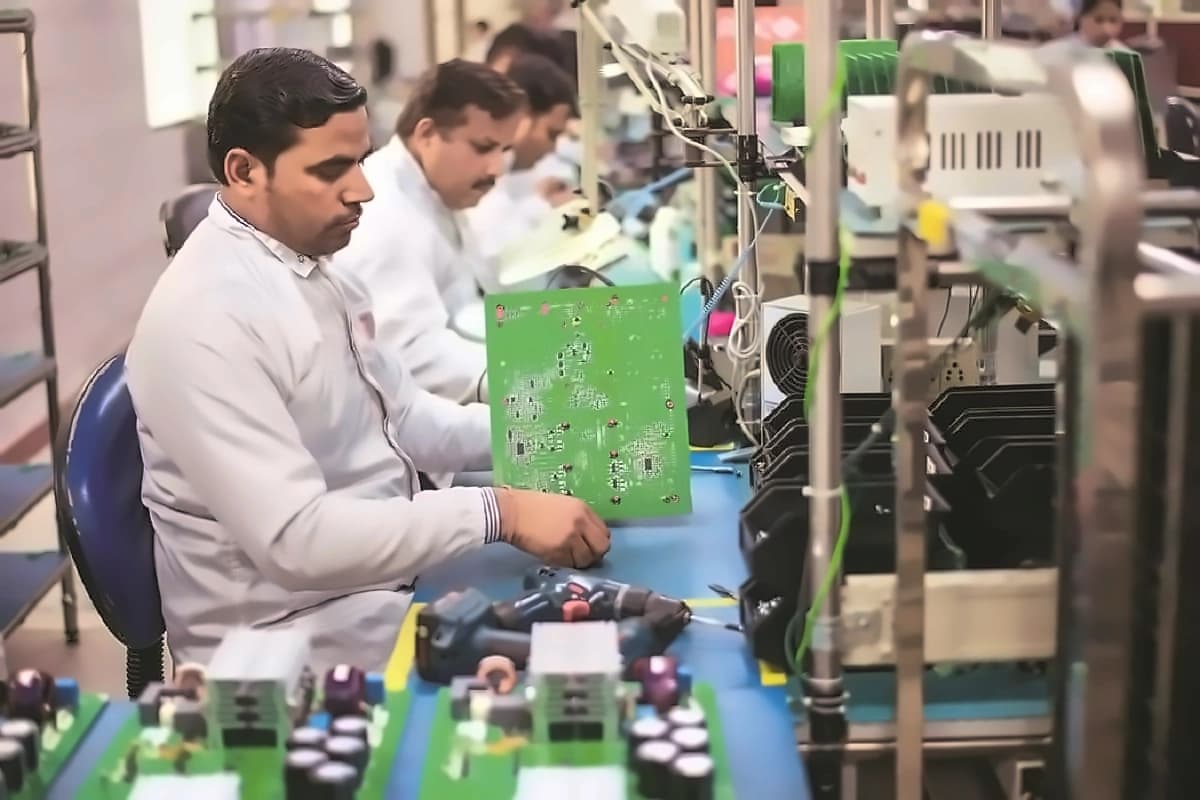
Beyond financial incentives, the policy provides electricity-duty exemption, interest subsidy, patent-cost reimbursement, skill-development assistance, employees' Provident Fund reimbursement, lease-rental support, logistics subsidy, and research and development assistance. As reported by Invest UP, the application process involves state application and approval through the nodal agency, alongside a separate Union government application where central incentives are sought. The policy supports existing electronics clusters, industrial parks and the Uttar Pradesh Defence Industrial Corridor to enhance component manufacturing capabilities. The ECMS accelerates the development of a robust and deep-rooted 'Swadeshi' electronics value chain, moving beyond assembly to domestic manufacturing of critical components and essential raw materials.

According to the policy documentation, dependence on the central scheme represents a significant challenge as the most substantial top-up benefits depend on approval under the Union government's ECMS. The policy also faces complex incentive calculations due to varying eligibility criteria based on component type, central approval status, investment, production, employment and domestic sourcing requirements. Additionally, duplicate claims risk exists as investment or sales already incentivised under another Uttar Pradesh government scheme cannot be claimed again under this policy, requiring applicants to provide undertakings on this point. The scheme aims to convert India's manufacturing momentum into a self-reliant and globally competitive electronics ecosystem by building capabilities deeper within the electronics value chain.