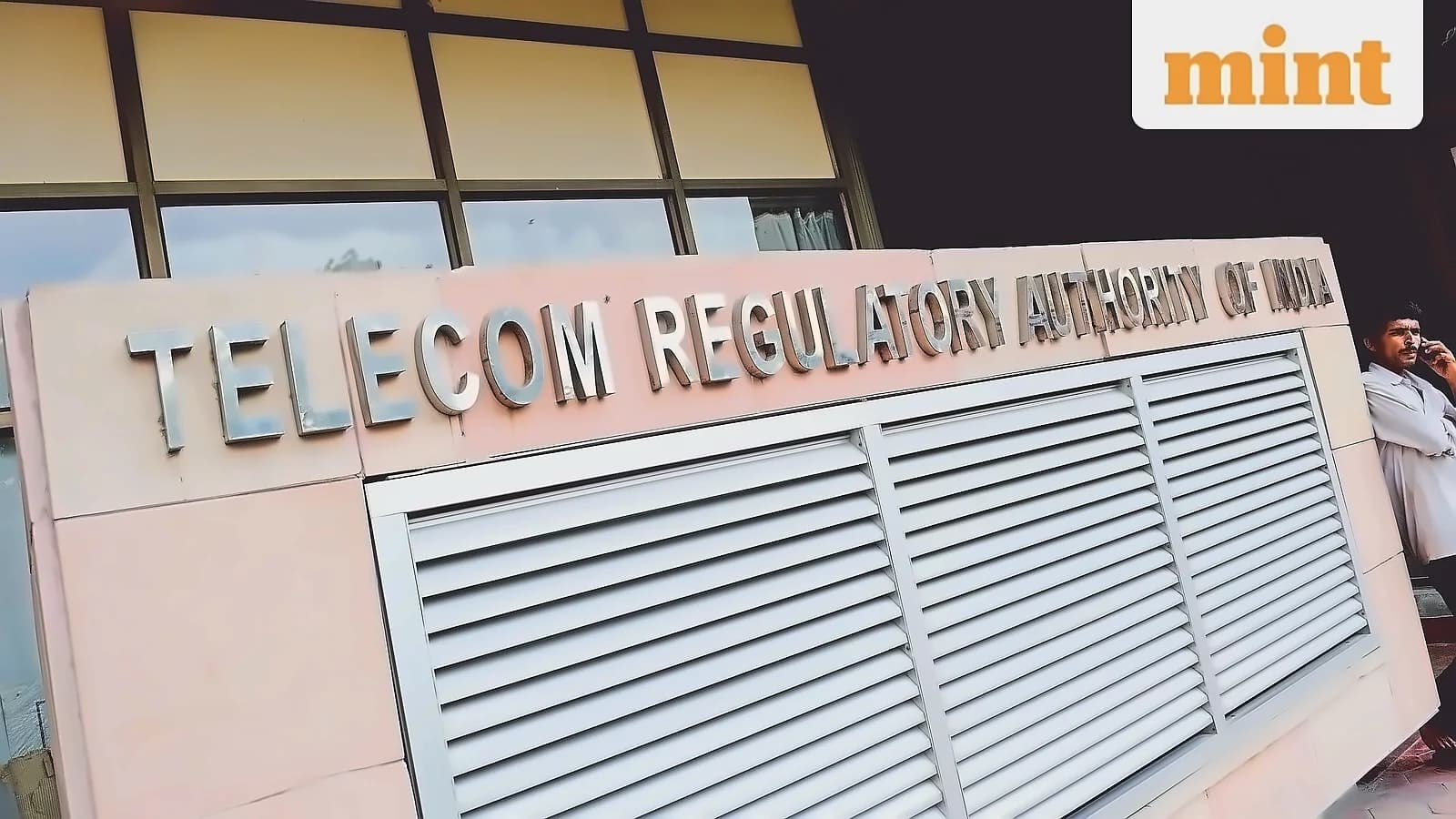
The Telecom Regulatory Authority of India (Trai) has proposed the first major overhaul of telecom grievance-redressal rules in 12 years, following a significant surge in consumer complaints. According to reports from Mint, complaints received by the regulator rose 63% to 73,081 in FY26 from 44,733 in FY24, with complaints standing at 55,978 in FY25. Under the proposed Telecom Consumers Complaint Redressal (Fourth Amendment) Regulations, 2026, operators could face penalties of ₹1,000 for each improperly dismissed complaint and ₹5,000 for each wrongly disposed appeal. The draft rules would also require complaint centres to operate round the clock, replacing the current limited-hour framework. The regulator's draft regulations also proposed restructuring telecom services providers' interactive voice response systems to add new mandatory options such as an appeal category for consumer complaints and ways to connect to human agents to register their complaints.
Major telecom operators have strongly opposed the proposed penalty structure, arguing that existing complaint mechanisms are adequate and that new frameworks could create unnecessary compliance burdens. According to submissions reported by Mint, Bharti Airtel chief regulatory officer Rahul Vatts stated that the current IVRS architecture should be preserved, citing consumer experience being influenced by devices, apps and third-party platforms. The Cellular Operators Association of India (COAI) similarly argued that while operators are responsible for network performance, provisioning, billing and customer support, they cannot be held accountable for deficiencies from user devices and third-party ecosystem components. Reliance Jio has also opposed the proposed penalties, stating that the determinant 'improper dismissal' or 'unsatisfactory disposal' are highly contextual and subjective, with significant proportion of complaints relating to network issues beyond operator control. Telecom operators said the proposed changes require massive overhauls to their IT systems, call centres and network interfaces, with Bharti Airtel and Vodafone Idea requesting a transition period of six-nine months instead of the proposed 30 days. Operators also opposed the massive compliance burden of generating highly granular key performance indicator reports, which Trai had proposed to be submitted to it and to the telco's own board of directors or CEO every quarter.
Consumer advocacy groups are pushing for stronger safeguards and easier access to human support, citing persistent issues with current complaint resolution processes. As reported by Mint, CUTS International has urged Trai to provide an independent review mechanism such as a Telecom Consumer Ombudsman or second-level external appellate forum for consumers who remain dissatisfied after exhausting internal grievance procedures. The Gujarat-based Consumer Protection Association highlighted that consumers' biggest grievances include endless IVRS loops, inability to reach human support, automated complaint closures, and chatbot dependency. The association has demanded that every consumer shall have the right to connect with a human representative within a reasonable waiting period not exceeding three minutes. Consumer groups argued that eliminating the advisory committee would remove a critical structural safeguard and create an institutional bias, leaving consumers without an independent voice when resolving appeals. They proposed modernising the committee instead, through digital advisory consultations, virtual participation or implementing strict 5-7 day turnaround timelines for the committee to provide its input.
Telecom companies have raised concerns about operational feasibility and cost implications of the proposed requirements. According to Mint reports, operators have opposed requirements to provide complaint-centre services in all official languages of each state and to run centres 24x7, arguing these measures are operationally impractical and would significantly increase staffing and supervision costs. Operators currently offer services in Hindi, English and 10-12 regional languages. The draft regulations would require operators to resolve complaints within three days where no separate timeline exists under quality-of-service rules, with consumers dissatisfied with outcomes able to appeal within 15 days compared to 30 days under the current framework. Consumer groups have urged Trai to retain the 30-day appeal window, arguing that aggrieved users need more time to escalate complaints. The regulator's mandate for mobile apps and web portals to provide real-time context-specific status updates and dispatch notifications across multiple channels, including acknowledging the complaint and sharing technician allotment details, adds to operational complexity.