At the 31st Southern Zonal Council meeting at Mamallapuram, chaired by Union Home Minister Amit Shah, chief ministers of South Indian states urged the Centre to ensure fair treatment in fiscal and political matters. According to reports from Business Standard, the southern states argued that their successful implementation of population stabilisation should not result in disadvantageous fiscal devolution. Tamil Nadu CM C Vijay Joseph called for "fairness in funds, fairness in voice and fairness in the respect owed to the states that power this economy," emphasizing that the south was the "engine of the Indian economy" with five southern states accounting for nearly 33% of the country's gross domestic product despite having about 20% of its population. Karnataka CM D K Shivakumar called for "fairness in funds, fairness in voice and fairness in the respect owed to the states that power this economy," noting that the south was the "engine of the Indian economy" with five southern states accounting for nearly 33% of the country's gross domestic product despite having about 20% of its population. The Chief Minister highlighted that Karnataka accounts for 42% of India's software exports, hosts around 1,100 Global Capability Centres, and attracts over 21% of India's FDI equity inflows between 2019 and 2025.
Tamil Nadu CM C Vijay Joseph urged the Union government to provide clear legislative assurance that no State would suffer a reduction in its percentage of representation in Parliament because of its success in population stabilisation. As reported by Business Standard, he pointed out that the freeze on allocation of Lok Sabha seats based on the 1971 Census was approaching its end and that the Delimitation Bill, 2026 was being considered. The Southern States had a "genuine and shared concern" that population-based delimitation could reduce their collective voice in Parliament. Karnataka CM Shivakumar urged the council to adopt a resolution calling upon the Union government to honour the 1971 Census as the basis for delimitation, retain the Lok Sabha's existing strength of 543 seats for the next 25 years, and accommodate women's reservation within these existing seats. He emphasized that "the South's success in controlling its population must not become a reason for reducing its political voice." Vijay argued that "public policy must not inadvertently penalise States for fulfilling national objectives," stating that the Southern States have been at the forefront of population stabilisation, human development, and economic growth.
The meeting highlighted significant financial disparities affecting southern states. Tamil Nadu CM Vijay emphasized that after the introduction of GST, states have virtually no flexible revenue levers outside petroleum and alcohol, calling on states to work together to regain flexibility in determining GST rates. Karnataka CM Shivakumar pointed out that the 15th Finance Commission's recommended special grant of ₹5,495 crore and State-specific grants of ₹6,000 crore had not been released. While welcoming the increase in Karnataka's share to 4.131% under the 16th Finance Commission, he said the State's share should ultimately be restored to 4.7%. The Chief Minister noted that "Karnataka is the second largest contributor to GST and to Income Tax, and a State that performs on growth and revenue deserves to be incentivised, not penalised." Vijay said the Southern states have been among the principal drivers of India's economic growth and contributors to the national exchequer, with their investments in human development, fiscal management and population stabilisation helping build resilient economies. He argued that "States that have invested in development, fiscal discipline, and demographic transition should not be placed at a disadvantage," stating that "the fiscal devolution framework must recognise both need and performance."
Vijay raised water resource management as a key area requiring interstate cooperation, stating that "water is fundamental to the lives, Agriculture and livelihoods of millions, and the management of interstate rivers demands both cooperation and unwavering respect for the rule of law." He emphasized that the rights of lower riparian states and the livelihoods dependent on assured river flows must be protected. On the Cauvery river, he said the timely implementation of the Supreme Court's judgment and decisions of the Cauvery Water Management Authority remained essential. On Mullaperiyar, he said safety should continue to be guided by judicial decisions allowing the water level to be raised to 152 feet, noting that "any upstream intervention with the potential to affect the rightful share of another State must proceed only within this legal and institutional framework." Vijay called for Supreme Court judgments, tribunal awards and statutory mechanisms for river management to be implemented fully. He also highlighted the sea as central to the Southern peninsula, calling for the maritime economy to become a key part of the region's development agenda. With its 1,076-km coastline, Tamil Nadu is ready to work with other Southern states on the shared maritime vision, calling for an integrated approach covering ports, coastal shipping, fisheries, marine industries, maritime services and coastal tourism to unlock the potential of the Blue Economy.
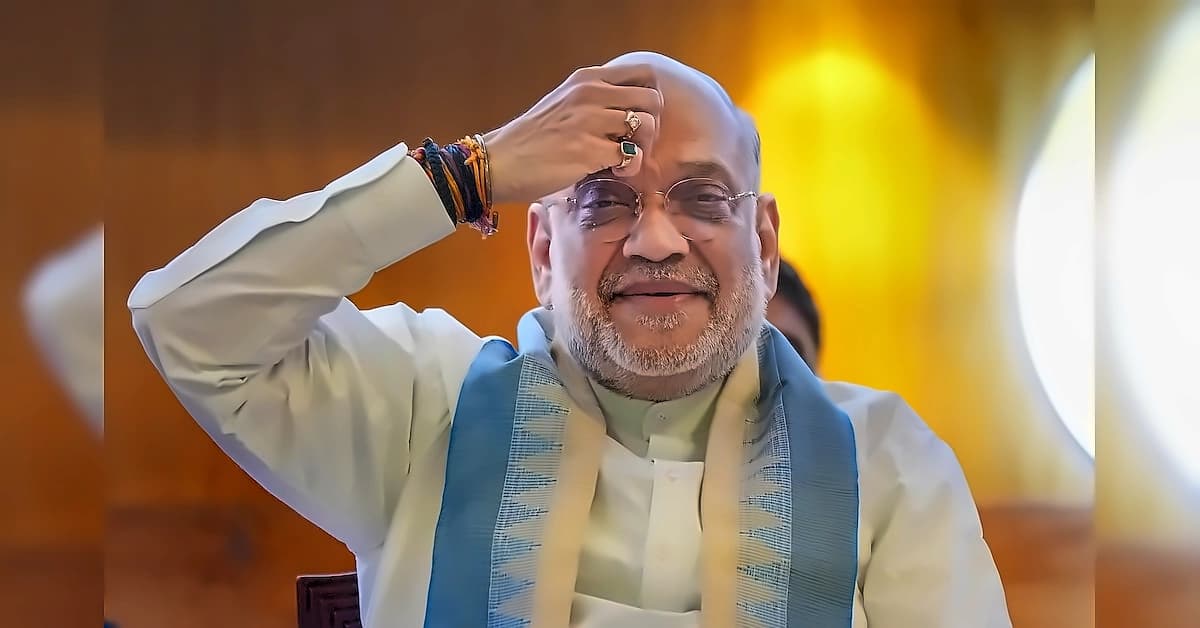
The meeting highlighted the southern region's economic potential and integration opportunities. According to Business Standard, Tamil Nadu CM Vijay emphasized that southern states should not be disadvantaged in fiscal devolution despite their success in population control. Karnataka CM Shivakumar called for "fairness in funds, fairness in voice and fairness in the respect owed to the states that power this economy," noting that the south was the "engine of the Indian economy." The meeting was attended by chief ministers from all southern states, lieutenant governors of Puducherry and Andaman and Nicobar Islands, and the administrator of Lakshadweep. Vijay said the challenges and opportunities before the Southern states are shared and therefore require a common response, stating "Our rivers, coasts, infrastructure, and markets should unite us in a common purpose and shared prosperity." He concluded by reaffirming Tamil Nadu's commitment to working with the Union government and other Southern states towards a Developed India, saying "Where we agree, let us act with ambition. Where we differ, let us resolve our differences through dialogue, mutual respect, and the rule of law. That is the essence of cooperative federalism."