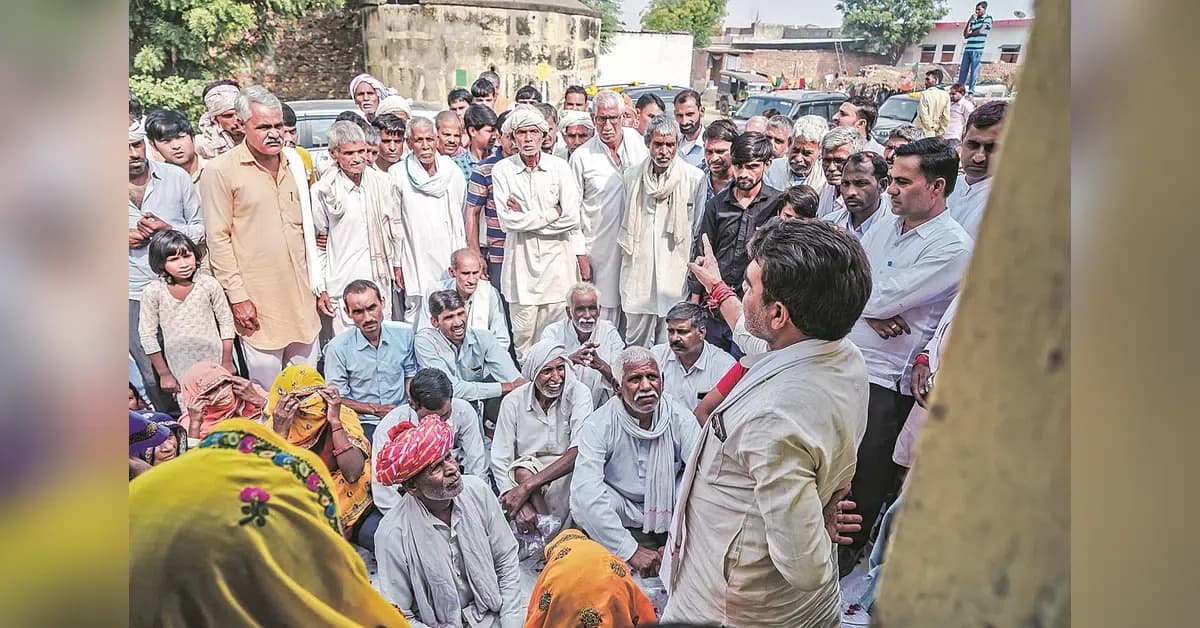
A government-appointed panel has flagged the absence of reliable and granular data at the Gram Panchayat level as one of the biggest challenges affecting the functioning of State Finance Commissions (SFCs). According to the Committee on Datasets for State Finance Commissions, the lack of a robust data ecosystem has adversely impacted both the quality and timeliness of SFC recommendations. The committee warns that this data deficit is undermining efforts to strengthen fiscal decentralisation and local self-governance across the country. The commissions, constituted under Article 243-I of the Constitution, are responsible for assessing the financial position of Panchayati Raj Institutions and recommending the sharing of financial resources between state governments and local bodies.
The government is set to launch the Report of the Committee on Datasets for State Finance Commissions on Monday, marking a significant step to strengthen evidence-based fiscal decentralisation in India. According to an official statement, Dr V Anantha Nageswaran, Chief Economic Advisor (CEA) to the government, will release the report in the presence of Vivek Bharadwaj, Secretary, Ministry of Panchayati Raj, and Dr Manish Gupta, Associate Professor, National Institute of Public Finance and Policy (NIPFP), along with senior officers. The launch will be followed by a keynote address by the Chief Economic Advisor on data-driven policymaking and evidence-based fiscal governance as essential foundations for empowered local self-government and inclusive development.
The report offers a structured and comprehensive mapping of the essential datasets required by State Finance Commissions and sets out actionable recommendations to improve data availability, standardisation, interoperability, and institutional capacity across the data ecosystem supporting fiscal analysis at the local level. As reported by the ministry, it is expected to serve as an authoritative reference for State Governments, State Finance Commissions, constitutional bodies, economic researchers, and all those committed to deepening democratic decentralisation and strengthening local public finance in India. The committee calls for Panchayat-level fiscal databases, uniform accounting standards and dedicated SFC cells across states to address the current data gaps.
For these Commissions to discharge their constitutional responsibility with requisite rigour and credibility, access to reliable, timely, and disaggregated data on local government finances, demographics, infrastructure, service delivery, and asset management is indispensable, according to the ministry. The committee was constituted in response to concerns raised at the Finance Commissions' Conclave on Devolution to Development convened in November 2024 under the leadership of the Chairman of the Sixteenth Finance Commission, where the difficulty in accessing comprehensive datasets across departments and agencies was identified as a critical gap affecting the quality and timeliness of State Finance Commission recommendations.
As Kerala's White Paper on fiscal health laid in State Assembly on Thursday (June 4, 2026) highlights, Centre-State fiscal relations have deteriorated sharply, with the state operating in a less flexible fiscal space due to multiple constraints. The document, drafted by a three-member panel headed by former Union Cabinet Secretary K.M. Chandrasekhar, notes that Kerala's share from the divisible tax pool has risen from 1.92% under the 15th Finance Commission to 2.38% under the 16th, but this nominal increase of 0.457% does not really translate into net gain for the State due to the cessation of post-devolution RD grants, sector-specific grants, and State-specific grants. Over the five-year period of the 15th Commission, Kerala had received ₹37,814 crore as RD grants and ₹2,412 crore under State and sector-specific grants, which have been removed for the 16th Finance Commission's 2026-31 period.