India could add at least 2,000 companies to its listed universe over the next few years if industry bodies identify and prepare promising small and medium enterprises for public markets, according to SEBI Chairman Tuhin Kanta Pandey. Speaking at the CII Financing Summit, Pandey asked CII and other industry associations to build clusters of promising firms and help them prepare for public listings. The reference is to additional listings, not 2,000 equity IPOs, and includes companies that may access public markets through equity or debt instruments. Pandey urged industry associations, including CII, to identify promising enterprises, adopt clusters and help businesses prepare to access public capital, stating that the market should aim for at least 2,000 listings in the next few years, at least from the small and medium sector. This expansion forms part of a broader effort to make Indian markets more accessible to overseas capital, alongside digitised FPI onboarding and work to reduce registration time to as little as five business days.
The Securities and Exchange Board of India (Sebi) is introducing a comprehensive single-fine mechanism for listed companies to prevent duplicate penalties from multiple stock exchanges. As reported by Upstox, Chairman Tuhin Kanta Pandey announced this initiative while addressing the CII Financing Summit in Mumbai on Friday, November 20, 2026, emphasizing that the aim is to eliminate duplicate reporting, simplify compliance and reduce the regulatory burden on listed entities. The regulator is reviewing the LODR framework to identify disclosures already made by listed companies under the Ministry of Corporate Affairs requirements, with a view to eliminating duplicate reporting. According to The Hindu, Pandey highlighted that SEBI's core philosophy is driven by optimum regulation, with the regulator focusing on transitioning from reactive rule-making to optimum regulation and anticipatory, risk-based supervision. A joint working group of SEBI and the Reserve Bank of India is expected to begin work immediately on a common application form and further simplification of registration procedures.
SEBI is planning dramatic reforms to simplify foreign portfolio investor operations, including reducing FPI onboarding time to as little as five business days. As reported by The Economic Times, Chairman Tuhin Kanta Pandey announced that the regulator would soon release a consultation paper proposing further simplification of FPI operations in India to make it easier for foreign investors to access domestic capital markets. The proposed changes seek to reduce regulatory hurdles for overseas investors as India looks to deepen participation in its capital markets. Currently, around 740 FPIs have registered under the Swagat framework, accounting for 17% of total FPI assets under custody as of October 31, 2026, with some foreign investors already completing the onboarding process within the proposed five-day period. The regulator has digitised FPI onboarding, accepted digitally signed powers of attorney and enabled net settlement to reduce funding costs. From December 1, KYC review cycles for applicable FPIs will increase from one and three years to two and eight years, respectively, reducing repetitive compliance activities. Additionally, SEBI has also simplified digital onboarding for non-resident Indians, overseas citizens of India and foreign nationals, with eligible investors now able to complete KYC and re-KYC without visiting India. Pandey stated that "By simplifying procedures and reducing avoidable compliance burdens, we aim to attract a wider pool of international capital and improve financing opportunities for Indian businesses, while maintaining investor safeguards".
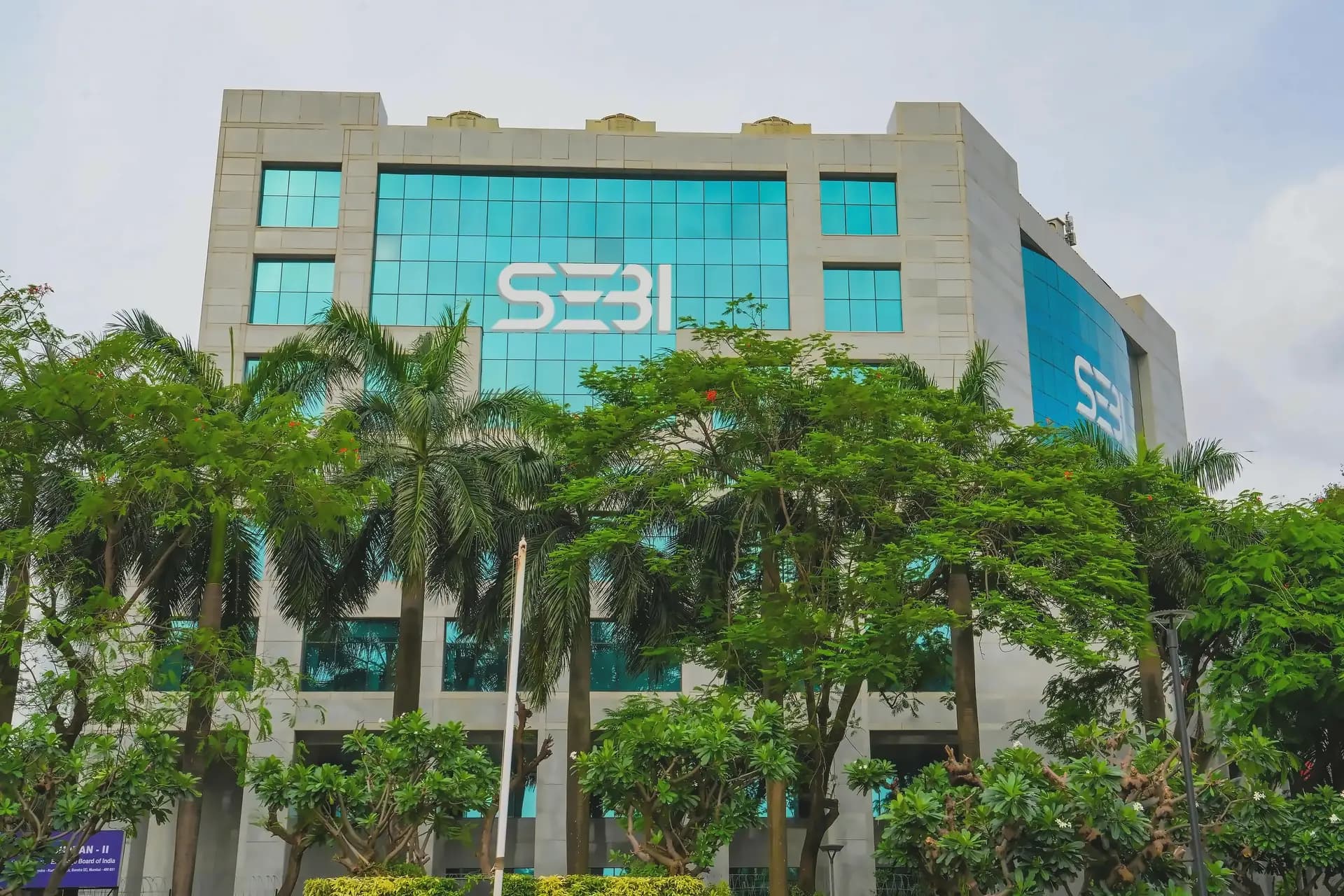
SEBI has initiated a comprehensive review of the Issue of Capital and Disclosure Requirements (ICDR) framework and is also reviewing the Listing Obligations and Disclosure Requirements (LODR) framework. As reported by Upstox, the regulator is reviewing the LODR framework to identify disclosures already made by listed companies under the Ministry of Corporate Affairs requirements, with a view to eliminating duplicate reporting. The regulator is focusing on deepening corporate bond markets and scaling capital through Alternative Investment Funds (AIFs), Real Estate Investment Trusts (REITs) and Infrastructure Investment Trusts (InvITs). In an effort to deepen the corporate bond market, SEBI is working in collaboration with the Reserve Bank of India and the Ministry of Finance on a market-making framework, or a fixed-income channel framework. According to The Hindu BusinessLine, a joint working group with the Reserve Bank of India (RBI) will work on a common application form to streamline the onboarding process, with Pandey stating that "We intend to make FPI investment norms consistent with global norms". The regulator is also working with the RBI, the finance ministry and market participants on a market-making framework to improve liquidity in the secondary corporate bond market, with a proposed Fixed Income Channel Partners framework aimed at widening bond distribution.
SEBI is exploring the feasibility of developing a domestically governed artificial intelligence (AI) model specifically for the securities market, in collaboration with market participants. As reported by The Hindu BusinessLine, Pandey said the regulator is exploring whether it is feasible for us to have our own model as part of our DPI (Digital Public Infrastructure), noting that "There are a lot of risks in AI, and opportunities too. Guardrails are also needed". A committee is examining the risks and opportunities associated with the technology and whether such a model can be developed collaboratively, with the proposed model aimed at making AI-based regulatory tools more secure, affordable and accessible, particularly for smaller regulated entities. SEBI is separately reviewing the SME IPO framework and the Innovators Growth Platform to address gaps and simplify access to capital. A consultation paper on reforms to the SME IPO framework is already in the public domain, with Pandey stating that SEBI will decide on the next steps after considering feedback from stakeholders. Already, a consultation paper is out. We are publicly consulting. After the consultation is over, we will take our decisions.
India's capital markets have achieved significant milestones, with companies raising an average of ₹10 lakh crore annually through equity and debt markets over the past decade. As reported by The Economic Times, during the first seven months of FY27, capital raising had already reached around ₹9 lakh crore. India's equity market capitalisation has crossed $5 trillion, with more than 15 crore unique investors participating in the securities market. According to The Economic Times, India's equity market capitalisation stood at over ₹500 trillion as of November 19, 2026, with 235 initial public offerings (IPOs) having raised around ₹1.45 trillion during FY27 so far. The country's mutual fund industry manages approximately ₹83 trillion in assets, while outstanding corporate bonds stood at ₹62 lakh crore as of August 2026, equivalent to nearly 55% of bank credit to industry and services. During FY27 so far, companies have raised more than ₹5 lakh crore through corporate bonds, with Pandey attributing this expansion to economic growth, rising investor participation, regulatory reforms and an increasing pool of investible domestic savings. FPIs had been pulling out money for much of this year, but have been very active off-late with increasing their investments in India.