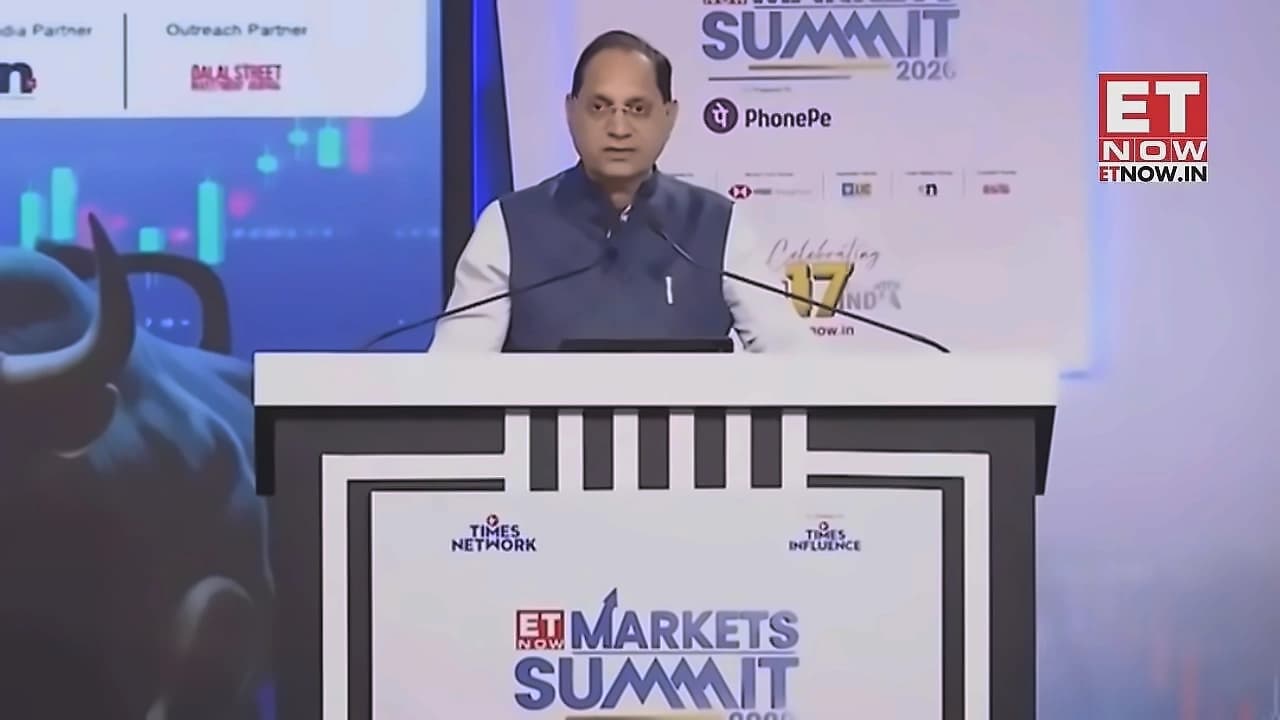
India's equity market has achieved a historic milestone, with total market capitalisation crossing ₹500 lakh crore supported by a growing investor base of 15 crore unique investors. According to SEBI Chairman Tuhin Kanta Pandey, speaking at the ASSOCHAM conference in New Delhi, the market has reached this significant threshold while mutual fund assets under management (AUM) have reached ₹83 lakh crore. The Chairman emphasized that economic growth should not be measured merely in terms of technology and speed, but should also focus on providing people with better financial choices and building their trust. As reported by The Economic Times, Pandey noted that opening an investment account takes only a few minutes, but investors must also understand the costs and potential risks associated with financial products. He questioned whether the current market structure can serve an economy twice its present size, finance a wider range of enterprises and remain fair, stable and trusted. According to CNBC TV18, companies raised around ₹9 lakh crore through equity and debt in the first seven months of the financial year, including about ₹1.45 lakh crore through 235 IPOs, while more than ₹5 lakh crore has been mobilised through corporate bonds.
SEBI has announced dramatic reforms to simplify foreign portfolio investor (FPI) onboarding, targeting reduction from several months to as little as five business days through digital workflows and system integration. Speaking at the 17th Capital Markets Conference organised by ASSOCHAM, Chairman Tuhin Kanta Pandey outlined that the regulator has proposed scrapping the Additional Disclosure Framework for FPIs to align India's rules with global standards. As reported by The Hindu BusinessLine, "Through digital workflows and system integration, we aim to cut FPI onboarding from months to as little as five business days," Pandey stated. The reforms come as about 740 FPIs have registered under SEBI's SWAGAT-FI initiative for trusted, low-risk investors, holding around 17% of FPI assets under custody as of October 31. As reported by The Economic Times, Pandey emphasized that wider participation must be matched by investor awareness, noting that a smartphone can open a trading account in minutes, but it cannot explain risk. SWAGAT-FI gives trusted, low-risk FPIs single-window access, simpler compliance and longer KYC review cycles, according to the latest developments.
SEBI is developing a corporate bond market-making framework with the Reserve Bank of India and the finance ministry, covering liquidity, market infrastructure and access to repo. The regulator is also reviewing short selling and securities lending to improve liquidity and price discovery in the cash market. For alternative investment funds, SEBI plans to simplify requirements on investor consent, related-party transactions, co-investment and exits. The next phase of Demat 2.0 is expected to enable secondary trading of tokenised bonds, while the listing time for REITs and InvITs will be cut from six working days to three. According to The Hindu BusinessLine, Fixed Income Channel Partners will help expand bond distribution through regulated online platforms, while Phase II of Demat 2.0 will enable secondary-market trading in tokenised bonds. As reported by The Economic Times, companies raised around ₹9 lakh crore through equity and debt in the first seven months of the financial year, including about ₹1.45 lakh crore through 235 IPOs, demonstrating the robust growth across all market segments.
SEBI Chairman Tuhin Kanta Pandey has announced that the market regulator is exploring an AI sandbox to test applications in a controlled environment and examining the development of a domestically governed AI model for the securities market to make secure and affordable AI tools more widely accessible. Speaking at the ASSOCHAM conference in New Delhi, Pandey emphasized that responsible innovation, stronger cybersecurity and effective governance would be critical as technology increasingly transforms financial services and capital markets. The Chairman noted that SEBI is deploying technology to strengthen market surveillance and investor protection, while cautioning that technology cannot replace human judgement and institutional accountability. As reported by The Hindu BusinessLine, guidelines on responsible AI use are in preparation, and an AI sandbox would let innovators test applications in a controlled environment. According to The Economic Times, SEBI is also working towards harmonising the regulatory frameworks governing Investment Advisers and Mutual Fund Distributors.
SEBI Chairman Tuhin Kanta Pandey has highlighted a significant gap between financial awareness and actual participation in India's securities market. Citing SEBI's 2025 Investor Survey, Pandey revealed that around 63% of households knew of at least one securities-market product, but only 9.5% participated. Even among investors, only 36% had moderate or high market knowledge. The findings assume significance as India's securities market now has more than 15 crore unique investors, while mutual funds manage assets worth around ₹83 lakh crore. Pandey emphasized that "A smartphone can open a trading account in minutes. It cannot explain risk. Wider access must come with understanding," urging industry groups to work with exchanges to help more companies understand public-market funding, the listing process and the responsibilities that come with listing. According to The Hindu BusinessLine, SEBI is also reviewing the Listing Obligations and Disclosure Requirements (LODR) framework to eliminate duplicative disclosures in filings with the Ministry of Corporate Affairs (MCA) and plans to replace multiple stock exchange fines for the same compliance lapse with a single penalty.
SEBI is reviewing multiple frameworks to enhance market accessibility and efficiency. According to The Hindu BusinessLine, the regulator is reviewing the Issue of Capital and Disclosure Requirements (ICDR) framework, which governs IPOs, follow-on public offerings, preferential issues and qualified institutional placements (QIPs), as well as the SME IPO framework and the Innovators Growth Platform. Additionally, SEBI is working to improve liquidity and distribution in the corporate bond market and reviewing frameworks governing AIFs, REITs and InvITs to support long-term investment and infrastructure financing. For stockbrokers, the regulator is exploring a graded compliance framework that would reflect a firm's scale, client exposure and reliance on technology. As reported by The Economic Times, SEBI is also addressing growing risks of cyberattacks, outages and data breaches amid greater digital connectivity, emphasizing that innovation must be backed by strong governance, cybersecurity and operational resilience.