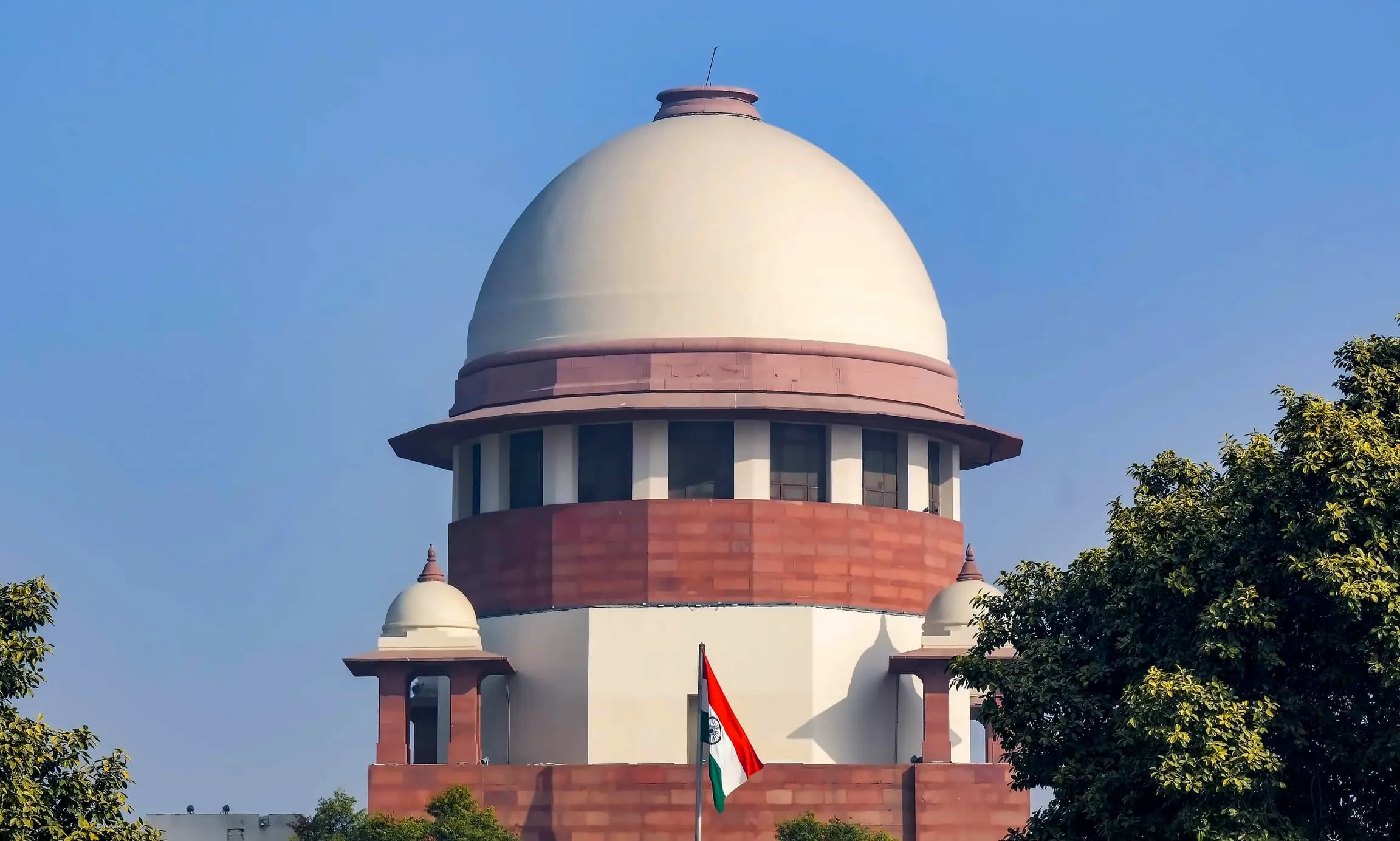
The Supreme Court on Wednesday reserved its verdict on the Union government's appeal against a Bombay High Court order granting Future Group non-executive director Sunil Biyani one week's protection from arrest in a Goods and Services Tax (GST) investigation. According to reports from Business Standard, a Bench of Justice Dipankar Datta and Justice Sheel Nagu examined whether the High Court could grant such interim protection after holding that Biyani's anticipatory bail plea was premature.
During the hearing, Justice Datta repeatedly questioned the legal basis for the High Court's direction. As reported by Business Standard, the judge asked, "Suppose the High Court comes to the conclusion that the petition is not maintainable because there is no apprehension of arrest. Where does the High Court get the power to say that after the order under Section 69 is passed, for seven days he shall not be arrested?" The High Court had directed that if GST authorities subsequently passed an order under Section 69 of the Central Goods and Services Tax (CGST) Act, Biyani should not be arrested for one week from the date the order was communicated to him.
Section 69 of the CGST Act, 2017, grants the GST Commissioner the statutory authority to order the arrest of any person suspected of committing major tax offences, such as fraudulent input tax credit (ITC) claims or large-scale tax evasion. According to Business Standard, counsel for Biyani argued that an arrest under Section 69 can be authorised only after the Commissioner records "reasons to believe" that the statutory requirements are satisfied. The counsel contended that communicating the arrest authorisation is a minimum safeguard to protect personal liberty under Article 21, as otherwise a person may be arrested without even knowing such an order exists.
Appearing for the Union government, Additional Solicitor General S Dwarkanath submitted that the Centre had no objection to communicating an order passed under Section 69 to the affected individual. As reported by Business Standard, the ASG said, "This order has to be communicated. Even if he is arrested, he has a right to challenge the order if the reasons to believe are non-existent." However, the Bench distinguished this issue from the High Court's grant of interim protection, with Justice Datta observing that while an order passed in exercise of statutory power must be communicated to the person affected, that did not explain how the High Court could grant seven days' protection in proceedings it had itself held to be not maintainable.
The case arose from Biyani's anticipatory bail plea in connection with a GST investigation. According to Business Standard, after the Centre informed the Bombay High Court that no arrest order under Section 69 had been issued, the High Court held the anticipatory bail plea to be premature but nevertheless granted Biyani a week's protection from arrest if such an order was issued in future. The Centre has challenged that limited protection before the Supreme Court.