Dixon Technologies shares rose as much as 1.42% to ₹14,920 and Amber Enterprises India climbed 1.21% to ₹7,794 during Friday's intraday trade amid reports that the Goods and Services Tax (GST) Council may consider cutting the 18% GST rate on mobile phones. According to Mint reports citing people aware of the matter, the GST Council may discuss a proposal to reduce the 18% GST rate on mobile phones at its meeting likely to be held next month, though the agenda has not yet been finalised. Both stocks subsequently pared some gains from their intraday highs.
Dixon Technologies shares fell over 2% by midday on August 24, despite being positioned as a clear beneficiary of India's new ₹62,500 crore Mobile Phone Manufacturing Scheme. The sell-off was likely triggered by how the policy was designed to create brands and boost exports rather than just increase local sourcing and production. According to CNBC TV18, the stock had run up over 7.6% in the seven trading sessions before the announcement on Friday, but the new policy framework has created investor concerns about the scheme's practical implementation.
Kotak Institutional Equities retains its 'Attractive' view on the electronic manufacturing services sector and expects the Mobile Phone Manufacturing Scheme (MPMS) to provide "a strong push for scale and localization" for Dixon. The brokerage believes exports will be critical for brands to consistently exceed TS1 growth hurdles, given India's relatively flat domestic smartphone market. Kotak expects Dixon to see a potential 14-22 bps EBITDA margin improvement from the scheme, driven by increased volumes from key anchor customers and margin benefits due to backward integration. The brokerage noted that exports will be "the key lever" for brands to exceed the TS1 baseline and maximise incentive payouts, making MPMS "structurally more favorable for export-oriented brands and their EMS partners."
JPMorgan has reiterated its 'Overweight' rating on Dixon Technologies and set a target price of ₹16,400 per share, citing the company's potential as a key beneficiary of India's new Mobile Phone Manufacturing Scheme. The brokerage believes the government's latest incentives for the electronics manufacturing ecosystem could support higher earnings for Dixon over the medium term, although the extent of upside will depend on export growth and negotiations with global smartphone brands over incentive sharing. JPMorgan noted that the scheme's eligibility criteria could have mixed implications for Dixon, with the ₹10,000 crore turnover requirement in FY26 restricting access to incentives largely to Dixon's bigger customers, while the ₹5,000 crore FY26 sales threshold suggests the scheme is designed to encourage exports, meaning Dixon will likely need to further scale up its export business to maximise benefits.
The potential 18% GST rate cut on mobile phones comes against a backdrop of weakening smartphone demand, with smartphone shipments in India declining 10-11% year-on-year in the April-June quarter, marking the steepest fall in a June quarter in six years according to Counterpoint Research and IDC as cited in Mint reports. The tax reduction could support handset demand and India's electronics manufacturing ambitions, providing additional support to companies like Dixon and Amber Enterprises that are positioned to benefit from the new Mobile Phone Manufacturing Scheme.
The new PLI scheme introduces significant challenges for manufacturers like Dixon due to its design focusing on brand growth rather than production capacity. The Ministry of Electronics and Information Technology (MEITY) said the incentives will be paid to brands, not manufacturers, with brands using more than one manufacturer required to provide certifications to each manufacturer. According to CNBC TV18, the benefits could also be split between manufacturers, creating additional complexity for companies like Dixon. The scheme rewards large mobile brands that keep increasing sales every year, with existing brands needing to increase sales by at least ₹5,000 crore every year compared to FY26 levels. This means FY27 sales must be at least ₹5,000 crore higher than FY26, FY28 sales must be at least ₹10,000 crore higher than FY26, and so on, with BNP Paribas noting this seems like a tall ask, especially beyond FY27. The scheme has two sub-schemes: Target Scheme 1 focuses on scaling manufacturing and localisation, while Target Scheme 2 looks to push local smartphone brands.
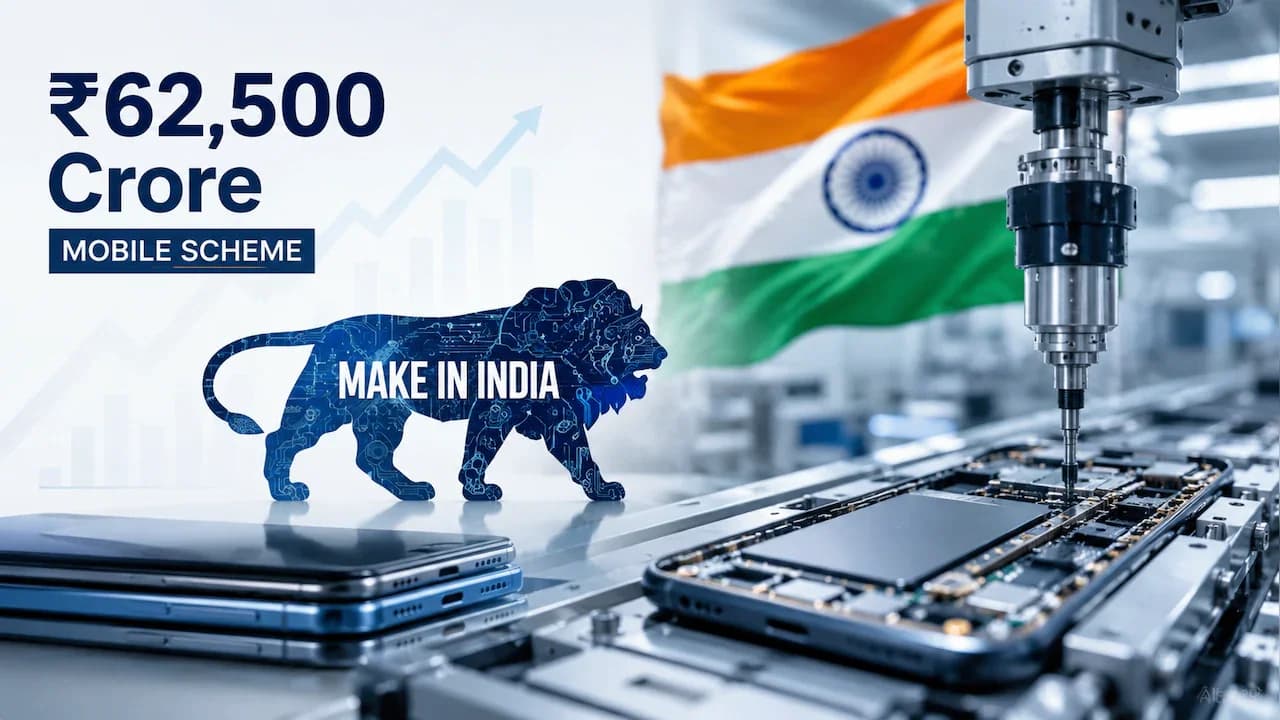
The scheme follows the expiry of the earlier PLI programme for large-scale electronics manufacturing on March 31, 2026. According to the government, India is now the world's second-largest mobile phone manufacturer by volume, while smartphones became the country's largest export product category in 2025. The new scheme builds on the success of earlier incentive programmes, with production under previous schemes reaching ₹11.61 lakh crore, exceeding the ₹8.12 lakh crore target. Electronics and Information Technology Minister Ashwini Vaishnaw said the new programme would support the development of Indian-owned mobile brands and domestic intellectual property, with the government assessing whether intellectual property is genuinely Indian-owned. The policy places significant emphasis on building a deeper domestic electronics supply chain and reducing dependence on imports, strengthening India's position in global electronics manufacturing.