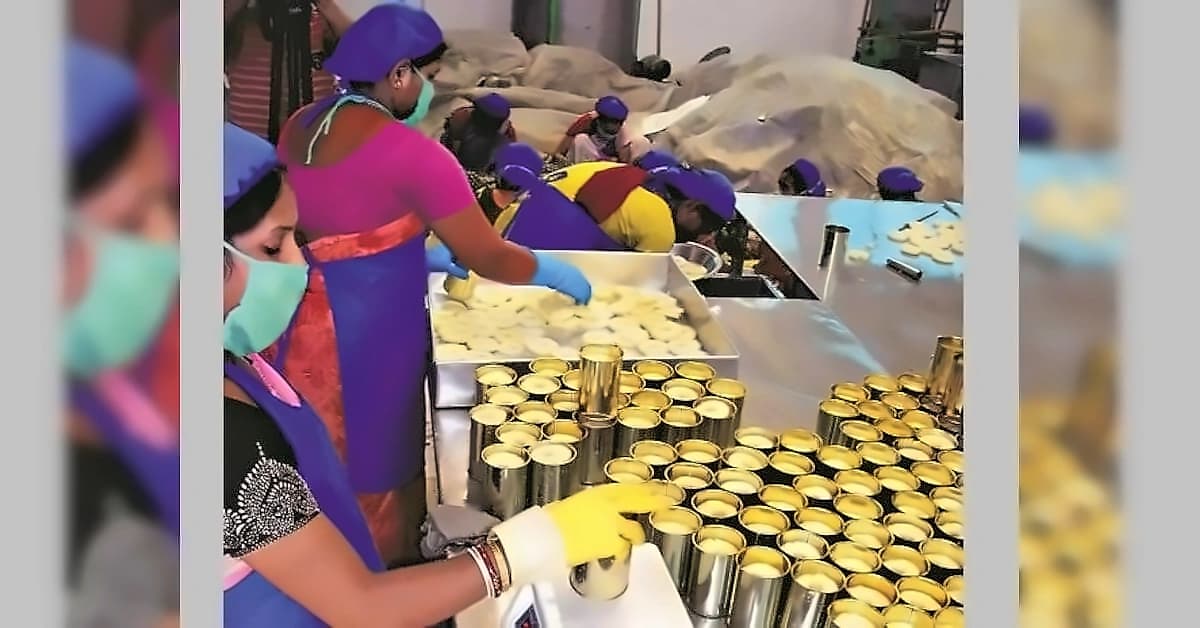
The Rajasthan government has announced plans to establish 39 food parks under the Rajasthan Food Park Development Policy-2026, with land already allocated at 35 locations. According to reports from Business Standard, Principal Secretary, Agriculture and Horticulture, Manju Rajpal revealed that the state currently operates two mega food parks, four agro-processing clusters, and six RIICO/spice parks. The policy, launched in August, aims to encourage agriculture and food processing industries while fostering entrepreneurship in rural areas and increasing farmers' income through value addition. As per ETRajasthan, the plan is designed to cut post-harvest losses, attract investment and improve export readiness by linking farm production with storage, processing and markets.
The state is simultaneously developing 10 crop-based agro-processing clusters focused on major agricultural commodities including moong, mustard, soybean, kinnow, pomegranate, guava, orange, isabgol, cumin and garlic. As reported by Business Standard, Horticulture Commissioner Shweta Chauhan confirmed that seven of the proposed 10 clusters are eligible under the Cluster Development Programme of the National Horticulture Board. Concept proposals for three clusters based on guava, pomegranate, and cumin have already been submitted, while four clusters based on isabgol, kinnow, garlic, and orange are proposed for the next phase. According to ETRajasthan, crop-wise and district-wise mapping of major production areas has already been completed for these proposed clusters, indicating where each value chain could be strengthened and where supporting infrastructure may be needed first.
The state currently supports over 1,500 agro-processing units and more than 1,850 micro food-processing units under the Pradhan Mantri Formalisation of Micro Food Processing Enterprises (PMFME) Scheme, according to Rajpal's statement at the stakeholder meeting. The policy encompasses agro-processing industries dealing with fruits and vegetables, spices, grains, oilseeds, pulses, medicinal products, minor forest produce, honey, dairy, and animal feed, along with infrastructure development projects including silos and cold storage facilities. As per ETRajasthan, the scale of the existing ecosystem is already sizeable, with the mix of large, medium and small units giving policymakers more room to design cluster-specific interventions, especially where raw material supply, packaging or logistics remain weak.
Chief Secretary V Srinivas emphasized that the clusters should extend beyond production and processing to encompass the entire value chain from farm to market. As reported by Business Standard, he highlighted the need for facilities including sorting and grading, packaging, cold storage, processing, transportation and supply systems, brand development, and market linkages. According to ETRajasthan, the goal is not only to improve farmer returns but also to reduce the losses that typically occur after harvest, when produce often has to move quickly and cheaply through fragmented supply chains. The state wants each proposed cluster to function as a full value chain, covering sorting, grading, packaging, cold storage, processing, transport, branding and market linkages, moving beyond raw produce sales to capture more value within Rajasthan rather than losing it to intermediaries.
The cluster mix points to a deliberate balance between horticulture and field crops, with fruits such as kinnow, pomegranate, guava and orange typically needing faster handling, better cold chains and stronger branding, while moong, mustard and soybean are more closely tied to bulk processing, oil extraction and commodity-linked trade. As reported by ETRajasthan, officials and experts from multiple departments including the Ministry of Food Processing Industries, Industries and Commerce, Finance, Agriculture and Horticulture departments, Rajasthan State Agricultural Marketing Board, National Horticulture Board, NABARD, and agricultural universities attended the stakeholder meeting, underscoring the cross-sector nature of the effort. The challenge now is execution, with Rajasthan having laid out the ingredients including crop mapping, a pipeline of food parks, cluster proposals and multiple institutional partners, the next step will be converting those plans into bankable projects and export-ready supply chains.