President Draupadi Murmu has promulgated the Supreme Court (Number of Judges) Amendment Ordinance, 2026, increasing the Supreme Court's judge strength from 34 to 38, including the Chief Justice of India. The law ministry notified the ordinance on Saturday, which amended the Supreme Court (Number of Judges) Act, 1956, to increase the sanctioned strength of the top court. The Union Cabinet, chaired by Prime Minister Narendra Modi on May 5, had approved the proposal to introduce The Supreme Court (Number of Judges) Amendment Bill, 2026 in Parliament. With two vacancies presently existing in the Supreme Court, the ordinance coming into force immediately means the Supreme Court Collegium will now have to recommend six names for appointment as judges in the top court. A bill will be brought in the Monsoon Session of Parliament to convert the ordinance – an executive order – into a law passed by Parliament.
The Supreme Court's current strength revision follows a long history of judicial capacity adjustments over the decades. According to Business Standard, the Supreme Court (Number of Judges) Act, 1956 initially fixed the strength at 10 judges apart from the Chief Justice, which was later increased to 13 in 1960, 17 in 1977, 25 in 1986, and 30 in 2008. The last revision came in 2019, when Parliament raised the number of judges from 30 to 33, excluding the Chief Justice of India through the Supreme Court (Number of Judges) Amendment Act, 2019. With the latest amendment ordinance, the total sanctioned strength of the Supreme Court will now rise to 38 judges, including the Chief Justice of India. Under Article 124(1) of the Constitution, Parliament has the authority to determine the number of Supreme Court judges through legislation, with the court's strength being revised several times over the decades in response to rising caseloads.
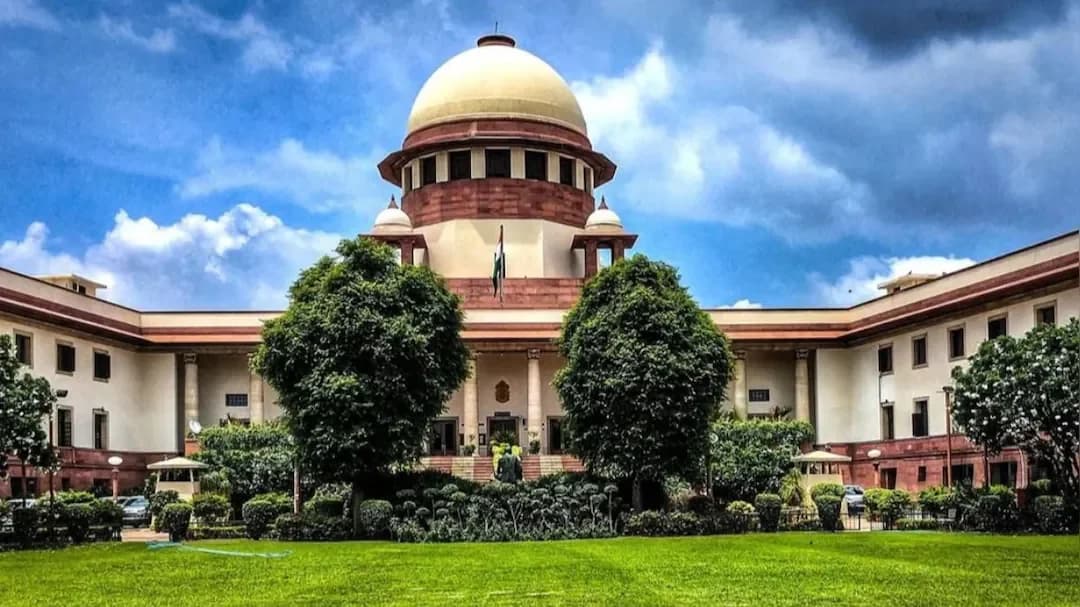
The decision has been widely welcomed by members of the legal fraternity, who described it as a timely step to deal with rising pendency and growing litigation before the apex court. President of the Supreme Court Bar Association, Senior Advocate Vikas Singh, acknowledged that the demand for increasing the number of Supreme Court judges had existed for a long time due to the steady rise in filings before the apex court. Senior Advocate Sacchin Puri, Vice President of the Delhi High Court Bar Association, called the decision a 'positive and much-needed step' that would help in the speedy disposal of pending matters, stating that increasing the number of judges was necessary to facilitate the speedy disposal of pending cases, benefiting both litigants and the legal fraternity. Advocate Juhi Arora Gupta, known for her legal expertise, described the move as a 'crucial step for improving judicial efficiency and ensuring speedy justice', noting that the growing number and complexity of cases had made it difficult for the present strength of judges to manage matters efficiently.
Senior Advocate Vikas Singh highlighted the need for matching infrastructure and expressed hope that a part of the new Supreme Court building would become operational by the end of this year. According to Business Standard, Singh noted that the Court can comfortably accommodate 38 judges and may even require around 50 judges in the coming years once the entire new building becomes functional. The current nearly 95,000 pending cases in the Supreme Court underscore the need for increased judicial capacity to manage the heavy volume of cases. PK Malhotra, former Union Law Secretary, suggested that 'simply increasing the number of judges may not bring major judicial reforms' and recommended that the government should consider setting up regional Courts of Appeal so that the Supreme Court can focus mainly on constitutional matters.
While legal experts have largely welcomed the Centre's decision, many believe that increasing the number of judges must be accompanied by wider judicial reforms to effectively tackle delays and pendency in the justice delivery system. Advocate Sumit Gehlot, a Supreme Court lawyer known for his constitutional and judicial insights, welcomed the decision but cautioned that 'simply raising the number of judges would not entirely resolve case pendency' and called for structural reforms and improved case management systems alongside increasing judicial strength. Eminent lawyer Hemant Shah acknowledged that while increasing judges may help reduce the backlog, it cannot be the sole solution, noting that 'several judges are set to retire in 2026, which may again impact pendency' and suggested that the government should work towards reducing unnecessary litigation. Former Union Law Secretary PK Malhotra emphasized that 'the government should consider establishing regional Courts of Appeal so that the Supreme Court can focus mainly on constitutional matters.'