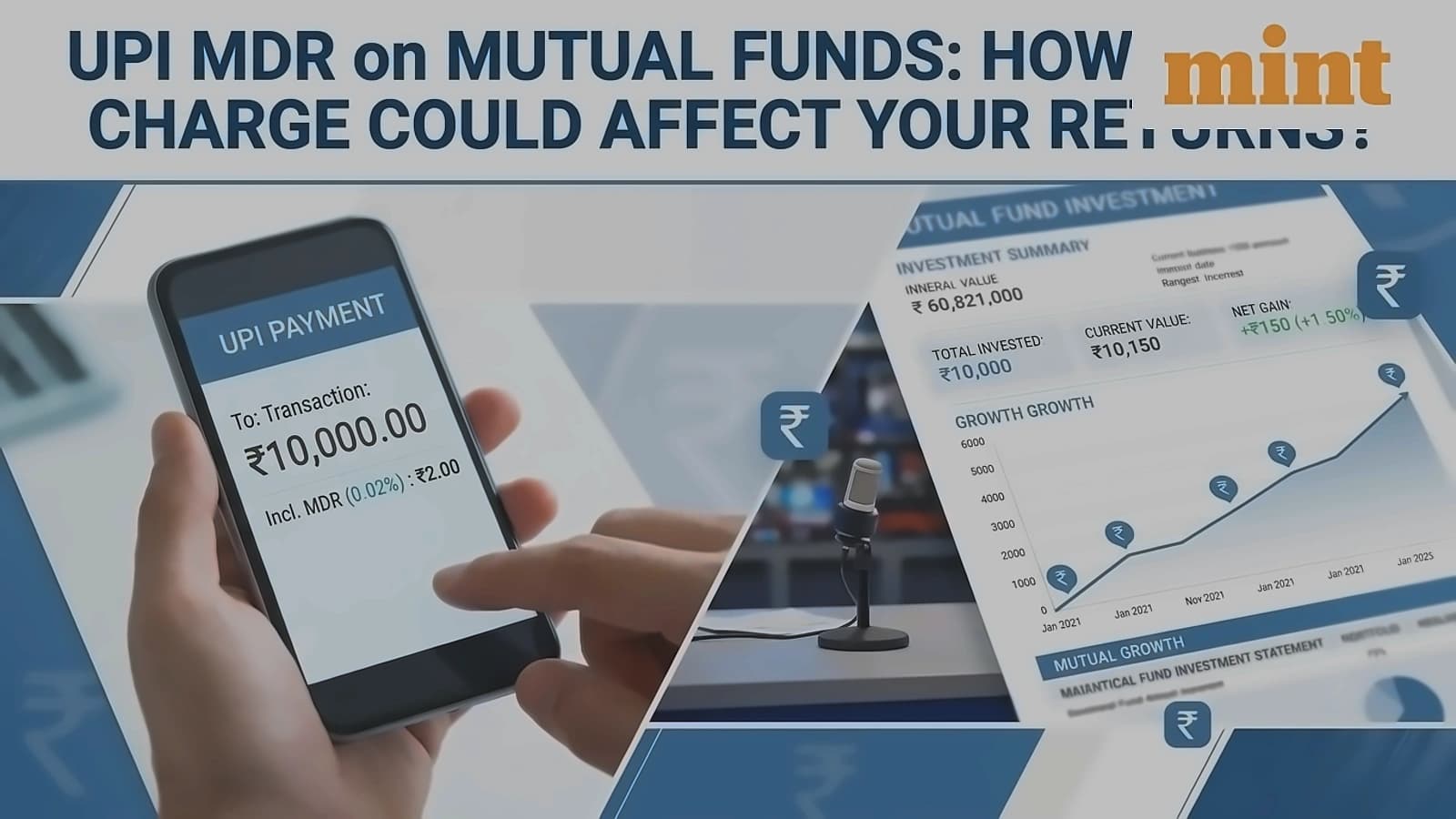
The merchant discount rate (MDR) on UPI transactions is set to make a comeback after nearly six years, with payments worth ₹2,000 and above likely to face a 0.3% fee. According to a report in the Financial Express on August 21, the fee could be introduced within the next two weeks. Union Finance Minister Nirmala Sitharaman has assured that customers and small merchants will not have to bear the fee, with the legal path for implementation cleared after the government moved an amendment to the Payment and Settlement Systems Act in August that removed the zero-MDR protection.
President Droupadi Murmu has given her assent to the Taxation and Other Laws (Amendment) Act, 2026, and another law to amend the Payment and Settlement Systems Act of 2007 on August 17, 2026, according to the Ministry of Law gazette notification. The bills were originally passed by Parliament on August 10, 2026, marking the completion of the legislative process for these significant amendments. As per The Hindu, the Taxation and Other Laws (Amendment) Act, 2026, and an Act to further amend the Payment and Settlement Systems Act, 2007, have received the assent of the President on the August 17, 2026.
When MDR returns, the fee will be split along the payment chain among four sets of players. A share goes to the issuing bank — the customer's bank — and to the payment service provider (PSP) and its bank handling the transaction. A second portion goes to the acquiring banks and PSPs on the merchant's side: fintechs such as PhonePe, Google Pay and Paytm that provide the app, QR code and onboarding. In person-to-merchant transactions, the largest share of the fee — the interchange — goes to the issuing bank, which consistently takes the biggest slice across payment systems. A thinner network fee goes to NPCI, which operates and settles the UPI rail.
The Parliamentary Standing Committee on Finance, chaired by Bhartruhari Mahtab, laid out the scale of the problem in its report tabled on August 12 this year. It noted that the government had allocated just ₹2,000 crore to promote UPI and compensate the industry for revenue foregone under zero-MDR — far below the digital payments industry's estimated annual operating cost of ₹20,700 crore. The panel found that the present incentive covers only about 11 percent of the industry's actual costs, and roughly 14 percent of the MDR revenue providers could otherwise have earned. The committee warned that inadequate compensation could constrain critical investment in cybersecurity, fraud prevention and payment-network infrastructure.
According to the government's data, India recorded more than 24,000 crore UPI transactions worth ₹314 lakh crore in FY26. In value terms, 71 percent was person-to-person (P2P) and the rest person-to-merchant (P2M). Only about 4 percent of P2M transactions are worth ₹2,000 or more — meaning the majority of transactions will stay outside the ambit of MDR, with the exclusion of small merchants narrowing the scope further. RBI Governor Sanjay Malhotra has echoed the sentiment, saying UPI cannot stay free forever: "It is not free even now, someone is paying for it. The government is subsidising it, but somewhere the costs are being paid."