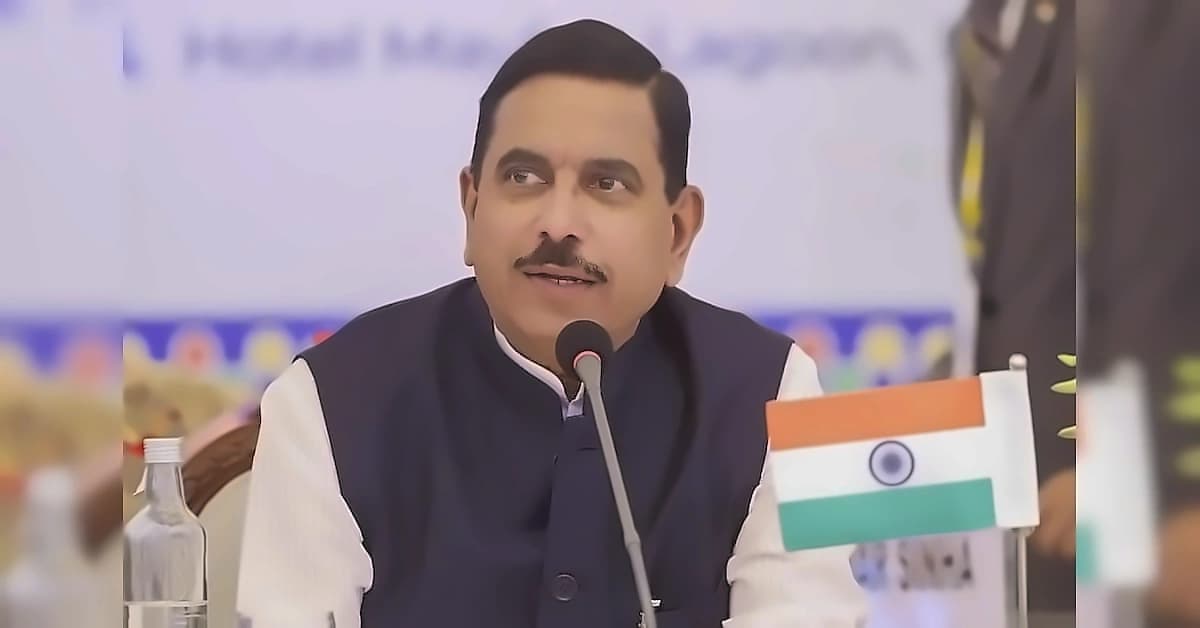
The government is preparing to launch Pradhan Mantri Kisan Urja Suraksha evam Utthan Mahabhiyan (PM-KUSUM) 2 soon, according to Union Minister Pralhad Joshi. Speaking at the 7th CII International Energy Conference, the Minister confirmed that PM-KUSUM 1 has been completed and closed, with PM-KUSUM 2 set to be rolled out very shortly. As per Zee News, the Minister announced that "PM Kusum 1 has been completed. That scheme is closed and very shortly we may come up with the PM Kusum 2." This direct transition from the previous scheme to the new initiative indicates the government's continued commitment to expanding renewable energy adoption in the agricultural sector.
The new scheme offers central subsidies of up to 30-50 per cent for standalone solar pumps and the solarisation of existing grid-connected pumps. According to Zee News, this financial support aims to reduce the farm sector's dependence on diesel while enhancing farmers' incomes through renewable energy adoption. The government has also provided significant support to distribution companies, disbursing over ₹3,800 crore in incentives to discoms and ₹104 crores to urban local bodies to boost rooftop solar adoption and power procurement. As reported by Zee News, the government, in collaboration with industry, is working to boost demand and support the sector through these substantial financial incentives.
PM-KUSUM 2 enables farmers to establish grid-connected solar power plants of up to 2 MW on barren or fallow land. As reported by Zee News, these solar installations allow farmers to sell electricity to local distribution companies at state-regulated tariffs, providing additional revenue streams beyond agricultural use. The GST reduction from 12 per cent to 5 per cent on renewable energy devices has significantly impacted costs, making a typical 3 kilowatt rooftop solar system around ₹9,000 to ₹10,500 cheaper. This cost reduction has created substantial savings, with the Minister noting that for an ordinary family, a 5 HP solar pump could become around ₹17,500 cheaper, resulting in savings of about ₹1,550 crore for the rollout of 10 lakh solar pumps.
As of July 2026, the government has achieved substantial progress with 1,986.3 MW of grid-connected solar power plants capacity installed out of the sanctioned target of 10,000 MW. According to government data shared at the conference, 13.07 lakh standalone solar pumps have been sanctioned, with 11.69 lakh installed during the same period. The government has also sanctioned 55,392 IPS pumps with 16,259 solarised, while 16.54 lakh FLS pumps have been solarised. Additionally, 16.54,044 FLS pumps have been solarised, demonstrating significant implementation momentum across all categories of solar pumps.
The GST reduction has created substantial cost savings, with the Minister noting that for an ordinary family, a 5 HP solar pump could become around ₹17,500 cheaper, resulting in savings of about ₹1,550 crore for the rollout of 10 lakh solar pumps. At the utility scale, the GST reduction could lower project costs by ₹20-25 lakh per MW, translating into savings of over ₹100 crore for a 500 MW solar park. For distribution companies, the estimated annual procurement saving could be around ₹2,000 to ₹3,000 crore. The government has also extended basic cost and put an extension on the capital goods of lithium ion cell manufacturing till March 2028, emphasizing the collaborative approach between government and industry to create demand, bring down costs and build domestic capacity. This comprehensive approach demonstrates the government's commitment to making renewable energy accessible and affordable for farmers across the country.