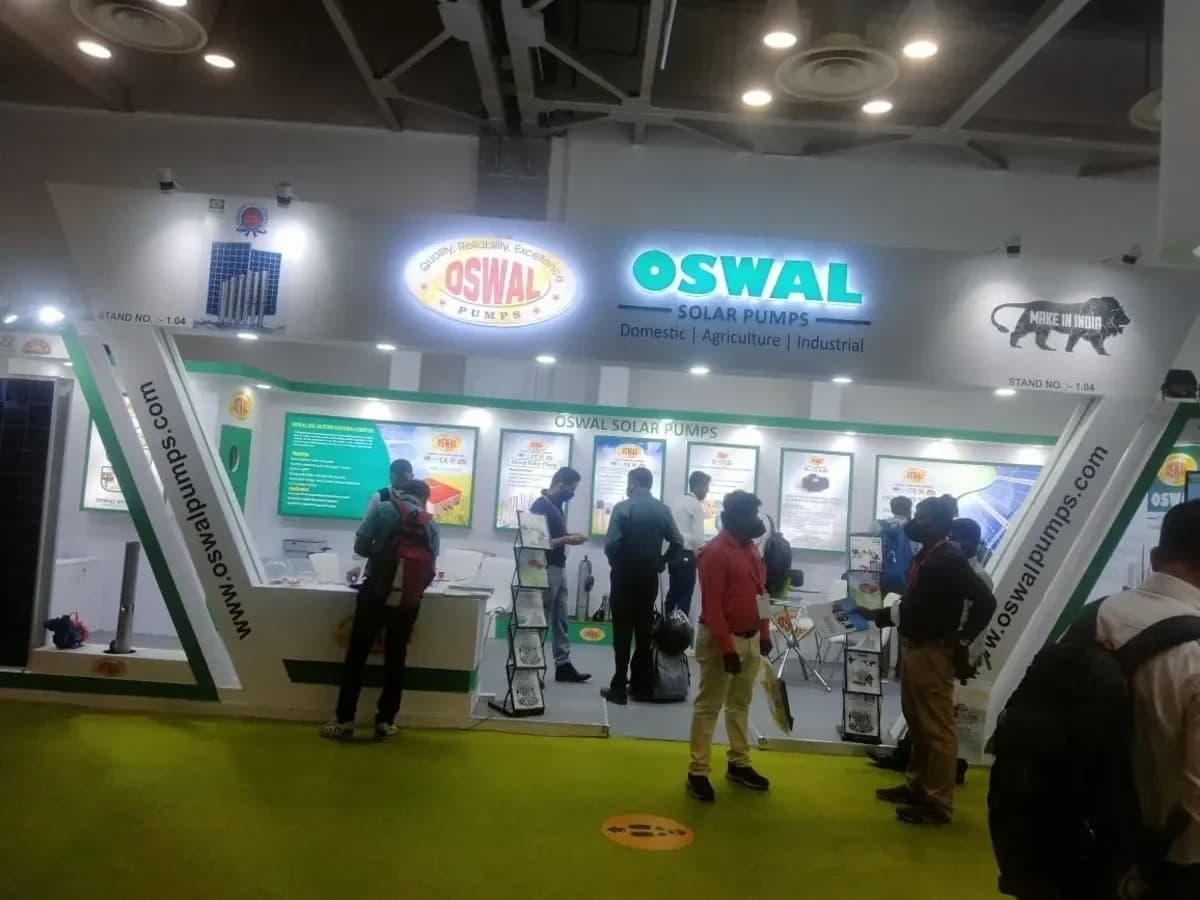
Let's start with a quick correction that matters. If you've been following the headlines, you might think Shakti Pumps (India) Limited landed the biggest order. They didn't. GK Energy Limited actually secured the largest chunk—15,000 pumps worth ₹353.89 crore. Oswal Pumps Limited and Shakti Pumps each received orders for roughly 6,500-6,900 pumps valued around ₹155-162 crore. Together, these three companies are looking at a combined order book of approximately ₹825 crore from Maharashtra State Electricity Distribution Company Limited (MSEDCL) under the Magel Tyala Saur Krushi Pump Yojana. Others +2
The pricing per pump is nearly identical across all three companies—around ₹2.36 lakh per system. This tells you something important about the competitive dynamics: this is a price-sensitive market where margins are getting squeezed. When three different companies end up with almost identical pricing, you're looking at intense competitive pressure, not premium positioning. Transcripts +1
Why GK Energy Got the Largest Order
Here's where it gets interesting. GK Energy secured the biggest order despite having the second-highest market share in Maharashtra's PM-KUSUM scheme (13.32%), behind Shakti Pumps (15.93%). So why did MSEDCL give them the largest allocation? InvestorPresentations
It comes down to execution capacity and business model. GK Energy runs an asset-light operation with outsourced manufacturing, which gives them flexibility to scale quickly without getting bogged down in capital-intensive expansions.
MSEDCL likely valued this proven execution capability for the largest order allocation. Transcripts +1
Their management also emphasized an "asset-light, technology-driven model" that enables efficient execution of decentralized solar projects at scale. In a government procurement scenario where delivery timelines matter as much as pricing, this operational flexibility becomes a competitive advantage.
The 60-Day Execution Challenge
All three companies face the same aggressive timeline: complete installation within 60 days from Work Order or Notice to Proceed issuance. This isn't just ambitious—it's a working capital squeeze waiting to happen. Others +2
Here's the problem: the payment terms block working capital for minimum 100+ days. Under government tender terms, 90% of payment gets released after receiving RMS (Remote Monitoring System) data for 7 days post-installation, and the remaining 10% after 90 days of RMS data collection. So you're front-loading all the costs—manufacturing, logistics, installation—and then waiting over three months for full payment. Transcripts
Smart, but it limits growth potential. Transcripts +3
Shakti Pumps (India) Limited has better working capital efficiency through growth in cash-based domestic business, and they're expecting relief from their upcoming solar panel plant that should release about 50% of working capital currently tied up in panel purchases. They've also got around ₹1,200 crores received from Maharashtra projects providing a financial cushion. Transcripts +3
Supply Chain and Manufacturing Bottlenecks
The 60-day timeline exposes every weakness in the supply chain. Raw material volatility is hitting everyone hard—copper, steel, and aluminium price increases are affecting margins across the board. Oswal Pumps Limited reported a 15-16% raw material price increase impact, though they managed to neutralize most of it to 1-1.25% through value engineering and supplier consolidation. Transcripts +2
Manufacturing capacity varies significantly. Shakti Pumps (India) Limited is operating at 60% capacity utilization with 40% headroom available—they've got room to scale. Their total annual capacity is 5,00,000 pumps & motors across two units, plus 4,00,000 per annum VFDs/Inverters capacity. Transcripts +3
Oswal Pumps Limited is expanding pump capacity by 2.25 times and scaling solar module capacity from 600 MW to 2.1 GW, but this expansion is phased through Q3 FY27. GK Energy Limited doesn't have this problem—their asset-light model uses multiple OEM/ODM suppliers through long-term agreements, giving them flexibility without capacity constraints. Transcripts +3
Geographic Installation Complexities
Installing solar pumps across geographically dispersed farmer locations in Maharashtra isn't just a logistics challenge—it's a cost structure problem. Remote locations mean higher transportation costs, more technician travel time, and increased per-diem expenses.
GK Energy Limited seems best prepared for this. They've got 40+ owned vehicles for direct control over last-mile delivery and 1,200+ trained technicians with local knowledge. That's serious rural infrastructure that most competitors can't match quickly. InvestorPresentations
Weather dependencies add another layer of risk. GK Energy faced execution delays due to sudden rainfall in Maharashtra during Q4 FY26. When you're working with a 60-day deadline, unexpected weather can derail everything. Transcripts
Margin Pressure and Competitive Positioning
The solar pump market has become increasingly competitive with commodity characteristics.
Shakti Pumps (India) Limited acknowledged that recent Magel Tyala tenders have had a 3-4% margin impact compared to previous tenders. Yet they maintain strong brand equity—their management shared a remarkable instance where "the portal for Shakti opened for 25,000 pumps and it was fully subscribed in 25 minutes". That's exceptional brand recall. Transcripts +1
Pricing in Maharashtra has declined from a previous average of ₹1.90 lakh to current ₹1.83-1.84 lakh for 3HP packages due to new bidders entering the market. This pricing pressure isn't going away anytime soon. Transcripts +1
Long-Term Pipeline and Scheme Sustainability
The good news is that the order pipeline looks sustainable for the foreseeable future.
Maharashtra alone represents 15 lakh plus potential pumps, with only 4-5 lakh completed so far. Transcripts +1
The Magel Tyala Saur Krushi Pump Yojana has different financial terms compared to PM-KUSUM—farmers contribute only 5-10% while the state government provides 90-95% funding. This makes it more attractive for farmers and potentially more sustainable for the state. InvestorPresentations
MSEDCL's empanelment process creates predictable order pipelines while maintaining competitive discipline through L1 price discovery. Companies receive Letters of Empanelment for specific quantities, providing visibility without guaranteed orders. This structured approach benefits established players with proven execution capabilities.
What Success Means for Future Competitiveness
Successful execution of these MSEDCL orders will significantly enhance brand equity and future bid competitiveness. In solar pumping, "the farmer who selects you. So, your brand has to have the recall". Strong execution performance creates word-of-mouth referrals in farming communities and strengthens relationships with MSEDCL for future empanelments. Transcripts
The shift toward farmer selection models (rather than pure government allocation) increases the importance of brand equity and execution quality. This favors established players over new entrants who lack market presence and track records.
Shakti Pumps (India) Limited appears best positioned for sustainable leadership with exceptional brand equity and backward integration strategy. GK Energy Limited offers strong regional competitiveness with its asset-light model and rural infrastructure. Oswal Pumps Limited provides manufacturing excellence and conservative financial management.
The ₹825 crore combined order book represents approximately 40-45% of Maharashtra's current off-grid solar pump market under MSEDCL. But with 15 lakh+ pumps still needed in the state alone, the opportunity is far from exhausted. The companies that can execute within the 60-day timeline while managing working capital pressures will be the ones that capture the bulk of PM-KUSUM 2.0's expanded rollout.